January 2013

My year in beans: 2012

Annual recap of how much I spend on coffee in a year

I started this five years ago: I was curious about the variety of coffees I consumed, and particularly about how much I spent on coffee since price seems to be such a driving force when consumers are faced with choosing between cheap coffee and slightly higher priced certified/sustainable coffee. My recording method has been standardized since 2009, but I have refined the method used to calculate price per cup. I was basing it on tablespoons per bag and cup, and I prefer a ratio of coffee to water that is higher than typically recommended. I’ve now gone to using the common industry standard of 11 grams of coffee beans by weight per 6 fluid ounces of water. I have amended my previous calculations, too. Here are my 2012 stats (coffee for a 2-person household):

  • 87 bags of coffee totaling 65 pounds.
  • Total retail price for the coffee only = $1293. I buy most of my coffee online, so I spent $113 on shipping, for a grand total of $1406 for the year.
  • Cost per six-ounce cup: only $0.52 ($0.48 without shipping).
  • The average price per pound (not including shipping) this year was $21.60. This includes four bags of really high-quality coffee which each cost over $45/lb. Most average coffee consumers will be able to bring even this price down substantially without compromising sustainability, or taste.
  • 77% of the coffees were certified organic, Rainforest Alliance, Smithsonian Bird-Friendly, or some combination. This is not to say the remainder were not sustainably-grown. I am do my best to research the source of each coffee and gauge sustainability, since not all farmers can afford certification. I’ve found that the last couple of years some of my favorite producers have dropped organic certification, and other coffees are produced under certification but not sold as such. So while I’ve tried to buy only certified coffees, some were not, but none were cheap, fast-food, commodity, or mystery coffee. If I don’t know where it comes from, I don’t drink it.

Previous results

My four-year average (discarding 2008 stats) is 63 pounds of coffee a year at an average of $20.53/lb, and $0.50 per 6-oz cup, including shipping. This has been remarkably consistent over the years.

Some price comparisions and the price of convenience:

If I drank the same amount of coffee, but used only K-Cups, my annual cost would go from $1300 (average including shipping and some very high-priced, award winning coffees) to just over $2000! This was calculated using inexpensive Folgers K-Cups priced in bulk at Amazon (not only cheap, but one of the worst coffees you can buy in terms of sustainability). The cost only goes up with “better,” organic, or bold (stronger) K-Cups*. So if you are using K-Cups because it’s convenient, you are not only paying through the nose, you are producing landfill-choking waste one little non-recyclable K-Cup at a time. That’s asinine. And please don’t tell me you use a single-cup brewer so you don’t waste coffee. If you are wasting $700+ worth of coffee a year, something is seriously wrong.

I think I’ve shown that “But I can’t find organic/Bird-Friendly/Rainforest Alliance/etc. coffee around here” is a poor excuse for not drinking it. My shipping costs — with nearly all my coffee purchased online — have averaged less than $130 a year (or $2.50/wk). It’s not hard to find free or reduced shipping specials, or flat rate shipping, online. You could get Smithsonian Bird-Friendly/organic certified coffee automatically delivered to you once a month from Birds and Beans for $105/year (even more variety from Birds and Beans Canada). Or design your own monthly coffee delivery from any of Caribou Coffee’s 100% Rainforest Alliance certified varieties for $75/year. Or buy more coffee locally than I do. For example, Birds and Beans is expanding nationwide, and if you don’t have a Caribou store near you, many retailers like Target carry it.  Ask your local retailer to carry your own favorite eco-certified coffees!

Great coffee that helps support ecosystems and rural communities worldwide is not too expensive for all of us to enjoy. You can calculate how much a cup of coffee costs, based on the price of a bag of beans, using the spreadsheet below.

*You can fiddle with the math yourself. Regular K-Cups hold 9 grams, other types hold varying amounts. There are about 454 grams in a pound, so about 50 K-Cups to a pound.
Massimo Zanetti coffees

Brands owned: Hills Brothers, MJB, Chock Full o’Nuts, and Chase and Sanborn

mz-usa-logo

No transparency, little in the way of eco-friendly coffees despite enormous market share.

Massimo Zanetti Beverage Group is an Italy-based privately-held company. Through its subsidiary Massimo Zanetti Beverage USA, it owns a number of familiar American brands (Hills Brothers, MJB, Chock full o’Nuts, and Chase and Sanborn) which it acquired in 2005 from Sara Lee Corp; as well as Segofredo Zanetti, Kaua’i Coffee in Hawaii, and private brands.

Massimo Zanetti is thought to be the world’s largest independent coffee company. They trade, process, roast, and distribute coffee, with 11 roasting plants and operations in more than 100 countries. They also grow their own coffee on what is said to be the largest coffee plantation in the world, Nossa Senhora da Guia in Pimenta, Minas Gerais, Brazil. I estimate its size at between 2500 and 3000 hectares of sun coffee monoculture. You can view it here on Google Maps. With their 2011 acquisition of Kaua’i Coffee, they now own the U.S.’s largest coffee plantation, 1250 hectares of sun coffee monoculture. In total, they handle around 150,000 tons of green coffee annually.

Two photos of Massimo Zanetti's Kaua'i Coffee farm.

Two photos of a portion of the Massimo Zanetti’s Kaua’i Coffee farm, taken as part of NASA’s UAV coffee project. MZ’s farm in Brazil looks similar, but is even bigger.

Certified coffees and ecological sustainability

As a privately owned company, Massimo Zanetti does little in the way of disclosure of its sourcing practices. In fact, the green/healthy/safe product rating site Good Guide gave Massimo Zanetti Beverage USA a zero score for transparency in both the Environmental and Social Performance categories. Similarly, Europe’s Rank A Brand gave the Segofredo Zanetti brand a zero score and said this: “This is our lowest possible sustainability score, and Segafredo has earned it by communicating nothing concrete about the policies for environment, carbon emissions or labor conditions in low-wages countries. For us as consumers, it is unclear whether Segafredo is committed to sustainability or not.”

As for their U.S. brands, a search of each of the individual web sites found no organic or eco-certified varieties for Kaua’i Coffee, Hill’s Bros., Chase and Sanborn, Segafredo, or MJB.  I found one variety out of ten of Chock full o’Nuts that is certified organic. Hills Bros. at one time had an organic/Rainforest Alliance certified blend that is apparently not in current production, although I have seen it still available at some retailers. I widened my search to include any certified coffee, and the organic Chock full o’Nuts was the only one.  This represents only a tiny fraction of the 120,000 to 150,000 tons of coffee this company handles annually.

Since the company does not disclose any information, there are no further details on certified coffee purchases or ecological sustainability.

The Good Guide was also stymied in calculating ratings for Massimo Zanetti coffee brands. Each one scored <3.5 points out of ten, among the lowest scores (the lowest of any coffee brand is 3.2). The “environmental sustainability” scores were boosted by the 7 points earned in the packaging subcategory, since many of the brands are sold in recyclable steel cans. I’m not sure how they scored 3 points in the certifications category, which specified that the coffees carried no certifications.

In any event, Good Guide has these brands flagged as ones to avoid. I completely concur. None of these brands represents good ecological practices, protecting biodiversity and habitat, or environmental sustainability. Or if they do, nobody is telling.

Rainforest Alliance Cupping for Quality — Dec 2012

ra-sealThe Rainforest Alliance Cupping for Quality award is designed to recognize exceptional coffees carrying the Rainforest Alliance seal and to highlight the linkage between sustainable farm management practices and cup quality. Two annual cuppings and awards are divided by geography. In December, coffees from the southern hemisphere — including Brazil, Peru, Kenya, Tanzania and Indonesia — compete.

The latest cupping evaluated 51 coffee samples from 9 origins, including one from Malawi, the first entry for that country.  Here are the top 10 coffees:

  1. Ndumberi Factory, Kenya — 87.41.  One of the coffee processing mills (factories) utilized by the Ndumberi cooperative. This group of over 2500 smallholders in the Kiambu region is also Fair Trade and UTZ Certified. Many of the members — the average size of their plots is 0.15 ha — do grow under some shade.
  2. Tunki, Peru — 86.91.  Placed first last year, and second in 2010. Also certified organic and Fair Trade. Tunki is one of the coffees from CECOVASA (Central de Cooperativas Agrarias Cafetaleras de los Valles de. Sandia), a group of cooperatives totaling nearly 5000 members. CECOVASA has been working with Conservation International, and has won an award for their work preserving biodiversity. “Tunki” is the local name for the national bird of Peru, the spectacular Andean Cock-of-the-Rock, depicted in their logo. Equal Exchange has a good article on a visit to CECOVASA.
  3. El Silencio – Luis Fernando Arias Alzate, Colombia — 86.88. Also Fair Trade.
  4. Tegu Factory, Kenya — 86.09. Nyeri district, part of the Tekangu Farmers Cooperative, which has around 900 members. Also UTZ Certified. The co-op has engaged in a community tree planting project.
  5. Quechua, Peru — 86.00. Like Tunki, one of the CECOVASA coffees; also organic and Fair Trade. Came in 5th place in 2010.
  6. Santo Tomas 2, Eibar Jose Rojas Pajoy, Colombia — 85.44.
  7. Gichatha-ini Factory, Kenya — 85.18. Also Fair Trade and UTZ Certified.
  8. Ibonia Estate, Kenya — 84.46. Also UTZ Certified. Placed 6th in 2010.
  9. Coop Sol & Café [Coopertiva de Servicios Multiples Sol & Cafe], Peru — 84.25. Also Fair Trade and organic certified. This 1000+ member cooperative includes cacoa and rice producers.
  10. Yadini Estate, Kenya — 84.23. A 131 ha estate (81 cultivated in cofffee) near Ruiru. Also UTZ Certified, and a Starbucks supplier. Placed 9th in 2010. According to a profile on their web site, “Bio- diversity is also being enhanced on the farm by the ongoing planting of coffee friendly shade trees” and they hope to market shade coffee in the future.

Last year, I began tracking the cumulative data on this competition going back to 2007. The average score for the top ten in this current event was 85.68, which is slightly above the previous average of 85.14. The top score of 87.41 was below the average of previous top scores (88.02). Not all countries have competed each year, but of the countries that have had coffees in at least five events, the highest average score goes to Peru at 86.30 (five events). Colombia (86.05, n=6) and Guatemala (86.04, n=5) came in next.

Search for these coffees online — I have seen quite a few of them offered within the last two crop years.

Caribou Coffee purchased by private German holding company

caribou-logoIn mid-December 2012, Caribou Coffee Co., the first U.S. major coffee company to source all its beans from Rainforest Alliance certified farms, was acquired by the Joh. A. Benckiser Group (JAB), a private German holding company.
Currently, the plan is for Caribou to continue to be headquartered in Minneapolis, with its own management team.

Joh. A. Benckiser Group is controlled by the Reimann family, the fourth-wealthiest in Germany. Other brands under their umbrella include cosmetics giant Coty and high-end shoe company Jimmy Choo. This is not JAB’s first foray into coffee, though. In summer 2012, JAB acquired Peet’s Coffee & Tea, one of the oldest family-owned coffee companies in the U.S. and a precursor to Starbucks. In October 2012, they increased their stake in D.E. [Douwe Egberts] Master Blenders 1753 to around 15%. Douwe Egberts is the Dutch company created when Sara Lee spun off all of its coffee and tea business.

The deal is not generally viewed as a fix-it-up-and-sell it, American-style private equity grab. There is a possibility that there will somehow be a merger of mostly West Coast Peet’s and mostly Midwest Caribou, or at least some sharing of buying or processing. I really hope that Caribou will retain its independence. When Caribou was public, they provided plenty of information on their overall corporate responsibility and coffee sourcing. Private companies, especially coffee companies, rarely do. I can only hope that under JAB, Caribou can continue with its transparency, excellent sustainability record, and its all-Rainforest Alliance coffee sourcing.

Update: In April 2013, JAB purchased D.E. Master Blenders.

Footnote: In poking around for background on this piece, I once again came across blog and social media comments from dopes that have persisted in calling for a boycott on Caribou because it was Muslim-owned and followed Shari’ah law. For a number of years, Bahranian-based Arcapita Bank was Caribou’s major shareholder. While you couldn’t get a ham sandwich at Caribou at the time, there was little reason for the Islamaphobia that followed. At any rate, the haters haven’t kept up with the times, as Arcapita divested itself of the last of its shares in Caribou in 2011.

Popular coffee brands: a compilation

[Note – this is a rapidly-changing topic; this post is here for primarily historical interest.]

Over the years, I have examined the sustainability (eco-certifications, sourcing transparency, corporate social responsibility efforts, etc.) of many popular coffee brands. Here is a compilation of those posts.

First, who owns what brands?

Many coffee brands are owned by just a few large multinational companies. These companies buy most of the world’s coffee as a commodity, and strive for profit over sustainability. These companies have been the drivers of low coffee prices at the expense of habitat, biodiversity, and farmers. While there are some certified choices among these brands, they make up just a tiny fraction of the coffee purchased by these companies, and the companies themselves often have dismal overall corporate responsibility records. Here are the companies and brands that are best avoided (links are to related posts):

  • Nestlé (and here) — Nescafé, Nespresso, Taster’s Choice, Clasico.
  • Smuckers — Folgers, Millstone, Dunkin Donuts bagged coffee, Cafe Pilon, Cafe Bustelo, Java Coast.
  • Kraft FoodsYuban, Maxwell House, General Foods International Coffee, Gevalia, Kenco, Maxim, Tassimo, Nabob, Sanka.
  • Massimo Zanetti — Chock Full o’Nuts, Chase and Sanborn, Hills Bros., MJB. A huge privately owned company which sources a lot of its coffee from it’s own massive full sun plantation in Brazil, said to be the largest in the world.

I regularly update a table on how much certified coffee is purchased by the large coffee companies; it includes other popular large buyers such as Starbucks and Green Mountain Coffee Roasters. If you’d like to know under what “standards” most commodity coffee is produced, see this post on the big industry code of conduct — it’s a real eye-opener.

Popular coffee brands, retailers, and fast food coffee

Conservation/partnership coffees

  • Songbird Coffee, partnership coffee with American Birding Association and Wild Birds Unlimited (Thanksgiving Coffee Company). A number of organic selections, all labelled as “shade grown” but none certified as Rainforest Alliance or Smithsonian Bird-Friendly (although they do sometimes buy from at least one Bird-Friendly certified producer, they do not use the Bird-Friendly seal). [Update: Songbird Coffee is now a partnership with the American Birding Association, and is Bird-Friendly certified]
  • Audubon Shade Grown Coffee (Rogers Family). Now all certified organic and Rainforest Alliance. Note that they are marketed as “certified shade grown,” even though RA certification does not guarantee the coffee was grown under shade. [Update: Audubon coffee is now roasted by Birds & Beans Canada, and is Bird-Friendly certified]
  • Birds and Beans (US). Exclusively Smithsonian Bird-Friendly (and hence, organic) certified coffees. Supports bird conservation organizations.

Two other conservation coffees we reviewed, National Geographic’s Terra Firma, and National Wildlife Federation Blend (Green Mountain Coffee Roasters) have apparently been discontinued since the reviews.

Researching these takes quite a bit of time, especially if the brand is owned by a large corporation (they tend to be secretive) or is privately-held (no annual reports or legal disclosures to dig through). But make your suggestions for future posts in the comments…maybe I’ll do a poll if there is enough interest. Just make sure your candidate has a broad geographic distribution.

Resources for BirdWatching Magazine readers

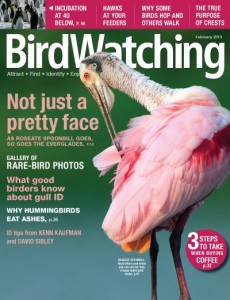
Welcome to BirdWatching Magazine readers who are exploring Coffee & Conservation for the first time after reading my article “The True Cost of Coffee” in the February 2013 issue. There are many ways to find more information on the connection between coffee, birds, and biodiversity here.

I have also assembled links to information I think you might be especially interested in. They are listed below; feel free to leave other questions in the comments.

How is coffee grown, and why is it important to birds and other biodiversity?

What do all the certifications mean?

Why should I pay more for certified or environmentally-friendly coffee?

Where can I get environmentally-friendly coffee?