Smithsonian Bird-Friendly

Finding Bird-Friendly coffee – now easier

We especially liked these cool cans of Bird-Friendly certified coffee from Chesapeake Bay Roasting Co. They also have t-shirts!

The Bird-Friendly website at the Smithsonian Migratory Bird Center has made it easier to find local and online retailers of Bird-Friendly certified coffee.

There is an interactive map to find local roasters. I found the page for online purchases is especially nice — each coffee has a brief description and a direct link to the roaster and filters are available. At the time of this writing, there were 125 coffees to choose from.

These resources make it easier to find and try some biodiversity-preserving coffee and find roasters that have incorporated sustainability into their supply chains.

Get Bird-Friendly coffee at Whole Foods

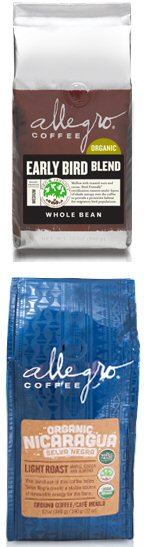
Two Smithsonian Bird-Friendly certified coffees are now available at Whole Foods Markets nationwide, offered by their wholly-owned subsidiary Allegro Coffee Roasters.

allegro-smbcEarly Bird Blend

The first is the Early Bird Blend, a special coffee Allegro will keep in rotation to feature Bird-Friendly certified coffees. Currently, it comprised of a blend of Selva Negra from Nicaragua (see below) and the GRAPOS (Grupo de Asesores de Produccion Organica y Sustenable S.C.) co-operative in Chiapas, which is in the buffer zone of the El Triunfo Biosphere Reserve. The Reserve contains the northernmost cloud forests in the world and is considered as one of the greatest biodiversity sites of North America. It’s one of the best of only a few places in the world to see the spectacular and critically endangered Horned Guan.

Allegro plans to utilize other Chiapas farms in the blend, as well as the famous Colombia El Roble (Mesa de los Santos), an origin we first reviewed here, and which has also been used by Birds & Beans in their Chestnut-sided Warbler variety.

Organic Selva Negra

The other is their most recent Origin Direct coffee, Nicaragua Selva Negra. This is the same program that featured the farm El Jaguar earlier this year, where my husband and I did a bunch of bird-banding and insect survey work a couple of years ago. The Origin Direct program (formerly Special Reserve) picks an outstanding source every quarter and awards the producers $10,000 to support community projects.

Selva Negra (the name of the farm is actually La Hammonia) is located near Matagalpa, Nicaragua, and I wrote about it when overviewing that country’s Bird-Friendly certified farms.  They also hold Rainforest Alliance and organic certification (the latter necessary for Bird-Friendly certification as well). I have been to Selva Negra twice, and can attest that the 150 ha of preserved cloud forest is fabulous, and contains many unique and rare birds among 280 or so species, plus orchids and other biodiversity. I had two great birding milestones there: my first Resplendent Quetzal, a near threatened species, and my 1000th life bird, a Ruddy Woodcreeper at an ant swarm, which are kind of unusual at high elevations.

Roast and taste

We’ve had an opportunity to try both of these coffees. The Selva Negra is designated as a light roast, although it comes with just a bit of sheen to the beans.  The Early Bird Blend is medium. Fans of Birds & Beans light or medium roasts, or generally more robust coffees will find the Early Bird Blend very much to their liking, and it will hold up well to milk and/or sweeteners. The Selva Negra is a bit more subtle, but a perfect every day breakfast coffee. We found both extremely smooth, with several layers of creamy, understated complexity building as they cooled. This was more pronounced with the Selva Negra, which was therefore probably responsible for this characteristic. This quality gave both coffees some of the most lustrous, almost velvety mouthfeels I think I have ever experienced in any day-to-day coffee, versus some much more expensive boutique selections.

Support the Bird-Friendly Early Bird Blend!

There are over 350 Whole Foods Markets; these coffees are currently available bagged and (if there is an Allegro roastery in one of your local stores) fresh in bins ready to be scooped up an enjoyed. This should reduce the number of people I hear saying that Bird-Friendly coffee is too hard to find. You can also buy online from Allegro.

But here is the important part — Allegro is launching the Early Bird Blend to gauge how much this certification resonates with customers. Do you care about the availability of this blend, and want to support the birds and biodiversity emblematic of and the purpose behind Bird-Friendly certification? If so, PLEASE make sure your Whole Foods store manager knows how you feel. Try out the Early Bird Blend and provide feedback to Whole Foods and/or Allegro.

Coffee drinkers have the potential to make a huge impact on the environment and economies of coffee growing nations. This is a terrific opportunity for coffee drinkers concerned about sustainably-grown coffee to stand behind our beliefs.

 

First Bird-Friendly coffee from Caribbean

The Smithsonian Migratory Bird Center has announced the first Bird-Friendly certified coffee from the Caribbean, from Spirit Mountain Coffee in the Dominican Republic. Several years ago, I wrote a piece about coffee growing on Hispaniola, the island shared by the Dominican Republic and Haiti. There, you can read about Hispaniola’s great biodiversity, including 30 endemic bird species; the importance of the island to birds that winter and migrate through the West Indies and breed in North America; and the critical role of shade coffee in preserving habitat on an island with a very high level of deforestation.

The farm is near the village of La Angostura in the Jarabacoa region. The property is around 140 ha, of which 32 ha at 1100 to 1400 meters is in typica and caturra coffee (some bourbon is being planted). All the coffee is Bird-Friendly/organic certified, and also carries Rainforest Alliance and UTZ certifications. The current owners acquired the abandoned farm in 2003, and have since planted over 50,000 trees of over 30 species that provide both timber and habitat for birds and other flora and fauna, making it ideal to qualify for Bird-Friendly certification.

In addition to coffee, Spirit Mountain keeps 20 bee hives for organic honey production, and also grows a variety of citrus, nut, and timber trees.

Bird-Friendly certifies coffees in Nicaragua

Approximate locations of Bird-Friendly certified producers in Nicaragua.

From my accounts of previous trips, readers know I have a soft spot for Nicaragua. So I’m happy to report that the Smithsonian Migratory Bird Center has now has three Bird-Friendly certified coffee producers in the country.

Selva Negra — Selva Negra, near Jinotega, is 450 ha that consists of an ecolodge, organic gardens, ponds, 150 ha of preserved cloud forest, and a coffee farm (actually named Finca La Hammonia, although usually referred to as Selva Negra).  About 120 to 150 ha are in shade coffee production, much of it organic; 87 ha is now certified Bird-Friendly. Finca La Hammonia grows bourbon and caturra between 1200 and 1300 m.  The sustainability efforts of Selva Negra are extensive and well-known, the farm has long been Rainforest Alliance certified, and the coffee has been well-represented in the U.S. by multiple roasters, including Allegro/Whole Foods.

The forested area has numerous trails (I have been there twice), hosts over 500 tree species, 130 species of orchids, and at least 280 species of birds. A number of restricted-range, rare bird species that are hard to find elsewhere are common at Selva Negra, including Three-wattled Bellbird (conservation status “Vulnerable”) and Resplendent Quetzal (Near Threatened).

Read more at their excellent web site.

UniÁ³n de Cooperativas Agropecuarias San Juan del Rio Coco — This cooperative is located in the northern department of Madriz, near the towns of San Juan del Rio Coco and Telpaneca. The certified area covers 709 ha and 128 growers, and the co-op is also certified Fair Trade and Utz Certified.

Gaia Estate (Finca Bosques de Gaia) – This small, 18-ha farm owned by Jefferson Shriver and Gabriela Navarez is located outside the familiar central highlands of Nicaragua, south of the capital Managua near Diriamba, Carazo department.

Birds & Beans has contracted with all of these producers and will incorporate the beans in two of their coffees this fall.  They purchased all of Gaia’s current crop, and it will appear in the Wood Thrush variety, and Selva Negra’s coffee will be in the Chestnut-sided Warbler variety.  San Juan del Rio Coco should show up next year.

A list of all current Bird-Friendly certified farms can be found here.