Category: Birds and other biodiversity Page 1 of 5

Know Your Coffee Birds: Red Siskin

Male Red Siskin. Photo by Linda De Volder under a Creative Commons license.

Here’s a entry in the occasional Know Your Coffee Bird series, which profiles birds that utilize shade coffee farms. This post is about a species people might not immediately connect with coffee. It is a finch, related to more familiar goldfinches (both American and European), and like them primarily eats seeds and favors a variety of open or semi-open habitats. This is in contrast to the insect- and fruit-eating birds inhabiting tropical forests that we tend to associate with coffee farms. Let’s talk about the endangered Red Siskin (Spinus [formerly Carduelis] cucullatus).

The Red Siskin never had a large range, being primarily found along the northern coast of Venezuela, just edging into Colombia. Once common, populations are now critically fragmented across this area and it is estimated that somewhere between 1500 to 7000 birds (at best) remain in the wild; this includes a relatively recent location found in Guyana. Red Siskins are considered so iconic in Venezuela that they are depicted on the country’s currency. Streets, a park, and even the country’s Little League team is named for them (“cardenalito” in Spanish).

Habitat loss has played a role in the decline of the Red Siskin, but unsustainable trapping for the cage bird trade is a major reason for the near-disappearance of this species. Males are prized for their bright coloration (females are duller) and their ability to mate with the common canary, introducing their red coloration to future generations of canaries. Because Red Siskins can be harder to raise in captivity, wild birds are continually captured to maintain the red genes in canaries — which is actually unnecessary from a genetic standpoint. Although trapping in Venezuela has been illegal for decades, the increasing rarity of these birds, the poverty-inducing economic crisis and political upheaval in Venezuela combine to make illegal trade in the birds lucrative for both greedy poachers and desperate citizens.

In 2015, the Red Siskin Initiative was established among many partner organizations to address the precipitous declines. Strategies include research, captive colonies with the aim to breed siskins for reintroduction, reducing overexploitation, and public education. An important component of this initiative is habitat preservation and income security through coffee farming.

Venezuela once had a thriving coffee industry which was eclipsed by the oil economy and grew out of favor due to government price controls that make coffee farming unprofitable and unsustainable. However, Bird-Friendly coffee certification (which requires organic certification) qualifies the coffee as gourmet, exempt from the price controls, and allows it to be sold at a premium. In addition to organic farming methods, Bird-Friendly certification has requirements regarding shade cover and composition, native tree diversity, and other criteria that provide habitat for birds, including Red Siskins. Partners also provide technical assistance and help producers with capacity-building.

In 2019, nearly 40 farms occupying 165 ha, members of the AsociaciÁ³n Civil de Productores Agroforestales—Piedra de Cachimbo y Florida (ACAFLO), obtained organic certification, with 13 also gaining Bird-Friendly certification. The goal is to expand the certified production area to 400 ha by the end of 2021. Venezuela exports little or no coffee these days, and the situation is dire there. I really hope for the success of this project, and look forward to being able to purchase this coffee to support this great conservation initiative. The establishment of Bird-Friendly certified coffee farms will provide a sustainable livelihood for farmers and preserve habitat for Red Siskins and many other bird and wildlife species.

Pair of Red Siskins. From a plate in Bird Notes, scanned by the Biodiversity Heritage Library.

More reading:

Integrated Open Canopy: a land sharing strategy for coffee

Some time ago, I wrote a detailed post about “land sharing” versus “land sparing“, two agriculture strategies. In a nutshell, land sharing is the use of cover crops, interplantings, and other measures that seek to approximate natural habitat, inviting birds and other biodiversity within the crop. Land sparing utilizes a patchwork of more intensive agriculture co-mingled with natural habitat.

Most discussions debating land sharing vs. land sparing revolve around food crops and the best way to feed a growing population without further devastation to biodiversity. A good review on the pros and cons is at the open-access paper Reframing the land-sparing/land sharing debate, as well as my previous post. This debate is somewhat different concerning coffee, because issues deal with sustainable farmer livelihoods rather than more general food security and availablility. That being said, shade coffee is an example of land sharing, while sun coffee plots in a matrix of forest would be an example of land sparing.

Over the summer, I attended (if that’s the word for a virtual meeting) the North American Ornithological Conference and listened to research on “Integrated Open Canopy” (IOC)*, a land sparing method in which intensively grown coffee plots (little or no shade) are grown at a 1:1 ratio with forested plots (primary or second growth). It reminded me it’s time to revisit this topic.

Why IOC/land sparing methods are becoming more important

The perceived advantage to farmers with IOC is that they can increase yields on the coffee plots while still preserving biodiversity on the forest plots. I add the qualifier for a few reasons. First, it’s not always true that shade coffee results in lower yields. Even when it does, shade coffee tends to be higher quality, and may be sold for higher prices (see the summary by the Specialty Coffee Association: Why Does Shade Matter?). Shaded systems provide additional benefits including increased pollination and pest control (proximity to natural habitats can also support these services). Sun or intensive coffee farming requires more inputs of fertilizer or for pest control and coffee plants need to be replaced more often, and may therefore be more costly. The decision on how to manage shade in coffee farms is therefore not simple, and it’s gotten more complicated.

A warming climate is pushing arabica coffee cultivation to higher, cooler elevations, driving deforestation. Climate change is also disrupting the distinct seasonality of tropical growing regions, expediting the spread of pests and disease. Coffee rust has become particularly devastating. The relationship between shade cover and rust is very complex; dense shade can facilitate rust, but open conditions promote spore dispersal and lack of natural vegetation disrupts ecosystem processes that bolster biological control of the fungus [1]. Small coffee farmers are giving up coffee farming for easier or more profitable crops. The importance of allowing flexibility to coffee farmers in their production methods to sustain their livelihoods while offering a way for them to preserve biodiversity at the same time is becoming more urgent.

A Slaty-backed Nightingale Thrush, Catharus fuscater, a forest-dependent species found only in primary forest and IOC farms in this study. Photo by Cephas, CC BY-SA 4.0, via Wikimedia Commons.

Does IOC/land sparing help birds?

Only a few studies have carefully looked specifically at coffee and birds in an IOC system. The most frequently cited is a paper out of Costa Rica [3], looking at small farms (<3 ha in coffee) in the Montes de Oro cooperative. Birds were surveyed in primary forest, secondary forest, IOC farms, and shade farms using mist-netting./bird banding. The authors noted most “shade” coffee in Costa Rica is commercial polyculture and thus they couldn’t compare IOC farms to shade coffee farms that might qualify for Bird Friendly certification. However, they did choose shade farms with more than 40% shade cover and 10 species of native trees.

The most important result in this study showed that IOC coffee farms had more forest-dependent bird species than shade coffee farms. In fact, forest-dependent species were least abundant on shade coffee farms. Forest-dependent species are typically found in large and/or primary forest and may be of higher conservation value due to their relative rarity in general as well as their more specialized roles — as seed dispersers, for example. Simple measures of presence/absence of species or even abundance (if those species are generalists, common, or non-native species) do not tell us much about the biodiversity value of forest.

Some further things to consider when contemplating these results:

The use of mist-netting is biased towards birds that spend most of their time in the lowest levels of the forest — from ground level to about 3 m, the height of the nets used to capture birds. Mean canopy height in their primary forest sites was 25 m, in IOC forest 18 m and in shade coffee 7 m. The mesh size they used was also small and suitable for birds only up to the size of a large jay, precluding capture of many larger species of birds. Mist netting misses many bird species, especially in plots with high canopy. If I had to guess, I would say their methods may have under-sampled forest-dependent birds, because canopy-dwelling species are often more specialized and sensitive to disturbance, and would not be sampled with standard mist nets.

On the other hand, proximity to large, intact forest greatly influences which species might occur in nearby plots, and the IOC farms were closer to the Monteverde Reserve Complex than the shade coffee farms, which may have biased the results towards more forest-dependent species. Additional survey methods are needed for clearer understanding and comparisons.

Of the 148 species they captured across all sites, only 24% were forest-dependent. Further, a third of those 148 species were only captured once or twice; not much can be concluded from such infrequent captures. These species may just be transients, and little can be surmised about their use of any of the habitats. Considering just the 36 species captured 20 or more times, only 8 were forest dependent. The capture rates for 5 of these was highest in primary forest, 2 in IOC, and 1 in shade coffee. All species were found in primary forest and on IOC farms, and all but one in secondary forest. Only half were found in shade coffee farms.

An additional limitation to this study was that it took place over several years in the months of November-March. This is the dry season, and resident birds (comprising 34 of the 36 forest-dependent species) nest later, in the rainy season. An important metric of the conservation value of land is whether it can support reproductive success, which was not possible in this study.

Nonetheless, there are encouraging trends in this study; similar results were presented for Honduras at the meeting I described, although this research has not yet been published. The results indicate that in regions where there are still intact forested plots combined with a tradition or need for more intensive forms of coffee farming, land sparing may be a good way to preserve birds and biodiversity. In addition to better bird sampling methods, examining the ecological and functional roles played by various birds (and ultimately other taxa), their reproductive success, and evaluating their usage of IOC forest plots, will need to be incorporated into further studies.

That being said, the benefits of land sparing to birds and wildlife are highly dependent on geography, climate, and plot configuration at farm, local, and landscape levels. In addition to scale, many other variables will factor into the value of land sparing for birds or other taxa, some of which I mention below.

How can certification play a role?

There really isn’t a mechanism for certifying IOC-type farms right now. Bird Friendly (which is currently the only true biodiversity-friendly/shade coffee certification) requires organic certification and canopy cover of at least 40 percent, as well as other vegetation parameters. It represents the classic land sharing concept. Building a framework for certification of land sparing IOC-type farms will require ecologically sound, scientifically-based criteria.

Some things to consider:

  • There should be some minimum size to the forest plots themselves, as well as requirements on their shape. This is because very small plots or plots with a lot of edge rather than core area are less valuable to forest-dependent species of birds (as well as other taxa).
  • The configuration of coffee plots and forest plots could play critical roles in habitat connectivity throughout the landscape (important to wildlife) or acting as buffers or windbreaks (important to coffee). These factors should be examined and taken into account.
  • While regenerating or second-growth forests should by all means be permitted under any certification scheme, forest age should also be taken into consideration, with older usually being more valuable. Fortunately, tropical forests mature quickly, and farmers should also be able to take advantage of tree biomass and receive credit for carbon sequestration. While this should be obvious, there should also be some way to define and evaluate whether a forest patch is actually a forest patch, and prohibit inappropriate plots such as gardens, etc. that are permitted in some certification schemes.
  • Clearing of new intensive farming plots, even if adequate offsetting natural forest is present, should not be allowed.
  • Forest composition (diversity of plant species, emphasizing natives) and structure (density and layers of vegetation, presence of vines and epiphytes) are important components. Many of these details are already incorporated into the Bird Friendly standard, but could probably use some tweaking depending on the region which may have birds or other taxa with specialized habitat needs, or where growing conditions are varied or unique.
  • The issue of chemical use in plots embedded or directly adjacent to forest plots also requires some thought. While organic practices are ideal, they will be more challenging for farmers in these situations because intensive coffee cultivation often requires supplemental fertilization, if not pest control.

When I visited coffee farms in Panama years ago, the patchwork of coffee and other land uses clearly demonstrated to me the difficulties in assessing these farms for certification. Several farms I went to in both Panama and Nicaragua would not qualify for Bird Friendly certification but had hectares of high-quality forest preserved on their farms. They were deserving of a certification that would recognize their efforts and afford them access to market incentives and increased income.

There are a number of slippery slopes on this road, but it is one that should be traveled. Coffee growing is becoming more difficult, and biodiversity loss in the tropical areas where coffee is grown is accelerating.

——

*Integrated Open Canopy is a term trademarked by the Mesoamerican Development Institute, an NGO working primarily in Honduras. They couple IOC farming with solar or biofuel drying methods for post-harvest processing — important to reduce deforestation for firewood typically used to fuel drying; read more here, as well as their goals and commitments at the Sustainable Coffee Challenge website.

[1] Vandermeer, J., D. Jackson, I.Perfecto. 2014. Qualitative dynamics of the coffee rust epidemic: Educating intuition with theoretical ecology. BioScience 64: 210—218. doi.org/10.1093/biosci/bit034

[2] Arce, V.J.C., Raudales, R., Trubey, R., King, D.I., Chandler, R.B., Chandler, D.C., 2009. Measuring and managing the environmental cost of coffee production in Latin America. Conservation and Society 7: 141-144.

[3] Chandler, R.B., King, D.I., Raudales, R., Trubey, R., Arce, V.J., 2013. A small-scale land-sparing approach to conserving biological diversity in tropical agricultural landscapes. Conservation Biology 27: 785-795.

Know Your Coffee Birds: Elfin-woods Warbler

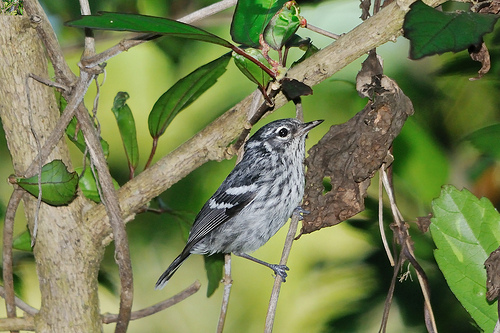
Elfin-woods Warbler. Photo by Mike Morel/USFWS under a Creative Commons license.

Elfin-woods Warbler. Photos by Mike Morel/USFWS under a Creative Commons license.

It has been awhile since I have posted an entry in the Know Your Coffee Bird series, which profiles birds that utilize shade coffee farms. This post is about a species that was not on my short list for an upcoming account, but has a very special, recently defined connection to coffee.

The Elfin-woods Warbler (Setophaga angelae) is one of over 100 species of warblers found in the New World, and is only found in Puerto Rico. Discovered and described less than 50 years ago, it is named for a unique habitat it favors — elfin woods. High humidity and rainfall, strong winds, and nutrient-poor soils result in the short, often twisted trees (dominated by only a few species) that are characteristic of these forests, found between 750-850 meters. More recently, the warbler has also adapted to lower wet forests at 600-900 meters. This bird may have eluded discovery for so long due to being very similar in appearance to another species I have profiled as a coffee bird, the Black-and-white Warbler, which nests in North America but winters in Puerto Rico.

The Elfin-woods Warbler was likely always rare, and it was proposed for listing under the Endangered Species Act in 1982. Habitat loss and degradation due to development, agriculture, and hurricanes are among the factors that drove population declines in the following decades. The current estimate is fewer than 2000 individuals in two populations: in the El Yunque National Forest in the eastern part of the island, and in Maricao Commonwealth Forest and adjacent private lands in the west. Part of the latter is an Important Bird Area designated by BirdLife International.

Earlier this month, after years of languishing as a candidate, the warbler was finally designated as Threatened under the Endangered Species Act.

Elfin-woods Warbler. Photos by Mike Morel/USFWS under a Creative Commons license.

Elfin-woods Warbler. Photos by Mike Morel/USFWS under a Creative Commons license.

When a species is afforded protected status under the Act, “critical habitat” is designated. These are areas that are essential to conservation and which may require special management efforts. Critical habitat for the Elfin-woods Warbler is largely public land, but does contain private holdings including coffee farms and potential coffee-growing land adjacent to the Maricao Commonwealth Forest. The warblers have been detected in shade coffee plantations, but not in sun coffee farms. Thus, in the critical habitat areas, conversion of shade coffee to sun coffee will be prohibited. Conversely, the planting of shade trees on sun coffee farms is encouraged. Provisions for coffee growers in this area also allow for pruning of shade and coffee trees, but only outside of the nesting season. Herbicides and pesticides may be used, but only during the first two years or so while the coffee and shade trees are becoming established (a time in which the warblers are not likely to use the farm).

Previous research has indicated that much of Puerto Rico’s coffee is not grown under shade, but that farmers are willing to convert to shade if they were encouraged to do so by incentives such as being supplied with shade trees to plant.  Since 2010, the US Fish and Wildlife Service has been working on habitat restoration initiatives in the Maricao coffee growing area through the Partners for Fish and Wildlife program. This has included technical and financial assistance to landowners to establish and restore shade coffee.  The listing of the Elfin-woods Warbler will likely provide more incentive and opportunity for farmers to create and enhance shade coffee, to the benefit of this interesting bird and other biodiversity associated with its habitats.

Read more:


Support shade coffee for Golden-winged Warblers

The American Bird Conservancy is an excellent international bird conservation organization. One of their projects involves a multi-pronged approach to protecting the Golden-winged Warbler (Vermivora chrysoptera). This species breeds in North America and winters in Latin America, and is experiencing rapid population declines. However,  it presently has no endangered or threatened listing status, so organizations have formed a working group to work on conservation measures.

One of the main components of ABC’s project is a tree-planting and distribution initiative in Nicaragua, spearheaded by my dear friends Georges Duriaux and Liliana ChavarrÁ­a at Finca El Jaguar. I have written many times about this great coffee farm and the heroic bird conservation efforts of Georges and Lili (some links below).  This year, ABC is partnering with the Biggest Week in American Birding to raise funds for this project.  The Biggest Week takes place this year on May 6-15 in northwest Ohio; it’s a huge birding event that coincides with the arrival of dozens of species of migratory songbirds through the region on their way to nesting areas.

I encourage you to donate directly to this conservation initiative.

Proceeds go directly to the reforestation program in Nicaragua — supplying native tree saplings to coffee farmers to build a conservation corridor that will benefit not just Golden-winged Warblers, but also Wood Thrushes and many other migratory and resident species as well as other flora and fauna. Over the last several years, this program has already planted over 8000 trees on over a dozen farms, conducted six reforestation workshops and numerous educational programs, and supported the bird monitoring programs established at El Jaguar.

Buying a pound of shade-grown coffee returns a small percentage of the retail price to the producer, increases demand and lets farmers know you value sustainable coffee growing. This is invaluable to moving sustainable coffee production forward. But your donation of even $20 to this program packs a big wallop and goes straight to a targeted project.

A young Golden-winged Warbler banded at the Rouge River Bird Observatory.

A young Golden-winged Warbler banded at the Rouge River Bird Observatory.

Golden-winged Warblers are special to me; they were the subject of my first major bird research presentation as an undergraduate. I can also vouch for the work of Georges and Lili, as well as the American Bird Conservancy — I’ve been talking with them about their plans to increase their efforts to support shade coffee farming near a number of their Latin American reserves. I can’t think of a better way to make a difference right now for the coffee and birds connection than a donation to this program.  Wondering what to get your mother for Mother’s Day? How about a donation in her name? Donate online here.

More posts on El Jaguar:

Research: More birds eating coffee berry borers

Forest bolsters bird abundance, pest control, and coffee yield. Karp, et. al., 2013. Ecology Letters.

I’ve summarized several papers from Matt Johnson and his students at Humboldt State University (CA) who study how birds provide pest control on coffee farms in Jamaica by preying on coffee berry borers. Here’s a new paper on the same theme, with the research being done in Costa Rica.

cr-cbb-birds2

From top: Buff-throated Foliage-Gleaner, Rufous-breasted Wren, White-tailed Emerald, Rufous-capped Warbler, Yellow Warbler. Credits below.

These researchers looked at coffee berry borer (Hypothenemus hampei, CBB) predation by both bats and birds; since bats were not found to be significant predators on CBB in this study I won’t go into those findings. The farms examined were “sun coffee” with less than 25% canopy cover, as shade coffee is not common in Costa Rica. To determine what birds were eating CBBs, the authors used DNA analysis of bird droppings.  This is a great way to determine if birds are feeding on the CBB, since the insects are extremely tiny they would be difficult to detect in droppings visually. Still, the bird would have had to have recently fed on CBBs, and the DNA would need to have passed through the digestive system without too much degradation to be detected by this method.

When birds were excluded from the coffee shrubs, the number of shrubs infested with CBB almost doubled, and the CBB drilled deeper into the coffee cherries. Birds were more common in farms that had some embedded or nearby forest cover…and the more forest cover the less severe the borer infestations on control plots. Perhaps surprisingly, very small (less than a hectare) forest patches weaving through the farms provided more of this pest-control benefit than having a large forest reserve nearby.

The authors also calculated the economic benefits the birds provided to farmers. For two farms that formed the core of their study, birds saved between 25 and 70 kg of coffee per hectare annually, for a cost savings of US$75-310 per hectare based on the prices being received. For the smaller farm the total economic benefit of birds preying on CBBs was between US$3500-$9400, and for the larger farm US$17,000-55,100. Since the CBB has only been present in Costa Rica since 2000 and in the vicinity of the study sites since 2005, cost savings provided by the birds may be even higher when CBBs are more-well established.

Bird species that were found to have preyed upon CBBs were:

  • Buff-throated Foliage-Gleaner (Automolus ochrolaemus). A common and widespread resident bird in the tropics which feeds on insects in shady forest situations.
  • Rufous-breasted Wren (Pheugopedius rutilus). A common wren resident wren in parts of Central America that feeds on insects in thickets and forest edges.
  • Rufous-capped Warbler (Basileuterus rufifrons). A resident tropical warbler profiled here in our Know Your Coffee Birds series.
  • White-tailed Emerald (Elvira chionura). A resident tropical hummingbird known for inhabiting shaded coffee farms.
  • Yellow Warbler (Setophaga petechia). While there is a resident form of Yellow Warbler in Costa Rica, it inhabits coastal areas. The Yellow Warblers in this study were migrants that breed in North America.

It’s interesting to note that although CBB have not been in the area for very long, native and migratory birds are already using them as a food source.

These studies on the identification, ecology, and effectiveness of natural predators of CBB are critical, given the expected spread of this pest due to climate change and the fact that they are evolving resistance to the potent insecticides used to combat them.

See also:

 Photo of Buff-throated Foliage-Gleaner by Jerry Oldenettel; Rufous-breasted Wren by Francesco Veronesi; White-tailed Emerald by Michael and Ellen Cox; all under a Creative Commons license. Rufous-capped Warbler and Yellow Warbler by Julie Craves, all rights reserved.

D.S. Karp, C.D. Mendenhall, R. Figueroa Sandi, N. Chaumont, P.R. Ehrlich, E.A. Hadly, & G.C. Daily (2013). Forest bolsters bird abundance, pest control and coffee yield Ecology Letters DOI: 10.1111/ele.12173

New orchid species named for coffee company

puro-orchid-1A new species of orchid, Teagueia puroana, was discovered in central Ecuador in the eastern Andes, and named for the Puro Coffee company.

I was once active in orchid growing and writing for the American Orchid Society, so when I read about an orchid discovered with a coffee connection, I was naturally interested. This orchid was discovered in 2002 in the Cerro Candelaria Reserve, a nearly 3000-ha area protected through a partnership between FundaciÁ³n EcoMinga and the World Land Trust.  Since 2005 when the brand was launched, Puro Coffee, the Fairtrade coffee brand of Belgium-based Miko Coffee, has contributed 2% of the retail price from each bag of coffee sold to the World Land Trust for the protection of rainforest. To date, this funding has helped purchase over 3200 ha in Ecuador, Brazil, Colombia, Borneo, and Guatemala. In honor of this support, the new orchid species was named Teagueia puroana. The official description of this new species was published in 2011 along with another new Teagueia species in the journal Lankesteriana.

Teagueia is a genus in the orchid subtribe Pleurothallidinae, a group of mostly miniature New World orchids usually found at high elevations. Despite their small size and specific, fussy cultural demands, Pleurothallids are popular with orchid aficionados for their fragile and delicate beauty. Until recently, only six species of Teagueia were known. Now over two dozen species have been discovered (along with new representatives of other orchid genera) all in the same Rio Pastaza watershed, many on Cerro Candelaria. The effort to map the distribution of orchids in this region was spearheaded by botanist Lou Jost.

After the discovery of the Teagueia on Cerro Candelaria, Jost and some of his colleagues founded FundaciÁ³n EcoMinga, and obtained funding through the World Land Trust to establish the preserve. So far, Cerro Candelaria is the only place T. puroana has been found. It lives on the stunted trees in the alpine grasslands known as pÁ¡ramo at 3700 meters. While some of the new Teagueia are abundant as creeping ephiphytes on low vegetation and mosses on different nearby mountains, T. puroana is very rare, with only a few plants located despite much searching.

While this is the first orchid I have heard of named for a coffee brand, orchids are often important components of shade coffee farms, and shade coffee farms can be important refugia for orchids.

puro-miko-logosMore on the coffee

Miko Coffee, part of the Miko Group, was founded as a grocery business in 1801, with coffee roasting becoming its main business around 1900 (plastic food packaging is the other main activity of the Miko Group). Miko coffee primarily focuses on the  “out of the house” market, providing beans, equipment, and related products for food service, restaurant, and office coffee in over 20 countries, mostly in Europe and Asia. Retail coffee is a relatively small portion of their business, and Puro Coffee is their Fairtrade and FT/organic/ethically-sourced brand.

Puro offers three different blends. The current compositions are given below, but they sometimes change. Puro provides updates on their web site, so you know what you are getting.

  • Puro Organic, certified organic and Fairtrade. Currently sourced from Peru (CEPICAFE) and Honduras (COSAGUAL and COCAFCAL).
  • Puro Noble, certified organic and Fairtrade; 80% arabica, 20% robusta. Currently sourced from Peru (CEPROAP), Honduras (COAGRICSAL and COPROCAEL), Guatemala (FEDECOCAQUA), and Congo (CDI Bwamanda). Also available in decaf.
  • Puro Fuerte, certified Fairtrade; 50% arabica, 50% robusta. Same sources as Noble.

We tried all three coffees, provided to us by Puro. Our expectations were not sky-high, as we most often drink single origins and find the more generic blends nice but not as interesting (especially to the more jaded panel members).  We were pleasantly surprised.

3.5motmotThe Organic blend was everybody’s favorite. Two adjectives were mentioned by nearly all reviewers: “smooth” and “milk chocolate.” Soft and creamy also came up. Personally, I usually don’t like Peruvian coffees too much, because the catimor variety is commonly grown there and I find I seem to be able to taste the chemical flavor of the robusta heritage. CEPICAFE, however, grows 95% typica, and the sweetness came through. When prepared in a Clever Coffee Dripper, we additionally found an initial hit of cinnamon and spice which we also enjoyed. Overall, this coffee earned 3.5 motmots.

3newmotWe approached the Noble with some trepidation due to its robusta content. We were all surprised we could not detect any hint of rubbery, chemical flavor familiar to us from other robusta offerings we’ve tried, and least when the coffee was fresh and hot. The flavor deteriorated a little bit as it cooled. Overall, we found it very similar to the Organic blend, just not as bright. This lack of some liveliness and the flavor change when cool dipped the score to 3 motmots.

2newmot75Upping the robusta content to 50% was clearly the tipping point for us, as nobody was really enthusiastic about the Fuerte blend. I’m really not sure exactly what was going on here, as some of the flavors our more experienced tasters were finding seemed beyond the usual bold, rubbery type of flavor that is a more normal characteristic of robustas. In a French press in particular, it seemed dirty and oddly astringent, with a most peculiar flavor/aroma that reminded me of rubbing alcohol. Not sure what might have caused this. Medicinal flavors can come from over-fermented beans; perhaps this batch may have had some bad beans in it, as it seemed at odds with what must be a really well-processed robusta from the CDI Bwanmanda group in Congo. Some grocery-store-coffee drinkers we dragged into this panel didn’t really detect these flavors; perhaps it might also be more suitable for an espresso prep than a drip. This blend ended up with 2 motmots.

Right now, Puro Coffee does not have a U.S. distributor, but a new web site for online purchases is being rolled out in multiple languages: Puro at Home. Their U.S. brand home page has an almost overwhelming amount of information. The Puro blog is an especially good source of information on their rainforest and habitat projects (e.g., cool moths and beetles in Brazil, giant monkey-eating eagles in Ecuador). There is also an entire page with links to the many short videos they’ve created on their coffee, rainforest projects, social initiatives, partnerships, and worldwide clients.

I have found that some coffee companies that support a cause as strongly as Puro Coffee does the World Land Trust tend to focus more on the cause than the coffee. Puro is certainly an exception to this: very committed to the cause of conserving rainforest and sustainably-grown coffee, and very satisfying coffee as well.

Jost, L., and Shepard, A. 2011. Two new species of Teagueia (Orchidaceae: Pleurothallidinae) from east-central Ecuador. Lankesteriana 11(1): 9-14.
Photo courtesy of Puro Coffee. All rights reserved.

Know your coffee birds: American Redstart

I have yet to meet someone who has seen an American Redstart (Setophaga ruticilla) who was not charmed by this bright, energetic little bird. Redstarts are warblers, but like many New World birds bear the name of similar-appearing (though unrelated) Old World birds. In this case, the original redstarts are flycatchers that often have patterns in black and red. Likewise, male American Redstarts that are at least two years old are jet black and vivid orange. Younger males and female American Redstarts are gray and salmon or yellow, but no less beautiful.

American Redstarts breed across much of eastern North America and western Canada, and winter in the West Indies, southern Mexico, Central America, and northern South America. Like other warblers, they feed primarily on insects, and may flush them from foliage by spreading and flashing their tails. This has earned them several other names, particularly in the tropics, including candelita (“little candle” or “little flame”) or mariposas (the same word used for butterflies).

In winter, redstarts can be found in a variety of forested habitats. They are particularly well-studied in the West Indies, where they are most often found in mangroves, coastal scrub, and shade coffee. In Jamaica, redstarts have been found to greatly benefit coffee farmers by providing pest control, especially against the hard-to-control coffee berry borer, one of coffee’s most dreaded pests. To reap these benefits, however, farmers needed to provide habitat for the birds, either via shade trees or adjacent forest patches. Another vote for shade-grown coffee!

In the Dominican Republic, redstarts returned annually and stayed put overwinter on shade coffee farms at rates similar to natural forest [1]. Other studies have specifically documented shade coffee use by redstarts in Mexico, Venezuela, and Guatemala; and I have recorded them myself in coffeelands in Panama and Honduras.

A recently published paper [2] presented data on a very rigorous study of wintering migrant birds in Puerto Rico that began in 1973, in which American Redstarts are among the three most common species (the other two are also “coffee birds”: Ovenbird and Black-and-white Warbler). All three species have shown population declines, even though overwinter survivorship has remained the same for the birds that do winter there. The most dramatic declines have occurred over the last decade, but the authors cannot pinpoint an explanation. They concluded with words seldom found in academic publications:

“Given the patterns shown by our data, we now join with those who earlier proclaimed that ‘the sky is falling’ for Neotropical migratory birds, even though we lack a ready explanation for these declines.”

Please see this as a call to action. This is one of many studies that have documented the loss of migratory bird species. These “birds of two worlds” have very complex life cycles, and many things impact their survival. Some of these factors are within our control, and they include habitat loss due to agriculture — such as coffee.  You can help by choosing your coffee carefully and being willing to pay more for organic and eco-certified coffee that encourages the preservation of habitat and enhancement of coffee farms with shade trees. Seldom is so simple an individual action apt to lead to such positive results for redstarts, other warblers, and the biodiversity and health of our planet.

See more in the ”Know your coffee birds” series.

Photo of male redstart by Laura Gooch under a Creative Commons license; female redstart banded at the Rouge River Bird Observatory by Julie Craves, all rights reserved.

[1] Wunderle, J and SC Latta. 2000. Winter site fidelity of Nearctic migrants in shade coffee plantations of different sizes in the Dominican Republic. Auk 117:596-614.

[2] Faaborg J, WJ Arendt, J D Toms, KM Dugger, WA Cox and MC Mora. 2013. Long-term decline of a winter-resident bird community in Puerto Rico. Biodiversity and Conservation 22:63-75.

Know your coffee birds: Ovenbird

The Ovenbird (Seiurus aurocapillus) is often heard before it is seen, a loud ringing “tea-cher, TEA-cher, TEA-CHER!” broadcast from close to the forest floor through much of the eastern U.S. and Canada during the nesting season. Ovenbirds are large warblers, no relation to the Ovenbird family Furnariidae found in the tropics. However, both the warbler and the family share a basic brown color palette, and are named for their curious domed, Dutch oven-like nests which, in the case of the warbler, are build on the ground.

Ovenbirds winter primarily in the Caribbean and Central America. There, they forage on or close to the ground, where much of their diet is comprised of ants. This habit of scratching and leaf-flicking on the forest floor has earned them the name “Betsy Kick-up” in Jamaica! Ovenbirds are frequently found in shade coffee plantations, where they may also feed on female coffee berry borers that are laying eggs in fallen coffee cherries, thus performing a great service to coffee farmers.

Migrant (and resident) bird species have been monitored in Puerto Rico since 1973 in a study where Ovenbirds have been one of the most common species. Their numbers have declined to less than 20% of their original abundance. Some of the declines are related to variable rainfall patterns (which will be exacerbated by climate change), and some to conditions on their breeding grounds (see below). But similar declines in resident Puerto Rican birds in the same study indicate there are undiscovered factors occurring on the wintering grounds as well.

On their North American breeding grounds, Ovenbirds need large forests to breed in, and habitat loss and fragmentation has taken its toll. Even in large forests in northern regions, declines in reproductive success are tied to, believe it or not, earthworms.

Due to the last glaciation, Canada, the upper Midwest, and New England have no native earthworms — all of the worms are introduced. Their efficient consumption of leaf litter on the forest floor has greatly altered many forests. Plants that require a thick organic layer in some forests have declined, leaving less cover for Ovenbird nests, which then fall to predators. Ovenbirds also rely on the insects and invertebrates that live in leaf litter, which are also far less abundant in habitats invaded by non-native worms. These factors are thought to be driving declines in some breeding populations of Ovenbirds.

Ovenbirds found on shade coffee farms help farmers by eating pests, and have found safe haven in winter. Choosing shade-grown coffee can help support populations of this charismatic songbird so that future generations can enjoy its distinctive summer song.

More coffee birds here.

Ovenbird photo by Julie Craves, all rights reserved. Banded by the Rouge River Bird Observatory, Dearborn, MI.

Know your coffee birds: Malabar Barbet

Western Ghats in pink and purple; purple portion is approximate range of Malabar Barbet.

The Malabar Barbet (Megalaima malabarica) is a bird that is endemic to India. Once considered a subspecies of Crimson-fronted Barbet, Megalaima rubricapillus, which has a broader range, the Malabar Barbet is found in only the Western Ghats from Goa south to Kerala and western Tamil Nadu. There, it inhabits evergreen and moist deciduous forests, generally below 1200 m, and is often found in high quality shade coffee plantations.

Coffee plantations cover about 6% (around 830,000 ha) in the Western Ghats, and while all the coffee is grown under shade, the quality of the shade varies. A diverse mix of native shade trees is the highest quality, and it has been found that these types of farms have similar diversity of birds and other wildlife as is found in nearby forests — the same situation is true in Latin America. However, various laws and restrictions on cutting native trees (which could provide value to wildlife and as harvestable timber, for example) are much more strict in India. This, in part, has led to the widespread planting of silver or silky oak (Grevillea robusta), a fast-growing tree native to Australia.

Although Grevillea has flowers that can be attractive to nectar-feeding birds, it does not have fleshy fruit, important to many birds. Because it is harvested for timber, the areas where it is planted are subject to periodic disturbance and alteration. One study* found that in shade coffee farms in the Ghats, an increase in the proportion of silver oak from 33% to 55% was associated with 91% reduction in the abundance of the Malabar Barbet. This is more evidence that certifications that merely require shade as a percent of canopy cover will not help enhance or preserve biodiversity — “shade” certification should also include a mix of shade tree species and a requirement that a percentage of them be native species.

Barbets in general are small-to-medium, stout birds with short tails, big heads, and strong, thick bills. They are found all over the world in tropical regions. Barbets eat primarily fruit, and Malabar Barbets, like many other species, forage in the forest canopy (perhaps one reason there are few good photos of this species!). Ficus trees and their fruits are especially important. While many small fruit-eating birds swallow fruits whole, Malabar Barbets will also sit and pick on fruits too large to swallow. Ficus are often used as shade trees in shade coffee farms in India.

Barbets are related to woodpeckers, and like them nest in tree holes. Malabar Barbets typically use holes that they excavate themselves which are located on the underside of small branches, where they raise one or two young per nest. Thus, it is important for them to have trees with dead branches in their territories for nesting — something that isn’t too typical on a shade coffee farm where Grevillea is harvested.

There are nearly many species of birds found only in the Western Ghats. A number of them use shade coffee farms either directly, or as corridors that connect more suitable forest habitat.


Photo of the Malabar Barbet taken in the Wayanad Wildlife Sanctuary, Kerala, by Sandeep Gangadharan under a Creative Commons license.

*Anand, O. M., J. Krishnaswamy, and A. Das. 2008. Proximity to forests drives bird conservation value of coffee plantations: implications for certification. Ecological Applications 18:1754-1763.

Know your coffee birds: Scarlet Tanager

Many birders have a “spark bird,” a species that captured their attention and inspired lifelong interest in birds. For me, it was the Scarlet Tanager (Piranga olivacea). As a young girl I was given a copy of The Bird Guide: Land Birds East of the Rockies by an elderly neighbor, a vintage book even back then. In studying the illustrations, I could not believe that a bird as bright and stunning as the Scarlet Tanager could be found in Michigan; if so, it surely could not be as brilliant as the book portrayed. It was some years before I finally saw a male Scarlet Tanager, as they tend to be canopy dwellers. I have handled and seen countless others since then. Each time, like the first, I still marvel at their brilliance.

I banded this male Scarlet Tanager at the Rouge River Bird Observatory in Dearborn, Michigan.

There are over 240 species of tanagers in the New World, and frankly they include some of the world’s most beautiful birds. They are really a tropical family, with only four species having evolved to migrate to North America to breed (a fifth is a rare breeder in the deep southwest). All of them retreat to the tropics to spend the winter.

The Scarlet Tanager breeds in large, mature, deciduous forest tracts over much of the eastern U.S. and southern Canada, save for the deep south, and spends the winter in northwestern South America, where they are most common in Ecuador, Bolivia, and the Peruvian Andes. During the nesting season, Scarlet Tanagers prefer to utilize the interior of large tracts of forest. Their sensitivity to fragmented habitats categorizes them as an “area sensitive” species. In small or fragmented woodlots, they suffer from predators and parasitism by cowbirds (which lay their eggs in the nests of other bird species, usually at the expense of their hosts). If a forest is too small (<10 ha), the tanagers will not attempt to nest at all.

Female and young Scarlet Tanagers are much more modestly colored than breeding males. In winter, males look similar to females, but with darker wings.

After their breeding season, the tanagers molt into their more somber winter plumage. The males go from scarlet to  bright olive with black wings. Females are a duller olive with dusky wings — the same color they are year round. This change from eye-catching to cryptic coloration is not unusual. Flashy colors are good ways to advertise for mates and let other birds know a territory is occupied, but are a little too conspicuous to predators the rest of the year. For North American migrant birds that share their wintering areas with many year-round resident birds in the tropics, it’s probably also a good strategy to be a little more modest.

Few species of North American migrant birds make it as far south in winter as the Scarlet Tanager. Their habits during winter are not well known, as they tend to be inconspicuous and spend most of their time in the canopy. While in the breeding season, Scarlet Tanagers eat insects almost exclusively, they also eat fruit in the winter.  They have been recorded on shade coffee farms in Central America (Panama and Nicaragua) during migration, as well as in winter. As canopy dwellers, they utilize the shade trees and do not find sun coffee appropriate habitat.

Two of the other North American breeding tanagers, Western Tanager (P. ludoviciana) and Summer Tanager (P. rubra) are also found on shade coffee farms.

Perhaps few North American breeding birds remind us so strongly that they are not really “our” birds, but tropical species on loan for a few short months in the summer. When we contemplate that fact, it reminds us that habitat on the wintering grounds — such as shade coffee farms — are truly critical for their survival. Support shade-grown coffee, so that future generations can open a field guide, become inspired by a vivid tanager, and discover that they really do exist.

Female-plumaged tanager photo by Jamie Chavez under a Creative Commons license.


Research: Borer-eating warblers may need nearby forests

Roosting behaviour of a migratory songbird on Jamaican coffee farms: landscape composition may affect delivery of an ecosystem service. Jirinec, Campos, and Johnson 2011. Bird Conservation International.

This is another paper from Matt Johnson and his students from Humboldt State University (CA) who study how birds provide pest control on coffee farms in Jamaica.  Previous papers summarized here include the primary research on which species of North American-breeding birds prey on coffee berry borers on Jamaican farms, and an analysis of how birds controlled the borers on shade and sun farms, and the economic value of the pest reduction.

This study looked at the most important bird species preying on the borers, the Black-throated Blue Warbler. This species was profiled here as part of our Know Your Coffee Birds series.

Researchers captured warblers on two farms in cultivated coffee patches. The birds were fitted with tiny radio transmitters, and the movements of 21 warblers were followed for 7 to 10 days with radio telemetry.

While the birds spend most of their days in the coffee cultivation areas, most (81%) birds roosted (spent the night) in nearby forested habitat patches, not on the coffee farms. Even if a bird roosted within the boundaries of the farm, it was usually in large shade trees or vegetated non-cultivated areas. The average distance between the daytime range and the roost sites was 119 m.

The structure of the vegetation on the farms where the birds foraged was quite different from where the warblers spent the night. Roosting sites had more canopy cover (averaging 94% closed) than the shaded coffee (36% closed). Roosting areas were also very dense. Thus, the Black-throated Blue Warblers in this study appear to choose coffee farms for their good food supply — which includes the coffee berry borer — and forests with dense protective cover to safely spend the night.

This implies that preserving forests, which provide safe haven for roosting birds, in or near coffee farms may encourage them to remain in an area. For farmers to benefit from the pest control services of migratory and resident birds, as well as other ecological services such as pollination provided by other fauna, local land use must be taken into account.

Male Black-throated Blue Warbler banded at the Rouge River Bird Observatory, photo by Julie Craves. All rights reserved.

JIRINEC, V., CAMPOS, B., & JOHNSON, M. (2011). Roosting behaviour of a migratory songbird on Jamaican coffee farms: landscape composition may affect delivery of an ecosystem service Bird Conservation International, 1-9 DOI: 10.1017/S0959270910000614

Research: Types of fruit trees on shade coffee farms important

The value of fruit security for the conservation of a neotropical frugivore in human-dominated landscapes. Peters and Nibbelink. 2011. Biodiversity Conservation.

This study looked at the feeding patterns of a fruit-eating tropical bird, Blue-throated Toucanet (Aulacorhynchus caeruleogularis) in shade coffee farms in the Monteverde region of Costa Rica.

Blue-throated Toucanets were once considered a subspecies of Emerald Toucanet, which was featured in the Know Your Coffee Birds series here on C&C. The goal was to determine how fruit resources — in particular the reliability of fruit energy throughout the year — influenced the persistence of fruit-eating birds in agroforestry systems like shade coffee.

Finca La Bella is a group of 24 independently owned small farms that grow coffee under a high diversity of shade (unlike much of Costa Rican coffee). Around 20 different tree species per ha are used for shade here, but different farms may have different types of shade trees. The authors looked at the types of fruit growing on six of the organic farms, and measured the fruit calories available to birds over most of the year.

Researchers found that the toucanets were located 20-30% more often on farms that were considered to have ”high fruit security.”  These were farms on which the fruit energy available was greater than 1000 calories for four months or more. This calorie threshold has been found in other studies to be the point at which more birds immigrate into a farm rather than leave to find food resources elsewhere. The home range of toucanets was also found to be smaller on farms with high fruit security, indicating the birds did not have to roam as far to find the fruit they needed.

Although Blue-throated Toucanets have been observed eating many dozens of types of fruits, some are preferred over others. The fig Ficus pertusa accounted for 69% of all observations in this study. The fruits of the familiar Cecropia (Cecropia obtusifolia) and of Firebush (Hamelia patens) were also important.

The authors concluded that to improve the quality of the agroforestry systems for fruit-eating birds, the type of trees used for shade or preserved on the property should be taken into account, including the year-round availability of fruit resources. Ficus were especially important in this study.

Aside from the preservation of biodiversity, fruit-eating birds perform the critical service of seed dispersal in tropical forests. Therefore, managing shade coffee farms to benefit these birds is of high conservation value.

Peters, V., & Nibbelink, N. 2011. The value of fruit security for the conservation of a neotropical frugivore in human-dominated landscapes Biodiversity and Conservation, 20 (9), 2041-2055 DOI: 10.1007/s10531-011-0073-5

Blue-throated Toucanet photo by Scott Ableman under a Creative Commons license.

Research: Shade coffee important to amphibians

The role of the matrix-edge dynamics of amphibian conservation in tropical montane fragmented landscapes. 2011. Santos-Barrera and Urbina-Cardona. Revista Mexicana de Biodiversidad.

Birds, insects, and occasionally bats are the most frequently studied taxa in shade coffee agrosystems. This paper looked at the diversity and abundance of frogs and salamanders in an area of tropical montane cloud forest, shade coffee farms, and corn plantations in southern Mexico.

The Pygmy Free-fingered Frog (Craugastor pygmaeus) was one of the most common species found in this study, and one which dominated in shade coffee. © 2010 Division of Herpetology, University of Kansas

The study took place near the community of El Molote in the state of Guerrero, part of the Sierra Madre de Sur de Guerrero. Montane forest remnants are embedded in a matrix of other land uses, primarily shade coffee, corn plantations, and areas of cultivated ornamental plants.

Researchers found that the diversity and abundance of amphibians in the forest was highly dependent on what type of land was adjacent to it — coffee or corn. Where shaded coffee plantations bordered forest patches, they helped to buffer the effects of the forest edge, improving the overall quality of the forest interior habitat. Amphibians prefer higher humidity and leaf litter cover which the shade coffee helped preserve, both in the forest and on the farms.

In contrast, where corn bordered the forest, high disturbance and the abrupt change in vegetation had a negative impact on habitat quality. None of the seven amphibian species were found in the corn plantations, and some species, including an endangered endemic frog, the Mourning Treefrog (Plectrohyla pentheter), were never found in the corn/forest ecotone.

The authors recommend that shade coffee farms should be managed to improve habitat and ecological connectivity.

Santos-Barrera, G., & Urbina-Cardona, J. N. (2011). The role of the matrix-edge dynamics of amphibian conservation in tropical montane fragmented landscapes. Revista Mexicana de Biodiversidad, 82, 679-687

Know your coffee birds: Hispaniola’s Palm-Tanagers

Black-crowned Palm-Tanager. Photo by Pat Johnson, taken during field work he performed with the Vermont Center for Ecostudies. VCE has done incredible work in Hispaniola.

There are two species of palm-tanagers (Phaenicophilus) found on Hispaniola, the island comprised of the Dominican Republic (DR) and Haiti.  One is the widespread Black-crowned Palm-Tanager (P. palmarum). The other is the only species of bird unique to Haiti: the Gray-crowned Palm-Tanager (P. poliocephalus). The latter is restricted primarily to the Tiburon Peninsula, the long arm of land in that forms the southeast coastline of the island, where it replaces the Black-crowned. At one time, the peninsula was separated from the rest of the island by the sea, allowing many endemic species to evolve. It is believed this is when the Black-crowned and Gray-crowned Palm-Tanagers diverged into two species. The two species are similar, with the Gray-crowned having (as you may have guessed) a gray rather than black crown, less white on the throat, and some smaller physical features.

Both of these resident species will use many kinds of forest habitats, from humid deciduous to pine, from sea level to upper montane elevations over 2000 meters. They will also use well-vegetated gardens and farms. In many regions, this adaptability would provide the birds with some habitat security. However, deforestation has been so severe on Hispaniola that in many places wooded areas, including agroforests, are so fragmented, degraded, or just plain uncommon that many forest bird species are struggling. The situation is particularly precarious in Haiti, where it is estimated that only 1.5% of the original forested areas survive.

The palm-tanagers forage on insects, often found in dead leaves or under bark, and some fruit. During the non-breeding season, Black-crowned Palm-Tanagers are typically found alone or in pairs, while Gray-crowned Palm-Tanagers are often found in groups of four to six birds.

Portrait of a Gray-crowned Palm-Tanager on a Haitian postage stamp.

Gray-crowned Palm-Tanagers (known locally as “Kat Je Sid” or “Cuatro Ojos”) really deserve special mention. They are locally common on the Tiburon Peninsula, especially in Pic Macaya National Park — little is known about their current status outside this tenuously-protected area. In fact, recent research has not revealed conclusive evidence that they occur east of a line extending south from Port-a-Prince, but historical reports indicate that their range may extend closer to the DR border.

A combination of reforestation and agroforestry crops such as shade coffee would certainly facilitate the conservation of this species. Coffee is produced in the Pic Macaya region. At one point it was roasted and sold by Barrington Coffee Roasting (see our review), Irving Farm Coffee, and Wicked Joe, but I could not find it available at the time of this writing.

However, shade coffee is currently being produced and exported by the Cooparative des Planteurs de Café de l’Arrondissement de Belle-Anse (COOPCAB) based in Thiotte, close to the DR border. This is a group of seven cooperatives representing 5000+ members. It is typica coffee grown at 1300-1350 m in mixed pine forest near Gras Cheval, north of Thiotte, and is usually branded as Blue Forest coffee. It is being most widely promoted and distributed by La Colombe Torrefaction. La Colombe is assisting COOPCAB in getting Rainforest Alliance certification.

The pine forests are critical for endangered Hispaniolan Crossbill, Loxia megaplaga, an island endemic. This bird, once considered a subspecies of the White-winged Crossbill of northern coniferous forests, feeds exclusively on the seeds of Hispaniolan pine (Pinus occidentalis). Forested areas in Haiti and the DR are also essential to North American migrant birds, especially the rare Bicknell’s Thrush. Birds do not represent the only important or unique species that rely on Haiti’s dwindling habitats. The country is host to many other endemic species, including one of the smallest frogs in the world.

The importance of income-producing, habitat-restoring agriculture to Hispaniola’s people, flora, and fauna cannot be underestimated. Given its history and potential, shade coffee is an excellent candidate.

Learn more:

Literature:

McDonald, M. A., and M. H. Smith. 1994.  Behavioral and morphological correlates of heterochrony in Hipaniolan Palm-Tanagers.  Condor 96: 433-446.

Sly, N. D., Townsend,  A. K., Rimmer, C. C., Townsend, J. M., Latta, S., and I. J. Lovette. 2010. Phylogeography and conservation genetics of the Hispaniolan endemic Palm-tanagers (Aves: Phaenicophilus). Conservation Genetics 11: 2121-2129.

Rimmer, C. C., Townsend, J. M., Townsend, A. K., Fernandez, E. M., and J. Alamonte. 2005. Avian diversity, abundance, and conservation status in the Macaya Biosphere Reserve of Haita. Ornithologia Neotropical 16:219-230.

Townsend, J. M. 2009. Gray-crowned Palm-Tanager (Phaenicophilus poliocephalus), Neotropical Birds Online (T. S. Schulenberg, Ed). Ithaca: Cornell Lab of Ornithology; retrieved from Neotropical Birds Online: http://neotropical.birds.cornell.edu/portal/species/overview?p_p_spp=46132

Share it or spare it?

Intensifying production while conserving biodiversity

Food security and the ability of agricultural lands to feed over 9 billion people by 2050 is an increasingly-discussed topic. Part of this issue is how to conserve biodiversity while boosting agricultural capacity, either by increasing the productivity of land currently in production through some sort of intensification, or expanding the farmed area itself. Two methods of production are frequently mentioned in the overall debate: “land sparing” and “wildlife-friendly farming.” If this sounds familiar, it’s because these concepts have helped frame the sustainable/shade coffee certification movement.

Increasing yield is not the only way for coffee farmers to increase their income, of course. Increasing quality can also lead to handsome profits for farmers. However, most coffee grown around the world — in tropical biodiversity hotspots — is destined for the commodity market. A look at how the agricultural models attempt to balance productivity and biodiversity can reveal some of the complexities of coffee production, and the challenges for coffee certifications.

Land sparing. This approach promotes the intensification of agriculture on existing farmed land in order to increase yield so that more land does not have to be converted. This allows for adjacent land to be permanently preserved. Biodiversity within the crop space itself is limited, but the protected natural habitats are meant to harbor species native to the region.

The catch-all term for this type of coffee agriculture (minus the set-aside component) is “sun coffee,” as coffee is grown in a monoculture under full sun, rather than under a canopy of trees.  Growing coffee in the sun generally requires generous use of pesticides, herbicides, and artificial fertilizers.

Wildlife-friendly farming. As the name implies, this approach seeks to preserve biodiversity within the agricultural landscape via modifications of the production area (addition of different crops, incorporation of natural habitat) and/or more eco-friendly growing practices (reduction in agrochemical use, organic mulching).  A variety of fauna can utilize the farmed land, but this type of production method usually means lower crop yield per unit area.

In the case of coffee, wildlife-friendly farming means the use of a multi-layered canopy of diverse shade tree species, limited pruning of the shade trees and their epiphytes, preservation of leaf litter, and minimal (or no) use of chemicals — all hallmarks of what we call “shade coffee.”

Coffee certifications favor wildlife-friendly farming

When we talk about coffee production, birds, and conserving biodiversity, intensification is the boogeyman — the state to be avoided. Sun coffee has been considered the antithesis of shade coffee and all that is good in sustainable coffee growing. Thus, aspects of wildlife-friendly farming have become the building blocks of many coffee certifications. Some, like Smithsonian Bird-Friendly, deal exclusively with wildlife-friendly farming techniques while others, such as Rainforest Alliance, incorporate wildlife-friendly criteria along with other types of requirements for certification.

Wildlife-friendly coffee farming (from here on out, we’ll just call it shade coffee) is therefore the intuitive choice in the spare-or-share debate. But there are rarely one-size-fits-all solutions in ecology.  While the benefits of shade coffee to birds and other biodiversity are great, even high quality shade coffee does not hold the same levels of biodiversity as intact natural habitat. This is especially true for forest specialists that do not thrive in small forest remnants or agroforestry areas. Many of these important species are unlikely to reproduce and maintain their populations in shade coffee alone if there is not gene flow from nearby natural habitats. Some sort of land sparing (protection of native habitat on the farm) is likely needed to conserve species of high conservation concern in at least some areas, even if shade coffee techniques are used.

There are many variations of “shade.” There is rustic shade similar to forest, all the way to shade limited to a few pruned, non-native tree species. The closer we approach the latter, the less value a shade coffee farm has for biodiversity. Shade coffee may not be suitable if it creates expanses of marginal habitat for species that need high quality land, or if the production areas prevent the movement of some species between patches of prime habitat. Incorporating specific criteria into certification standards provides assurance that the amount and type of shade fosters biodiversity. Unfortunately, becoming certified is beyond the means of many farmers.

Another issue is that in some coffee-growing regions, growing coffee under shade is not practical. At high elevations, for instance, light and humidity levels limit growing coffee under multiple layers of shade because of increased fungal diseases and decreased yield. In these instances, where coffee is grown in sun, biodiversity need not be forsaken if some form of land sparing is utilized.

Should we revisit intensification of coffee production?

There is some evidence that the concept of land sparing can help prevent deforestation, which in turn helps preserve biodiversity. In Latin America during the 1980s, countries with a higher crop yields had lower deforestation rates, and countries that increased the crop yields per unit area had lower rates of cropland increase. Similarly, between 1970 and 1995, a period of intensification of coffee farming in Latin America, there was a 44% increase in production, largely due to intensification, while the area planted with coffee increased 27%. Colombia is a country that embraced intensification as a way to combat the arrival of coffee rust; between 1970-1997, more than 70% of the coffee area in Colombia intensified coffee growing practices. During this period, the area planted in coffee decreased 18.5% and forest and secondary growth increased 12.1%.

This suggests that with very careful planning, intensification of coffee production with planned land sparing could take place without disastrous results for the environment. Among other things, a land sparing scheme won’t work for biodiversity preservation unless the set-aside lands are actively protected and probably managed in some way so that they do not become degraded.

And while the production area itself can be farmed more intensively, it can’t be farmed in an “anything goes” manner. If intensification results in negative impacts beyond the farm (e.g., in the protected area, such as pesticide run-off), then the value of the protected area is likely to be diminished.

Finally, there needs to be some incentive for farmers to protect their spared land. Adjacent forest patches can provide benefits to coffee production even if the farmed area is sun coffee. This includes a source of pollinators as well as birds and insects which prey upon coffee pests. However, further financial benefits will likely need to be built into this scheme. If all economic gain is seen in the  high-yielding production areas of their property, farmers may be inclined to expand those areas at the expense of protecting habitat.

How do we integrate agriculture and biodiversity?

When ethical consumers consider a coffee purchase, they are often presented with a dichotomous view of coffee production. The reality is more nuanced. Full-blown “wildlife-friendly” farming may not be the only or best choice (or even an option for some farmers). And “land sparing” may not be its polar opposite. Coffee can be and is grown in a myriad of blended models. Consider patches of sun coffee, supplemented by some artificial fertilizers, using no pesticides, interplanted with natural habitat and fruit and timber trees, with protected forest nearby. In some instances, this could be preferable to an extensive landscape of shade coffee (especially low quality shade).

Right now, the obstacles to establishing criteria to certify blended models are daunting. For example, how do you set a threshold on how much land must be set aside? Is 60% better than 55%, and how can it be measured?  The amount and quality of land to be set aside would need to be determined on a regional basis, and be dependent on local land use, conservation issues, coffee farming traditions and conditions, and farmer needs.

This post is already long-winded, so it represent a simplification of a very complex issue. It’s not meant to endorse sun coffee or intensifying coffee production, or to disparage coffee certifications. It’s just an exercise to illustration the complexities of sustainable coffee production, and provide some food for thought.


This post drew from the following sources:

  • Fischer, J., Brosi, B., Daily, G., Ehrlich, P., Goldman, R., Goldstein, J., Lindenmayer, D., Manning, A., Mooney, H., Pejchar, L., Ranganathan, J., & Tallis, H. 2008. Should agricultural policies encourage land sparing or wildlife-friendly farming? Frontiers in Ecology and the Environment 6:380-385.

  • Green, R., Cornell, S.J., Schalemann, J.P.W., Balmford, A. 2005. Farming and the Fate of Wild Nature Science 307:550-555.

  • Guhl, A. 2008. Coffee production intensification and landscape change in Colombia, 1970-2002. Pp. 93-115 in Land Change Science in the Tropics: Changing Agricultural Landscapes, A. C. Millington and W. Jepson, eds. Springer: New York.

  • Phalan, B., Balmford, A., Green, R.E., & Scharlemann, J.P.W. 2011. Minimising the harm to biodiversity of producing more food globally. Food Policy, DOI: 10.1016/j.foodpol.2010.11.008

  • Rice, R. 1999. A Place Unbecoming: The Coffee Farm of Northern Latin America Geographical Review, 89 (4) DOI: 10.2307/216102

Page 1 of 5

Powered by WordPress & Theme by Anders Norén