Retail and specialty roasters

Roast Magazine’s 2007 Roasters of the Year

The November/December issue of Roast Magazine includes their picks for roaster of the year. (You can check out my posts on previous winners here and here.)
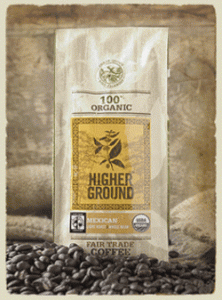
In the micro-roaster category (annual output less than 100,000 pounds) is Higher Ground Roasters.

Last May, C&C reviewed three of their selections and I discussed how impressed I was with their wide-ranging and thoughtful sustainability efforts. Roast was also impressed, especially taking into account the considerable challenges faced by Higher Ground on their home turf in Alabama, where specialty coffee is still a bit of a novelty.

The Roast article notes that because the company doesn’t have a retail location,

“Perhaps the biggest challenge Higher Ground faces is getting the coffee into people’s hands for the first time.”

Let me give them a hand and tell you that this is a great small company that deserves this honor, and you should certainly give them a try.
 

Roast awarded their macro-roaster award to Zoka Coffee Roaster and Tea Co. We have not reviewed any of Zoka’s coffees yet here at C&C, although I have tried a couple of them. Whereas all Higher Ground coffee is certified organic and Fair Trade, and shade-grown, Zoka does not restrict itself to certified coffees. But Zoka does carry a number of certified organic coffees (7 right now), strives for full traceability, and the Roast article goes on to say,

“…the buyers do make a conscious effort to visit farms and verify firsthand that the producers: 1) maintain a diverse and multi-level shade canopy (when appropriate) on their farms; 2) use natural, worm-generated compost made from cherry pulp at a micro-mill; 3) when necessary, use only parabolic dryers fueled by renewable sources rather than timber from surrounding forests; and 4) safely neutralize all the wastewater from wet mills.”

Congratulations to both of these worthy roasters!

Starbucks Black Apron Costa Rica

Plainspoken Coffee. A Coffee Review for Ordinary People by Ordinary People, #29.

Starbucks Black Apron Exclusive: Organic Lomas Al Rio (Costa Rica).

This review is a tad out of the ordinary for two reasons. First, I don’t buy coffee from Costa Rica. For the most part, they have gone in for sun coffee and chemicals and the Costa Rican marketing model makes it very difficult to identify where and how a particular bean was grown. You can read all the details in my post on coffee growing in Costa Rica. Second, I don’t buy coffee from Starbucks. Not because I dislike the company, but I just find most of their coffee overroasted, not very fresh, and in the case of the Black Apron line, outrageously overpriced ($14/half pound). Nonetheless, the back stories of the Black Apron coffees have been so interesting (e.g., Gemadro, Terranova) that I always see what’s new and what I can find out about it.

The latest Black Apron Exclusive is Organic Lomas Al Rio. Lomas Al Rio is not an estate, farm, or co-op, but a coffee mill in the Central Valley. This area is known for its sun coffee. To its credit, Starbucks makes no claim that this is shade coffee, and clearly states Lomas Al Rio is a mill. This source is not new to Starbucks, which has been purchasing Lomas Al Rio coffee since 1998; it is an intregal part of its Cafe Estima blend.

The Lomas Al Rio mill receives coffee from well over a hundred small and medium farms. It doesn’t process exclusively organic coffee, in no small part because so little organic coffee is produced in Costa Rica (less than 1% of the crop). Many farms in Costa Rica that were once organic have given up on it and gone back to using chemicals (non-organic nitrogen fertilizers in particular). The reason often given is that quality can’t be sustained organically. This is inaccurate in general, but in the case of large areas of sun coffee, it may be true. Sun coffee monocultures strip the soil of nutrients, and pests are more prevalent without the predators (birds, lizards, other insects) found in more forested coffee farms. The long route to high quality organic coffee in Costa Rica would probably involve re-planting a lot of native shade trees. Obviously, it’s easier to just start using non-organic means instead.

Around 2002, Lomas Al Rio was Costa Rica’s first Smithsonian Bird-Friendly certified coffee. Alas, it is no more, having let certification lapse.

No doubt this coffee is Catuai and/or Caturra, as these sun-tolerant varieties are very dominant in Costa Rica. If the “use by” date on the packaging is 6 months out from roasting, we sampled this coffee at two months old, rather long in the tooth. It produced a weak bloom, so I’d guess the we’re pretty close on the age. As I mentioned, most Starbucks coffees are roasted too dark for my taste. This wasn’t too bad, a medium-brown with a sheen, but no spots of oil. But I was dismayed at the pieces and shards in the bag, and the tell-tale missing divots on many beans, a sign that the coffee was roasted too fast. This is a sign of carelessness, but may only affect a given batch. At $14 a box, I was not about to buy another to see how common this error might be. So my expectations were not high. I was very happily surprised.

This coffee had great balance, with a medium body, a pleasant, soft mouthfeel, and a nice finish. It was wonderfully sweet when hot, and it had a distinct flavor than none of us (amateurs) could identify. Marzipan popped into my head — some sort of carmelized sugary almond flavor. Another taster also felt strongly about an almond note. This intriguing mystery flavor meant we tried it repeatedly with different people. Just about everybody liked it, and nobody came any closer to really nailing the sweet taste. Once the coffee really got cool, it took on a sort of odd flavor. But, what do you know, it got a solid 3.25 motmots.

Coffee Review tasted Lomas Al Rio from two different roasters in 1998 and 2002.

Starbucks and Ethiopia: investigative report

The Sacramento Bee has published an in-depth report by Pulitzer Prize-winning journalist Tom Knudson exploring Starbucks and its Ethiopian relationships.

Of particular interest to C&C readers will be the information on Ethiopia’s Gemadro Estate, the source of one of their Black Apron exclusive coffees. I reported on the Gemadro Black Apron when it was being offered (Starbucks Ethiopia Gemadro Estate: Corporate greenwashing?). One thing I discussed was the extent of the land clearing on the estate and its implications for the environment.

Knudson goes over this point (and many others) in greater detail. He interviewed Tadesse Gole, an Ethiopian ecologist who did his PhD work on the preservation of wild coffee and the author of a study on the environmental and cultural impacts of coffee and tea plantations in Ethiopia, including Gemadro. He found an annual deforestation rate of 12.2% in the Gemadro area, the highest in the Sheka Zone. A spokesman at Ethio-Agri CEFT, which manages the estate, says that much of the land was cleared before Gemadro obtained it, and that conservation practices include reducing erosion by planting grasses and reeds, establishing shade trees over the coffee, and leaving 3,200 acres untouched for wildlife.

Gole countered this by pointing out that many of the plants and trees are not native to Ethiopia, which changes forest composition. Knudson points out confirmation on Gemadro’s web site (which says crops planted there include some from South America, Mexico and India).

Finally, Knudson uncovered the fact that the estate was certified under Starbucks’ own CAFE Practices but that nobody from Starbucks or their certification auditor (Scientific Certification Systems, SCS) had actually visited the estate. The inspector at another firm employed by SCS was fired for poor performance, and SCS would not release the inspection report to the Sacramento Bee. This demonstrates a weakness in certification schemes in general, which often rely on third parties for inspections.

While the article comes down hard on Starbucks, it does offer some pros along with the cons, and admits,

“No coffee company claims to do more for the environment and Third World farmers…In places, Starbucks delivers on those promises, certainly more so than other multinational coffee companies.”

I will add that Starbucks has also been the forerunner in waking up Americans to “specialty” coffee, or at least that there is an alternative to Folgers and Maxwell House. Frankly, every former grocery store/big four coffee drinker that converts to Starbucks is a step in the right direction towards sustainability. And no other company has spawned more converts than Starbucks.

The article is Investigative Report: Promises and poverty. Check out the sidebar: a large aerial photo showing the estate and surrounding area, highlighting areas of forest and development. The article has also been reprinted in its entirety at the web site of the Organic Consumers Association.

Coffee review: Caribou Coffee Roastmaster Reserve Panama Maunier

Plainspoken Coffee. A Coffee Review for Ordinary People by Ordinary People, #27.

Caribou Coffee’s latest Roastmaster Reserve is Panama Maunier, from Panama’s Boquette region in Chirqui province.

Caribou indicates this is an estate coffee, named for French flower grower and former owner Monsieur Gilbert Maunier de La Espriella. Things have become a bit more complicated since Maunier sold the farm in 1985 to Plinio Ruiz, founder of Casa Ruiz SA, a well-known producer, processor, and coffee exporter in Panama.  Other Casa Ruiz brands include La Berlina or Finca Berlina and Panamaria.

Ruiz added more land adjoining the Maunier Estate, as well as processing beans from neighboring farms. From the multiple sources I consulted, including the Casa Ruiz site itself, “Maunier Estate” coffee comes from a number of farms, not just one estate. The last several years, Maunier Estate coffee has placed in the Best of Panama competition. It’s possible these competition/auction lots are isolated from the original Maunier farm, but given Caribou’s volume, the Roastmaster’s Reserve is no doubt the standard multi-farm blend sold under the “Maunier Estate” brand.

Maunier grows 40% caturra, 30% bourbon, and 25% typica at 1400 to 1700 meters. Much of Panama’s coffee is grown in a fairly sustainable manner. Another Casa Ruiz web site states that their coffees are grown in an environmentally-friendly manner under shade with little or no chemicals (several of their brands are, in fact, organic). I was not able to unearth any specific further details on their growing methods.

On to the coffee. This is a light roast (a “3” on Caribou’s 1-10 scale), a wise choice for Central American coffees, whose delicate flavors are easily erased by more aggressive dark roasts. Even so, I braced myself to distinguish and describe yet another mild-mannered Central American. Other than the crazy geisha, we haven’t had much to say about most Panamanian coffees, which have the “classic” coffee profile.

Caribou’s Maunier is no exception. In a nutshell, it was actually more boring than many other Centrals; I would describe it as fairly one-dimensional. It wasn’t bad, really, it just didn’t have any spark to speak of and not many sweet chocolately tones one usually finds in these coffees.

Also unlike any Central I can recall, rather than a bright, light body, the Maunier seemed much heavier, nearly syrupy when prepared in a French press. Clearly, this wasn’t a result of a dark roast. We thought perhaps instead we’d been a little careless in preparation, but this was one characteristic that stood out over repeated tastings. Later, I reviewed the various cup profiles on Maunier, which described it as floral, herbal, somewhat spicy or winey, and acidic — and with heavy body. While we got some interesting floral and “bubble gum” aromas from the beans and ground coffee, in the cup the Maunier was rather generic, save for this full-bodied mouthfeel.

It is this rich body that I think will appeal to many ordinary American coffee drinkers, who tend to not appreciate subtlety and seem to like sturdier coffees. There’s nothing offensive about the Maunier. Folks not looking for anything intriguing or unique will find Caribou’s Maunier to be a classic, straightforward coffee with a body that will stand up to cream, sugar, or other additives. We were a little uninspired, and gave it 2.5 motmots.