Coffee and the environment

Recent sustainability awards

Rainforest Alliance Cupping for Quality. This event was started in 2004 as a competition for Rainforest Alliance certified coffees. The most recent cuppings took place last December and in April, with over 100 samples submitted. There are many top-flight sustainable coffees available; I was disappointed to see that most of these coffees scored under 90 points (specialty coffee = 80 or greater).

Here are the top farms:

  1. La Esmeralda, Panama, 90.04. Arguably, the most famous and pricey specialty coffee in the world.  We offered background here and a review here. It also won first place in the SCAA 2007 Roasters Guild Cupping Pavilion Competition earlier this month (for the third year in a row), and the Best of Panama, once again, last month. We have a jar on my desk to save up to try this one again. It just sold at auction for $130/pound, $80 more per pound than last year, it is just not worth it.  It was very distinctive and interesting, but this pricing reflects novelty/celebrity status.
  2. Carmen Estate Coffee S.A., Panama, 88.96.
  3. Santa Teresa, El Salvador, 88.25. (All bourbon coffee from four farms, from western El Salvador in Ahuachapan, is milled at the Santa Teresa Estate.)
  4. Finca Medina, S.A., Guatemala, 87.46 (Antigua;10% of the farm is regenerated native forest.)
  5. Grupo Aguadas de Caldas, Colombia, 87.04.

SCAA Sustainability Awards.  Established in 2004, this award recognizes specialty coffee companies that have created innovative projects to expand sustainability within the coffee world while inspiring others to initiate similar endeavors. These are the winners for 2007 announced earlier this month.

  • Poabs Organic/Biodynamic Estates, India. In the Nelliyampathy hills in the Western Ghats (Palakkad district, Kerala), pioneers of organic farming not only of coffee, but also tea and other crops.
  • Selva Negra Coffee Estate, Nicaragua. Sustainable coffee producer — read about their shade production, which incorporates Smithsonian Bird-Friendly criteria.
  • International Paper Company and Green Mountain Coffee Roasters. For producing the first hot beverage cup made from fully renewable resources (ecotainer), a compostable corn-based material produced in a greenhouse-gas neutral manufacturing process.
  • SOPPEXCCA, Jinotega, Nicaragua. Cooperative alliance of coffee producers with many community initiatives, as well as a move from conventional to organic production.

Rainforest Alliance Green Globe Awards. RA honored companies which significantly advanced the goals set forth by the Rainforest Alliance and have integrated environmental and social sustainability into their work at their 20th anniversary gala last month. Honored were:

    • Caribou Coffee. Caribou has made a larger commitment than any other big coffee house to buying RA-certified beans, and they are up-front about exactly how much they use. By 2008, Caribou Coffee has pledged that 50 percent of its coffees will come from Rainforest Alliance-certified farms. Caribou Coffee’s lines that currently bear the seal, and the percentage certified in each blend include:    — Daybreak – 50 percent
      — Colombia – 100 percent
      — Guatemala El Socorro – 100 percent
      — Caribou Blend – 75 percent
      — Fireside Blend – 30 percent
      — Espresso Blend – 75 percent
      — French Roast Blend – 75 percent
      — Reindeer Blend – 30 percent
      — Perennial Blend – 30 percent
      — Amy’s Blend – 50 percent
  • Nestlé Nespresso SA. Okay, this is why I take a somewhat dim view of some of RA’s work. This recognition is for their AAA Sustainability Program. I’ve read through their whole web site, and the emphasis here is more on quality than environmental practices, and seems to lack stringent environmental criteria. Although this is a partnership with RA, it is not indicated that RA certification criteria are even required.  Some of the individual projects seem quite worthwhile. But even if we could agree that this particular program is completely righteous, it supplies 30% of Nespresso’s beans (50% by 2010).  Nespresso is a subsidiary of Nestlé and represents only a small amount of the total  beans purchased by this huge company which has a poor track record on many environmental issues, including pollution, water rights, and recycling (read more at Responsible Shopper).  I just can’t get behind rewarding a company like this unless they make an across-the-board effort to clean up their act.
  • Another award went to “innocent”, a UK smoothie brand.

Illegal coffee growing threatens wildlife, Kraft major buyer

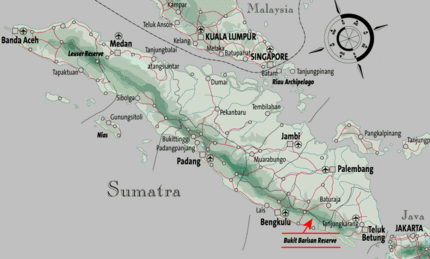
In a well-investigated and detailed report (pdf) released yesterday, the World Wildlife Fund (WWF) revealed that robusta coffee is being illegally grown in southern Sumatra, with most being purchased by large coffee producers such as Kraft and Nestlé.

“Illegally grown coffee is mixed with legally grown coffee beans and sold to such companies as Kraft Foods and Nestlé among other major companies in the U.S. and abroad.” — WWF

The coffee is being grown inside Indonesia’s Bukit Barisan Selatan National Park, which has over 300 bird species and is one of the few places where the endangered Sumatran subspecies of tigers, elephants, and rhinos coexist. This park has already lost 30% of its land to illegal agriculture, mainly coffee. WWF found 173 square miles being used for illegal coffee growing, with a yield of nearly 20,000 tons of coffee annually.  Wildlife has abandoned these cultivated areas.  WWF tracked the illegal coffee from the park through export routes to multinational coffee companies using satellite imaging, interviews with coffee farmers and traders, and trade route monitoring.

The U.S. received 17% of the coffee tainted with illegally grown beans.  Illegal beans are sold to local traders, who mix them with legally grown beans which then make their way to exporters. Major international companies purchase beans from exporters, and if they are not conscientious about their supply chain, they may not know they are buying illegal beans. The main buyers are shown in this graph from the report (click to enlarge), with Kraft being the number one buyer.

Exports of robusta beans from Lampung province, where most the park lies, have been steadily increasing, and the top six companies on the graph buy 55% of all Lampung beans. The profits spurring the encroachment into the park are financed by the purchases of these global roasters, and all Lampung beans have a very high probability of being contaminated with illegally grown beans, according to WWF. Talcoa (part of Kraft Foods), Kraft, and Nestlé were the top recipients in 2003-2005; Folgers (Procter & Gamble) and Starbucks received smaller amounts in 2004.

After being contacted by WWF, Kraft and Nestle were among five companies in the early stages of “engaging with WWF” on the problem. Four companies, including ED&F Man, parent company of VOLCAFE (which supplies beans to Nestlé and Maxwell House), denied involvement. Eight other companies did not reply (full list in report).

Remember this is robusta coffee, so you don’t have to worry about the Sumatran arabica beans from your favorite specialty roaster. The illegal beans are those used in most supermarket blends.  Another reason to not buy these coffees!

See update #1 here and a late 2007 update here.

Hat tip to Ned Potter’s ABC News Science and Technology blog.  Map adapted from GoVacation Indonesia.

Pesticides used on coffee farms, part 4: Organic coffee & further resources

I’m sure once you examine the effects of the pesticides that are commonly used on coffee, you will agree that the workers, the environment, and the folks downstream are all better off if coffee is grown without pesticides.  Careful cultivation and biocontrol makes it possible to combat many common pests and grow coffee without these chemicals.  And you can support the farms that have taken these steps by purchasing organic coffee.

Organic coffee information
First, a few facts about organic coffee. Certified organic coffee means that it has been produced under standardized conditions, which are verified by inspections. Farms or cooperatives pay for certification, including accommodating inspectors and paying for their travel. American consumers often see the label on the left certifying organic products, including coffee. Requirements for this seal include no use of prohibited substances on the land for at least three years.  This includes most synthetic pesticides, herbicides, and fertilizers. Other certification requirements include a buffer between the coffee and any other crop not grown organically, and a plan that demonstrates methods the prevent erosion and other sustainable methods.

The USDA also accredits other agencies to certify organic products using the same standards.  A common one for coffee is the OCIA. There are also various state agencies. The Eco-labels web site has much more information.

Many farms have never used any sort of chemical input on their coffee crops, often because chemicals are expensive and the farmers cannot afford to purchase them. The farms, or cooperatives they belong to, may not have the financial resources to pay to have their product certified organic even if they qualify, because it incurs various fees. These could be considered “passive organic.”

Other farms may be missing an element which disqualifies them from certification.  While I believe all of the elements are important, I’d much prefer to buy coffee from, for example, a farm that judiciously applies small amounts of non-organic fertilizer and preserves 100 ha of native forest on its land than a certified organic farm that uses half its land for a cattle pasture.

That being said, if your coffee is not certified organic, it will take careful research to know if your coffee is sourced from farms that practice sustainable methods. Because a number of common coffee pests and pathogens are more difficult to control naturally when the coffee is grown in the sun, it’s often a good bet that organic coffee is also grown under shade.  Certified organic coffee represents less than 1% of the market, an astonishingly low figure.  Therefore, buying organic coffee is nearly always good for the environment.

A final thought: it is abundantly true that Americans apply more frightening chemicals to their lawns than most coffee farmers apply to their crops.  And specialty coffee (e.g., not produced by the big four) is still one of the most rustically farmed crops in the world. I don’t think that makes it hypocritical to encourage and support organic coffee farming. As my mom used to say, “Two wrongs don’t make a right.”

Pesticides birds, humans, and wildlife

Coffee without chemicals

Pesticides used on coffee farms, part 3: Common pesticides

(Updated) Even though many chemicals that have been found to be harmful to the environment have been banned or are strictly regulated in the U.S. or Europe, they remain legal to use in less-developed countries, including many countries that grow coffee (a 2016 documentary, Circle of Poison, covered this topic).  This is troubling on many levels, beyond the fact that dangerous chemicals are being applied to crops.

For instance, workers in these countries may be less likely to be well-informed about the dangers of the chemicals, less likely to be provided with protective gear, and less informed about proper application methods (see this abstract, for example).  These regions are also much higher in biodiversity and ecosystem complexity, increasing the risk to the environment.

Here are just some of the more common chemicals used on coffee farms to control major pests and pathogens (which were described in a previous post).  I’ve included the World Health Organization classification, based on human risk.  Click on the link for more information.

Endosulfan (brand name Thiodan) — used against coffee cherry borer. (UPDATE:  As of early 2011, Endosulfan has now been slated to be banned globally, although it does not take place immediately. Here is a 2016 article about its continued use around the world.) Does not dissolve readily (but does degrade) in water and sticks to soil particles, so may take years to completely break down. Its breakdown products are more persistent than parent compounds. It is toxic to mammals, birds, and fish. Effects the central nervous system, and in animals causes kidney, testes, and liver damage. Class II (moderately hazardous). In Colombia, more than 100 human poisonings and one death were attributed to endosulfan use in coffee during 1993; more than 100 poisonings and three deaths were reported in 1994.  Here is an article on growing coffee without endosulfan.

Chlorpyrifos (brand name Dursban). A broad spectrum organophosphate used against coffee cherry borer and coffee leaf miner. In the U.S., the Environmental Protection Agency banned most household uses in 2000.  It is a contact poison.  It has caused human deaths, and has been linked to birth defects. It is extremely toxic to birds, freshwater and marine organisms, bees, and other wildlife.  It can bioaccumulate and effect bird reproduction. Class II. An article about chlorpyrifos is here.

Diazinon (brand name Basudin). Used against coffee borer. Not very toxic to mammals unless inhaled, it is nonetheless highly toxic to wildlife and beneficial insects, and acutely toxic to birds.  In the U.S. where it is still commonly used on turfgrass, diazinon has caused the second largest number of total known incidents of bird mortality of any pesticide. Class II. Another profile here, and a Sierra Club Canada fact sheet here.

Disulfoton. A systemic organophosphate insecticide used against leaf miner.  In the U.S., restricted use due to its high toxicity to mammals by all routes of exposure.  It is also highly toxic to birds and fish. Secondary exposure and poisoning occurs after birds feed on insects that have consumed residue-laden plants; these insects are impaired by the disulfoton and are easier for birds to capture, compounding the problem. High levels of toxins can be attained in this manner and has resulted in avian mortality in connection with disulfoton use.  It is delivered in granular form, which poses the threat of runoff and contamination of other crops when applied on slopes, on which coffee is often grown. Degrades or is metabolized by plants into harmful compounds that are very persistent in the environment. Class 1a, extremely hazardous (highest toxicity).

Methyl parathion (a.k.a. ethyl parathion, parathion). Organophosphate used against leaf miner. One of the most toxic pesticides,  highly restricted in U.S. Very toxic to birds when ingested or through skin exposure.  Also highly toxic to animals and fish. Persistent in soil and will bioaccumulate.  Areas sprayed with this chemical should not be entered for 48 hours. It is banned in Indonesia and restricted in Colombia, but Pesticide Action Network reports that there is evidence that methyl parathion is not used safely in Central America and is regularly misused in developing countries. Class 1a, extremely hazardous.

Triadimefon (brand name Bayleton). Copper-based fungicide used to against coffee rust. Only slightly toxic to birds, little is known about its effect on humans, but it is suspected that there is potential for reproductive problems with chronic exposure.  It has been found to induce hyperactivity in rats. The major concern is that long-term use of this and other copper-based fungicides is copper accumulation in soils, such as been found in coffee farms in Kenya and in Costa Rica.  Copper toxicity has been found in other crops grown in these soils, and copper impacts other biochemical and biological processes in soil, and little is known about long-term effects in tropical ecosystems. The primary metabolite of triadimefon is triadimenol, which is Class III (slightly hazardous).

Cypermethrin. A synthetic pyrethroid used against coffee cherry borer. Generally low direct toxicity to birds, but ingestion via contaminated insects causes mortality in young birds.  Extremely toxic to fish other aquatic organisms, and should not be applied any place where it may drift into water.  Class II.

Next in this series: Resources on organic coffee, and further reading.