2008

Blogging bird and coffee research

At the Partners in Flight 4th International Conference

Background
Wearing my occupational hat as an ornithologist, I just attended the Partners in Flight (PIF) conference in south Texas. PIF is a consortium of conservation agencies and organizations that partner to conserve birds — the emphasis is often on migratory landbirds. Because these birds do not recognize human boundaries, cross-border cooperation is a hallmark of PIF.

Coffee in the paper sessions
The first day, I attended a full-day symposia on conservation projects in Central America. Several described the identification of Important Bird Areas (IBAs) in countries such as Nicaragua, El Salvador, and Guatemala. Each speaker identified “sustainable agriculture” and “promotion of high-value cash crops” as a priority means of conserving these key bird conservation sites. Maps of the regions all showed IBAs which included areas whose primary land use was coffee production.

Another researcher looked at whether shade coffee might be a threat to forest birds. She examined whether chickens, always a familiar site wandering around in diverse farms in the tropics, could harbor disease that is passed on to forest birds. The chickens in her study did harbor various signs of diseases (though at a much lower level than “industrial” fowl), and some species of forest birds also showed evidence of exposure to them. However, there was no sign that there was increased mortality or an effect on population, since contact between chickens and forest birds was pretty limited.

The highlight of the meeting for me was an entire morning devoted to a dedicated shade coffee symposia, led by Robert Rice of the Smithsonian Migratory Bird Center. I have written up the abstracts on the papers presented (download as a Word doc), and will incorporate this information in future posts.

Here I’d like to mention a theme that popped up in much of the research and dominated the discussion section: the importance of forest fragments in coffee farms and coffee-growing regions in general.

There was wide agreement that remnants of forest in or adjacent to coffee farms were vital to the preservation of biodiversity. These can be more important than the managed shade on the farm, especially if shade trees are sparse or of only one or a few species.  A researcher from Costa Rica talked about how many farms there planted small plots of sun coffee and used forested strips (planted or natural) as windbreaks. A Colombian researcher said that in some regions there was so much cloud cover that coffee could not be grown under any type of canopy, but the forested patches owned by the farmers harbored many forest birds. Neither of these farm types would qualify for shade certification, but the forest fragments were critical refugia for birds and other fauna.

The question that arose was how could farmers be rewarded for preserving these patches? And what if they did not own adjacent forest, such as protected areas owned by the government? So many tropical parks are “protected” only on paper, and local people do not see the benefit in a hands-off approach. Could there be away to provide incentive for stewardship of these forests as well, by incorporating that into shade certification criteria as well?

Other certification challenges were discussed as well, but I will leave some for future posts.

As I have written about before, Cerulean Warblers are a declining migratory species often associated with shade coffee, and they have been the subject of several papers. Both the American Bird Conservancy and their Colombian partner ProAves have booths in the exhibit hall. I have written about their efforts to preserve Cerulean Warbler habitat, including shade coffee farms, and their Cerulean Warbler Conservation Coffee. This coffee has been sold out for quite awhile, but they now have a new crop which has just been roasted by Thanksgiving Coffee Company, the roaster partner in this worthy endeavor.

And, yes — this conference only served sustainable coffee. Caffe Ibis is the exclusive provider, and all participants were told to bring their own mugs! Randy Wirth, co-owner and roaster of Caffe Ibis, gave a talk about his work in sustainable coffee, from visiting many of his sources (often multiple times), and his tireless work with both consumers and the coffee industry to promote and inform about sustainable coffee. We have many similar ideas about this issue, and I hope to have an opportunity to interview him for C&C some time in the future.

Look for other news and thoughts coming out of the PIF conference in future posts!

Research: Spiders on Indian coffee farms

Kapoor, V. (2008). Effects of rainforest fragmentation and shade-coffee plantations on spider communities in the Western Ghats, India. Journal of Insect Conservation, 12(1), 53-68.

Ants and butterflies are often the two most studied arthropods on coffee farms, so it was nice to see a paper looking at spiders. The study took place in Tamil Nadu and Kerala states in areas of mid-elevation tropical wet evergreen rainforest that had tea, coffee, and cardamom plantation surrounded by the Indira Gandhi Wildlife Sanctuary. The authors examined the community structure of spiders in two organic shade coffee farms and ten rainforest fragments of various sizes that were also under varying degrees of degradation.

Most of the study discussed the impact (or lack thereof) of fragment size on spider communities. Results regarding the shade coffee farms were limited. First, both of the coffee farms had similar spider density. The species composition in the two farms were more similar to each other than to other fragment types, but one farm did have higher species richness than the other. The author began by noting that the farm with higher richness had more native shade trees, versus the monoculture of non-native Eucalyptus in the other farm. That would be notable, except that the author went on to say that the first farm adjoined two forest fragments, while the other had poor connectivity. This is likely to have a strong effect on spiders with their relatively limited dispersal ability. Another factor mentioned by the author was that the coffee trees in the first (richer) farm were “much taller” than in the other farm. However, the sampling took place in the herbaceous and shrub layer up to 1.6 m, which is not very tall for a coffee tree, so it is unclear to me how this variable may have influenced the results.

One spider species was noted as being commonly found in undisturbed sites but absent from the coffee farms, while three types of spiders were more common in disturbed sites and the coffee farms. Unfortunately, “disturbance” was not specifically defined. Finally, the author admitted there is virtually no information on the natural history of spiders in the Western Ghats, and said this lack of data hindered using them as indicators of habitat disturbance.

Spiders do have many life-history features that should make them good habitat barometers. Despite some shortcomings, this study was a first step in examining spider communities in forested agrosystems. The results also at least suggested that shade coffee farms in this region are utilized more like “disturbed” than pristine sites by spiders, and that these spider communities may show responses similar to those documented for other organisms to forest connectivity and shade management of coffee farms.

Photo of Nephila pilipes, one of the spiders found in this study, by amateur_photo_bore; thanks for publishing under a Creative Commons license.

V. Kapoor. (2007). Effects of rainforest fragmentation and shade-coffee plantations on spider communities in the Western Ghats, India Journal of Insect Conservation, 12 (1), 53-68 DOI: 10.1007/s10841-006-9062-5

Coffee review: Doi Chaang Coffee

Plainspoken Coffee. A Coffee Review for Ordinary People by Ordinary People, #33.

The vast majority of the coffee grown in Thailand is robusta, grown in the southern part of the country and commonly doused with chemicals. In the late 1970s, planting of arabica coffee (and other crops) in the northern highlands was encouraged in order to replace the cultivation of opium poppies, as well as to counter deforestation from shifting agriculture practiced by many of the local ethnic groups, known as “hill tribes.”

The hill tribes of the northern Thailand have faced extreme challenges in the past several decades. When cultivation of opium poppies was outlawed in 1958, it forced these people to use more land to generate income and sustenance, a situation exacerbated by their increasing numbers, which have quadrupled the last 30 years; the growth rate is double that of the national average. The poverty of the hill tribes is further compounded by their cultural isolation, difficulty in attaining citizenship and land ownership, and lack of good access to education and other employment opportunities.

Until recently, much of the coffee grown in Thailand was typically used in the domestic market. The better arabica beans were mixed in with inferior beans, so some farmers were not receiving the prices their beans merited. Now some of the hill tribes in northern Thailand are working with partners to market their beans for export.

The Akha tribe of Chiang Rai province in the Golden Triangle is one. Their Canadian partners are Vancouver investment banker John Darch, trade and shipping executive Wayne Fallis, and Alberta roaster Shawn McDonald. McDonald’s coffee ventures include Planet Coffee Roasters and import/export company Mayan Winds. They’ve teamed up to form the Doi Chaang Coffee Company. The tribe’s coffee farmers, consisting of over 800 families, retains a 50% ownership in this company, and entirely owns their Thai-based company.

Doi Chaang coffee is grown on over 2400 ha in the vicinity of the village of Doi Chang (20.325, 99.839) in Chiang Rai province (highlighted on map above) at around 1200 meters. It is 50% Caturra, 35% Catimor, and 15% Catuai. The coffee is grown
under the shade of various fruit and nut trees, including macadamia, plum, pear, and peach. Reforestation efforts in the area strive for a 50/50 mix of native tree species and cash crop species (both marketable and consumable crops are necessary to replace the income formerly generated by poppy growing). The photo below shows some of the coffee and shade cover in Doi Chaang: there appears to be liberal use of shade trees and nice variety.

No chemicals are used on the coffee, and it is certified organic. The coffee is wet processed and sun dried.

Doi Chaang offers eight varieties/roasts including aged and peaberry offerings. Green beans are also available. We reviewed the medium roast. Our expectation was that it might be slightly on the darker side of “medium,” since many south Asian/Indonesian coffees are roasted dark. But it was a typical medium roast with just a few pinpricks of oil. The aroma was interesting, and did lean towards an Indonesian bean. It was described by our panel as spicy (several people), woodsy, dry, tobacco/smoke, and (in the spirit of not dismissing anybody’s opinion) soy sauce, and meatloaf with gravy.

Those of us with more coffee tasting experience were anticipating a taste like a Sumatran or Timor. We were very surprised by the Doi Chaang coffee — it started out with more acidity than we expected, a juicy, tart beginning that was more reminiscent of a Central American. It was also much sweeter than we thought it would be, also like a Central, with a little hint of chocolate. As it cooled, it betrayed its heritage, with cedar and especially leather notes coming through, and it had a characteristically Indonesian heavy body. Overall, however, the Sumatran-like profile was muted and subtle, and mingled with classic Central American attributes. It was a really interesting and pleasing combination. Darker roasts, of course, might weigh in more on the Indonesian-like side.

We confess that brewed in a drip machine, it lost much of this intriguing nature. It was still pleasant, but both the bright sweetness and the sturdy leather spicyness were rather lost. It would not be a disappointment, but if you try the Doi Chaang, prepare it at least once in a French press to appreciate the subtle and satisfying interplay of flavors. The final tally was 3.25 motmots. Coffee Review tasted the peaberry and the dark roast varieties last year. UPDATE: We review the Doi Chaang Wild Civet coffee here.

The Doi Chaang project represents part of an effort towards sustainable agriculture and development in northern Thailand to provide economic stability for the hill tribes. Thailand has been losing forests at a higher rate than most other southeast Asian countries. Although mixed agriculture that includes coffee and other crops and native trees is not “reforestation” in a pure sense, it is certainly preferable to illegal logging and unsustainable farming practices. Some ventures to aid the hill tribes have met with criticism and failure, and one of the early problems was an inability to efficiently move and market cash crops. The energetic marketing efforts of Doi Chaang Coffee Company of a quality product, as well as the retention of ownership by the Akha, indicate this project is better concieved and executed, and much more of a success.

More general info:

  • Reclaiming the Golden Triangle — Ecos Magazine (link to PDF)
  • Thailand environmental profile — Mongabay
  • Fragmentation and wildlife in montane evergreen forests, northern Thailand. Pattanavibool, A. and P. Dearden. 2002. Biol. Cons. 107:155-164.
  • Secondary forest succession after the cessation of swidden cultivation in the montane forest area in Northern Thailand. 2008. Forest Ecol. Manage. doi:10.1016/j.foreco.2007.12.022

Why certifying shade coffee is so complex

After visiting some coffee farms in Panama’s western highlands, I have some thoughts regarding shade certification programs.

There are pros and cons of various certifications. And as I frequently note here on C&C, farms lacking certifications may easily meet or exceed criteria but can’t afford audit and certification fees. Finca Hartmann, which I discussed in my previous post, is not certified organic or shade grown. In part, they do not qualify because they use an herbicide once a year and also use some non-organic fertilizer. A Hartmann family member also told me that they did look into shade certification, but were not given help or support by the certifier so they gave up on it.

Aside from affordability, I can now easily see the huge hurdles and complications involved in certifying farms as biodiversity-friendly, both for the farmers and for the certifying agencies. Nearly all the coffee growing areas we encountered were complex amalgamations of habitats and management types which appear to be very challenging to evaluate and categorize, especially farms like Finca Hartmann that grow coffee in matrix of forest types and with other crops. Ironically, it seems the larger and more uniform a farm, the easier it would be to certify. If environmental criteria were not strict, certification would be relatively straightforward.

What would be more meaningful (although perhaps not especially practical or achievable at this time) would be some sort of ranking system or disclosure of key habitat and management components. Some of these elements might be:

  • Total farm property, and percent in infrastructure, native forest, pasture, coffee, other crops, and mixed use.
  • Range and average acreage of coffee plots (e.g., of the 70 ha of coffee on a farm, it is distributed in 30 plots of 1 to 12 ha, average 7 ha).
  • Range and average acreage of natural forest habitat, and whether or not is it permanently preserved.
  • Number of species of shade trees, top 5 species (with scientific names, since there are so many local variations of common names), and some measure of density or distribution. I include this latter component because it speaks to whether coffee is grown under shade versus near shade. Some shade certification criteria include a rule that there must be a certain number of shade trees per hectare. Yet one could have the requisite number of “shade” trees in a clump, adjacent to a patch of coffee grown entirely in the sun. This might not be entirely bad — and indeed we saw birds using tree patches like this and wandering over to forage in the coffee, especially if the patches were substantial, native, and contained a variety of vegetation. But that may not offer the same types of foraging opportunity as coffee integrated with taller vegetation. This is likely to vary widely regionally and on a smaller landscape scale.
  • Number of shade layers. This type of multi-layer diversity is very important. The more layers, the closer it gets to the native forest it displaces. That being said, the lack of uniformity and apparent variety of management types over a farm could make this very difficult to evaluate.
  • Whether the farm used 1) pesticides, 2) herbicides, 3) non-organic fertilizer, and how often. The latter two when used sparingly are not as damaging to the environment as pesticides, yet they currently may all get lumped under “non-organic” practices.
  • Water treatment and waste recycling procedures.
  • The exact coordinates of the farm. With the coverage and resolution of applications like Google Earth, one can get a good idea of land use by looking at satellite photos.
  • Some quantitative data on fauna, emphasizing forest-dependent species, if it can be provided by people with some type of ecological expertise.

Farms or co-ops might be able provide this type of information on their web sites (or roasters could include it on their offerings pages) in some sort of standardized format. This information could help consumers assess the eco-friendliness of their coffee sources.

Of course, this type of data is fairly meaningless to the average consumer. An additional requirement would be a central reference web site explaining the variables and their importance. This material could be freely used by roasters on their web sites. This central site could also keep a database of links and summaries of farm information (in a small way, it’s what I try to do here at C&C).

This Internet based system would be quite simple and inexpensive; importers and roasters with relationships with farms and co-ops could easily get this out on the web. One obvious shortcoming is that it requires consumers to put forth some effort by looking something up on the Internet. The pertinent data doesn’t end up on a retail bag of coffee in some simple-to-interpret seal or ranking. Yet, it’s hard for me to imagine how a ranking system would work, since whoever is doing the evaluation would run into the same sorts of problems trying to assign simple, discreet values to complex systems.

These are just some thoughts, based on what I’ve seen and the types of information that I, as an ecologist, try to suss out when I choose a coffee.

Finally, I’d like to point out the other side of the coin via a spot-on observation made by the Bean Activist’s Chris O’Brien in the comments on my Counter Culture Finca Mauritania Microlots review. He points out that it doesn’t make sense that the burden of proof of sustainability is on the farmers.

“It seems backwards that we force the ‘good guys’ to pay to prove their goodness instead of charging the ‘bad guys’ for being bad. Ultimately I think it comes down to the need for policy changes, in producer countries as well as consumer countries. The full sun, low-price, chemical coffee estates should be the ones paying extra fees for violating basic minimum standards for sustainability and equity.”

I wholeheartedly agree with this. But since the biggest producers of sun coffee are also much stronger, larger, and more powerful than the producers of shade coffee, I think this will be a hard row to hoe. And I believe so long as there is a demand for cheap technified coffee, it will continued to be produced, especially if the disincentives to the producers don’t make it unprofitable. Once again, for the moment, we are left with educating consumers so that they can hopefully begin to influence the market with their buying power.

What shade coffee looks like

One trip to one part of one county’s coffee growing region is limited information to work with. Nonetheless, my recent visit to the western highlands of Panama was an eye-opener, replacing a mental image based on a great deal of reading and examining photographs with the reality on the ground.  I’d like to share some of what I learned.

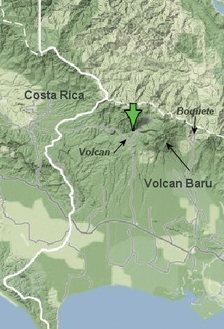
First, a little overview of the entire landscape. The highest point in Panama is in the western highlands: Volcan Baru, at nearly 3500 m (almost 12000 ft). The town of Volcan is on one flank of the volcano, Boquete is on the other. These are Panama’s major coffee-growing areas, some of the most important in the world. Coffee is not the exclusive crop, however. Many cool season crops are grown here. We were on the Volcan side, where cabbage, lettuce, and onions were common, as well as dairy farms. Small farms and plots were everywhere, creeping up the flanks of the mountains. Most were not large, and from what we could gather by observing harvesting and taking crops to central depots, tended by one to several families. We have urban sprawl. They have a sort of agricultural sprawl.

Definitions of shade-grown coffee describe various systems that go from very rustic (coffee in a forest) to sun coffee (plots of coffee with no shade trees). I talk about this continuum in my introductory post “What is shade-grown coffee” and provide a graphic in a later post on shade certification criteria. Coming from an industrialized country with industrialized agriculture, where even small garden plots nearly always follow an orderly, genteel, Euro-centric plan, I really didn’t consider how “messy” agrosystems are in Latin America. We spent a lot of time on one coffee finca, lesser amounts in two others, and passed through a number of others. The various levels of shade management are present, but they can be difficult to categorize as they are often interspersed with each other and other types of land use (crops, livestock, homesteads).

We spent two half-days at Finca Hartmann, a very eco-friendly farm near Santa Clara. It is in two sections: the lower Palo Verde section (1200-1300m), and the higher-altitude Ojo de Agua section (1500+ m), which is directly adjacent to the La Amistad International Park. The property (aside from housing and other human infrastructure) is a mix of remnant and regenerating forest, pasture, and coffee.  Coffee occurs in plots ranging from 1 to 15 ha, and itself grows intermixed with native vegetation and/or crops such as citrus and bananas. This photo shows some fairly young coffee (probably 2-5 years old; the Hartmann’s are in the process of replanting much of the farm which was established in the 1950s) at Palo Verde, shaded by citrus, castor, and native trees. We had a large mixed flock of birds here, including forest birds such as White-ruffed Manakin and Bay-headed Tanager.

In another area in Palo Verde, older coffee trees are growing amid a mid-story of bananas, and an open canopy of tall native trees, encrusted with many epiphytes — which are very important to biodiversity in tropical agrosystems.

The Hartmann’s have preserved a lot of forest on their land. Below, my husband consults a field guide in a beautiful forested patch along a stream. There is extensive old forest at Ojo de Agua which many researchers have used to study forest and shade coffee ecosystems.

Nearly 300 species of birds have been recorded at Finca Hartmann, as well as 62 mammal species and hundreds of other organisms. Patriarch Ratibor Hartmann is a devoted naturalist, and visitors can examine some  carefully-curated collections he has made on the farm. We photographed many insects ourselves. One was a damselfly that had only been described about 30 years ago, and had never been photographed, according to an expert back here in the states.

Other insects were just stunning, such as this metalmark, Mesosemia asa. Although we really only explored for 6 or 7 hours over the two days, were working without a guide, and spent equal amounts of time looking at insects, we observed nearly 80 species of birds at Finca Hartmann.

Other farms in the region were in contrast with Finca Hartmann. The photo below is from Finca Florentina near Paso Ancho, a large plantation that has been a source of beans for Starbucks. This farm also had patches of forest, but coffee typically grew in larger plots than at Finca Hartmann.

Still at Finca Florentina, an even larger plot of coffee, with sparser large trees. This area had a lot of non-native eucalyptus trees. We wandered through these areas for several hours, and saw far fewer species of birds and insects. Many were more common species typical of open areas, such as various species of grassquits, or the ubiquitous Rufous-collared Sparrow.

And along a road near Santa Clara, were big areas of sun coffee. These farms are likely owned by or sell their beans to the large Cafe Duran, which is a common brand in Panama. Their mill was nearby.

None of the coffee growing areas we saw came close to matching the structural complexity of native forest, a characteristic that is highly important to biodiversity. Nonetheless, it was clear that birds and other fauna used coffee growing areas that were integrated with or close to native vegetation.

This gave me a great deal of insight into the issue of shade certification, and I will talk about that in my next post (Why certifying shade coffee is so complex).

Research: Butterflies in Indian coffee farms

Adult butterfly communities in coffee plantations around a protected area in the Western Ghats, India. J. Dolia, M. S. Devy, N. A. Aravind, and A. Kumar. 2008. Animal Conservation 11:26-34.

Butterfly diversity was examined in 12 coffee plantations in India’s Western Ghats, a region of high biodiversity. Distance from a protected area, the Bhadra Wildlife Sanctuary, was the most influencial variable for the abundance and richness of butterfly fauna. The closer the coffee farms to the sanctuary, the higher the species richness and abundance. The composition of butterfly species on coffee farms also became less similar to that of native forest as distance from the sanctuary increased.

The proportion of Australian Grevillea robusta, often called silver oak, a fast-growing, sparse shade timber species now being planted in place of native species on Indian coffee farms, did not seem to effect butterfly abundance or diversity (more on silver oak on coffee farms here). However, the authors stated that three or four species of shade trees dominated at the coffee farms, and none seemed attractive to butterflies.  Coffee has traditionally been grown under native, rustic shade, but there has been an increasing use of fewer, often exotic, species and less shade in recent years.

There were some limitations to this study. It took place during the dry season, when there were not many trees and plants in flower in the sanctuary, but some (mostly non-native species) in the coffee farms. Nectar-feeding butterflies of larger species, which are strong fliers, may have therefore been disproportionally represented at farms farther from the sanctuary. The authors also noted a lack of information on host plants for butterfly larvae, but that many feed on understory shrubs and plants, which tend to be absent from coffee farms. Pesticide use also has a detrimental effect on butterflies. Although coffee farms may serve as corridors or provide roosting or basking sites, they may not have adequate resources for reproducing butterflies.

Photo of Blue Tiger (Tirumala limniace), a common south India species, by Challiyan.

J. Dolia, M. S. Devy, N. A. Aravind, A. Kumar. (2008). Adult butterfly communities in coffee plantations around a protected area in the Western Ghats, India Animal Conservation, 11 (1), 26-34 DOI: 10.1111/j.1469-1795.2007.00143.x

Greetings from the Panama highlands

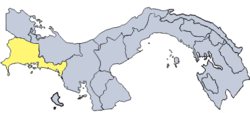
My husband and I are in the highlands of Panama, in Chiriqui province (in yellow on the first map) near the Costa Rican border. We are staying near the city of Volcan, on the western flank of Volcan Baru at about 1500 meters (5000 feet) . Chiriqui is the main coffee growing area in Panama. Boquete is on the other side of the volcano, but there are plenty of farms all around us, including Finca Hartmann and Carmen Estate, whose coffees we’ve both reviewed.

We have coffee shrubs growing on our rented property, and as it is harvest season here, the cherries are ripe. I tasted the pulp, and it’s very sweet, but sparse. I can now see how tenacious the mucilaginous coating on the beans is, and it really helps me understand the why and how of wet processing coffee. I’ll try to take a little video of I can. We plan on visiting at least one coffee farm, and I will also post photos of the area as I have the opportunity.

Coffee review: Counter Culture Finca Mauritania Microlots

Plainspoken Coffee. A Coffee Review for Ordinary People by Ordinary People, #32

In our background post on El Salvador, one of the coffees we reviewed was Counter Culture’s Finca Mauritania, from the slopes of the Ilamantepec (Santa Ana) volcano. The Santa Ana region (shaded on map) is a premier coffee-growing area in El Salvador. The Apaneca-Ilamatepec Mountain Range where Finca Mauritania is located is in close proximity to one of the country’s most important parks, El Imposible.

Counter Culture still offers the straight Bourbon varietal from Finca Mauritania. They’ve also had a limited offering of Aida’s Grand Reserve, a peaberry selection from all three of owner Aida Batlle’s neighboring farms: Finca Mauritania, Finca Kilimanjaro, and Finca Los Alpes. For this review, we chose another special set of microlots, Counter Culture Coffee’s Finca Mauritania Microlot Gift Pack. This unique set consists of three microlots, all from Finca Mauritania, but each set of beans underwent a different type of processing.

Nearly all coffee from Central America is “washed” or wet processed. After the coffee cherries are picked and sorted, the cherries are sent through a depulping mechanism that removes the skin and flesh. Some amount of sticky mucilage or flesh may remain, and so the beans are soaked in water for one or two days to break down this matter, which is washed away by more fresh water. Beans are then dried, often in the sun on large patios.

Pulped natural is a process by which the cherries are only skinned or partially depulped before they are dried. The climate in Central America, especially the humidity, is such that this drying process must tended to vigilantly, with a lot of raking and turning, not only so the gooey beans don’t stick together, but also to prevent molds or fungi from developing. Nearly non-existent five years ago, this process is becoming more popular in El Salvador because the country grows so much Bourbon variety coffee, according to Counter Culture buyer Peter Giuliano. The pulp natural process and Bourbon beans are great for espresso blends. In Latin America, Brazil dominates the espresso-component market, where the drier climate is more appropriate for pulp natural processing. Conquering this technique opens up new frontiers for El Salvador.

If done with finesse, the enzymes in the pulp transfer flavors to the beans — the intensity will vary depending on the amount of pulp left on, drying time, and other factors. This method lowers acidity and increases body, and introduces an often fruity sweetness.

We indeed found this to be a medium-bodied coffee with a syrupy mouthfeel. Nearly all tasters found some curiously unique flavors in a French press preparation: pepper, salt, garlic (which was not as bad as it sounds), basil, spice, a complicated enzymatic astringency (this from a student who had just taken his chemistry final). As a drip coffee, it struck a couple of us as vaguely Sumatran, with muted woodsy and leather tones. One taster adequately summed up what we all experienced, “There’s a lot going on on my tongue right now.”

I was reminded of the pulped naturals we’d tried from Brazil’s Daterra Estate, although this selection was clearly more complex. I think it had the characteristics that would in fact make it terrific in an espresso blend. It was interesting and valuable to taste beside the other lots, but we were sort of confused by it and agreed that on its own, it was the least compelling of the three to drink straight. It garnered 3 motmots.

The more typical wet processed selection in this gift pack was the peaberry microlot. Peaberries are those coffee cherries which only develop a single, round seed rather than the pair of flat-sided seeds usually produced. About 5 to 10% of coffee cherries produce peaberries. These small, round beans roast more evenly than typical flat beans, but also more quickly because of their size so they must be roasted with care.

Although there isn’t any scientific proof that I know of that each peaberry gets “twice the flavor,” they are commonly thought of as being more intensely sweet and acid. Nor can I say that this peaberry microlot was twice as sweet as the rest of the FM crop, but we all agreed — bright, clean, sweet, deep, and lovely! Various tasters got some malt, baker’s chocolate, nuts, cherry, and honey. I picked up a bit of a floral aroma and tasted sweet apple in the cooling cup (I’m always pretty pleased with myself when I can pick up some sort of unique flavor, and nearly pulled a muscle patting myself on the back when I read later that some of Counter Culture’s cuppers also tasted apple). The finish was super smooth and syrupy when prepared in a French press.

This is a superior example of an exceptional classic Central American coffee. I could drink this every day and not get tired of it, and when I think of great coffee, this is the profile that I hold standard. When we cast our votes on this one, something happened that hasn’t occurred in a long time: it got 4 motmots across the board.

“Pasa” means “raisin” in Spanish, which is what coffee cherries look like when completely dried with their flesh intact. Dry process coffees are dried without removing any of the coffee cherry; the beans are removed, or hulled, after drying. The drying may take up to a month, and as with pulped naturals must be done very carefully — especially in humid climates — to prevent any molds, fungi, or bacteria from tainting the cherries. This process, common in more arid African nations, creates bold flavors, often berry-centric fruitness with heavy body.

Dry process is essentially unheard of in Central America, but it captured the imagination of Aida Batlle. I’ll let Peter Giuliano relay the story:

“Aida has completely innovated the Pasa process, based on things she has heard (but never seen firsthand) about Ethiopian and Brazilian natural processes. Aida has a strong experimental streak, and jumped into the process with her trademark enthusiasm and quality focus. Aida is always innovating, and she decided to experiment with tree-dried coffees. Just leaving them on the tree to dry was a challenge, she had to post a security guard so that people would not sneak onto the farm and pick the coffee while it dried on the tree!  Milling was another challenge — since nobody does dried-in-the-fruit coffee in El Salvador there was no equipment to do the milling, so they had to improvise with a small mill intended to husk samples in a cupping lab. As a result, it was incredibly labor intensive to produce this coffee.”

We were blown away when we opened the bag of Pasa — it was boldly fruity, mostly the familar blueberry aroma of an Ethiopian coffee. There was also a bit of a woodsy/earthy smell. The blueberry translated into the cup, although perhaps not as forcefully as an African. I’d recently tried Counter Culture’s Ethiopian Biloya and the Pasa was its more restrained and modest sister. Other than the berries, tasters commented on hints of apricot, the balance, smoothness, creamy mouthfeel, and overall sweet richness. We would have certainly thought this was a dry-process Ethiopian, but I believe we also would have wondered about the quiet differences. 3.5 motmots.

Post-script: I don’t know what Aida’s future plans are for the Pasa, but I think this a perfect substitute for an Ethiopian coffee. It has the added advantage of having less distance to travel — less fuel for shipping. Whereas Ethiopian coffees come from many small shareholders, we know exactly where the Finca Mauritania comes from, and that it is grown in a shade polyculture that benefits biodiversity. Aida is also in the process of converting all of her farms to certified organic. I know if I had the choice between a dry process African and this coffee, I’d pick the Pasa. Same great flavor, more sustainable.

Tasting these three selections, from the same farm with different preparations, was fun and enlightening…and tasty, of course. Bravo to Counter Culture for putting this package together, at a bargain price.

Research: Tree species diversity in Veracruz coffee farms

Tree species diversity and vegetation structure in shade coffee farms in Veracruz, Mexico. A. M. LÁ³pez-GÁ³meza, G. Williams-Linera, and R. H. Manson. 2008. Agriculture, Ecosystems and Environment 124:160-172. 10.1016/j.agee.2007.09.008

Fifteen shade coffee farms, under different types of shade management, and two forest reserves in the Coatepec-Huatusco region of Veracruz were compared. Some of the results were as expected, e.g., there were fewer tree species in shade monocultures and the most tree species in diverse polycultures; some of these diverse polyculture farms actually had more species than the two forest reserves sampled.

One of the most interesting revealations in this paper was that the proportion of native tree species was similar across all farms, regardless of management type, at around 79%. Many of these species (71%) were rare, found on only one or two farms. This highlights the importance of coffee farms for preserving native species diversity in this important coffee-growing area, which is becoming highly fragmented and losing forest rapidly. One of the authors found in a previous study that 27 native tree species were no longer found in regional forests, but still existed on shaded coffee farms.

The authors noted that high tree species richness and functional diversity is linked to the fates of many other plant and animal taxa, and that further multi-taxa studies are needed to better evaluate the role of coffee farms in biodiversity preservation. They also suggested that it is imperative for shade coffee agrosystems be explicitly included in regional conservation strategies.