Retail and specialty roasters

The sincerest form of flattery

Last year, Counter Culture Coffee launched its Direct Trade program. They also started rolling out their current line of packaging: brown kraft-like valve bags with a sleeve that has nice origin-appropriate art, a map on one side panel showing the source, tasting notes on the other side, and a good description of the farm or co-op on the back. I believe they won an award at a coffee trade show for this labeling.

This year, Starbucks debuted “seasonal coffees.” These coffees are only available for a limited time, and are “harvested in-season when they are at their peak of flavor.”  I’m not sure what Starbucks is really trying to say, since all coffee is harvested “in season.”  Coffee is at its peak flavor when it is fresh — when the green beans have not been sitting around for ages, and when it is freshly roasted. Maybe these seasonal coffees are not as stale as the Starbucks coffee often found on store shelves. But I digress.

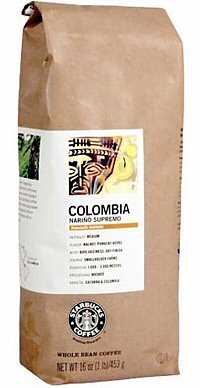
What I really wanted to point out was that the packaging for the new Starbucks seasonal coffee line looks very familiar. A brown (non-valve) bag, with a printed wrap-around-look label with art on the front and tasting notes and a map on the side… You get the picture. If not, here you go:

National Geographic Terra Firma coffee

(Note: As of 2013 it appears that this coffee has been discontinued.)

The National Geographic Society is getting into the coffee business. They are rolling out a line of specialty-grade coffees called “Terra Firma.” They are all be single-origin coffees, from six countries: Brazil, Ethiopia, Sumatra, Kenya, Colombia, and Costa Rica. Net proceeds from Terra Firma coffee will support programs of the Society. Initially, it will only be available in the U.S., to both retail and food service users.

It’s not shade coffee
According to their press release, this coffee is “crafted to emphasize environmental and cultural sustainability in coffee-farming communities.” Further motivation apparently stemmed from results of a survey NatGeo contracted which indicated “being environmentally friendly” influenced the purchasing decisions of a majority of American. Yet although the coffees will be Fair Trade certified, none are certified organic or shade grown (Rainforest Alliance or Smithsonian Bird-Friendly). You’ll have to wait for one of those; there are plans to release an organic or Rainforest Alliance certified coffee in the future.

With all of Nat Geo’s emphasis on the environment, not to mention their long commitment to science, the lack of organic and/or shade certification for the Terra Firma coffees is bound to stick in the craw of educated consumers. The press release states that Fair Trade certification “guarantees…environmental stewardship,” which it does not.

On the plus side, at least we know who is roasting their coffee.
The Terra Firma coffee will be sourced and roasted by the Brazilian firm Café Bom Dia. Americans perhaps best know them as the source of the coffee sold at Sam’s Club and WalMart under the Member’s Mark and Marques de Paiva brands.

Since I last wrote about Café Bom Dia, their web site has had an overhaul and there is additional information about their sustainability efforts, which are certainly the most impressive of any of the large coffee roasters. Their main roasting facility is in Varginha, Minas Gerias, Brazil, where the roasters run on biomass (“sustainably forested eucalyptus” and wood from coffee trees taken out of production). This facility has zero net carbon emissions and is certified CarbonNeutral. This is where the Terra Firma coffee will be roasted.

Specific sources
Café Bom Dia owns and manages farms in Brazil, but also has a network of 4800 producers in all the Terra Firma countries of origin except for Kenya, which will be a new relationship for Café Bom Dia. Because large plantations and family-owned farms do not qualify for Fair Trade status, the Brazilian beans will not come from Café om Dia farms, but from Fair Trade cooperatives in southern Minas Gerias. The specific sources for the beans from other origins will depend on harvests and availability — the usual criteria for large-volume efforts that depend on a particular flavor profile and price point. I was told by that for this initial line of Fair Trade coffees, source cooperatives will not be chosen specifically for their environmental practices.

National Geographic drops the ball
I obviously have a preference for (and encourage people to seek out) coffee in which the specific origins — and therefore growing methods — can be easily traced and explored. In my opinion, the problem with the Terra Firma coffee isn’t that NatGeo partnered with Café Bom Dia. In fact, I commend Café Bom Dia for always being responsive and straightforward with me, and for what I believe to be a more sincere effort to run an eco-friendly business than any other large roaster. Café Bom Dia can and does source organic and Rainforest Alliance certified coffees — it’s what they sell at Sam’s Clubs and WalMart, where their Rainforest Alliance coffees are even 100% certified beans. What is remarkable is National Geographic did not choose these sustainable coffees for their initial offerings.

In preparing this post, I first wrote to Café  Bom Dia with questions about this choice. Café Bom Dia provided much of the information above, including the fact that organic or RA certified selections were planned for the future. I followed up with NatGeo specifically asking about the choice not to initially include more eco-friendly selections. Here is their reply:

While you do raise some interesting questions, we have to defer to Café Bom Dia on the finer points of their coffee production methods.

In keeping with our mission to “inspire people to care about the planet,” we do our best to promote sustainability through our mission-oriented projects, editorial endeavors and licensed products. There are many factors that are taken into account when choosing a new partner: we chose Café Bom Dia because of the company’s commitment to sustainability and its pedigree as a certified Fair Trade supplier.

In recent years, NatGeo has licensed their brand on a wide range of disparate products, including digital music, apparel, and home furniture. Given the serious impacts of coffee growing on the environment, coffee seems like a better fit than many of the other items that display the NatGeo logo. It presents a fantastic educational opportunity — the power of National Geographic to inform consumers about coffee sustainability issues is tremendous. The Society has 8.5 million members, but its reach and respect go far beyond those numbers. It would have sent a strong message if they had chosen to market and promote certified, eco-friendly coffees. Actually, the fact that they did not sends an equally strong one.

Coffee review: Starbucks Organic Shade Grown Mexico

Plainspoken Coffee. A Coffee Review for Ordinary People by Ordinary People, #41.

Starbucks Organic Shade Grown Mexicois produced by around 900 small farmers on 3200 ha of land in the southern Mexican state of Chiapas [1]. Many of the farms are near or adjacent to the El Triunfo Biosphere Reserve, which contains the northernmost cloud forests in the world and is considered as one of the greatest biodiversity sites of North America. El Triunfo totals 119,000 ha, of which 93,458 ha corresponds to a buffer zone and the rest to the core areas. Core areas are primary forest owned by the government. The buffer zone consists of privately owned lands, about 60% of which are forested. The remainder is agricultural, with shade coffee being the dominant crop; up to 70% is rustic shade.

Originally this coffee was to be a temporary offering, but proved so popular that it is on the permanent Starbucks menu.

Background

This coffee-sourcing is part of a partnership with Conservation International (CI) which began in 1998. Originally, this was to be a three-year program with CI providing technical assistance to producers encouraging them to continue eco-friendly growing practices, and Starbucks as a dependable buyer. This partnership has continued with some new wrinkles, including the development of Starbucks C.A.F.E. practices.

This project has not been without controversy. One main gripe has been that the contracts with Starbucks paid above-market prices, but the beans went through the large exporter and processor Agroindustrias de Mexico (AMSA), which took a cut of the price. This doesn’t seem like an unusual arrangement and perhaps the only practical one with between a large buyer and dozens of cooperatives. At some point Starbucks did try to deal directly with producers, but the cooperatives were unable to arrange shipment.

Some of the co-ops withdrew from participation. Various reasons have been given. According to CI’s report to USAID [1], when the world price of coffee rose above the price already agreed to in the contracts, producers reneged and sold to other buyers (a not too-uncommon occurrence). Some felt that, after a long struggle for autonomy, that they were once again beholden to middlemen [2]. CI apparently negotiated many of the initial contracts, and some producers later regretted signing when they found out Starbucks was the end buyer (was that not in the contracts?). There were also objections to quality demands being imposed on them.

Nonetheless, the arrangement with Starbucks did and has increased income for many of the farmers. One co-op mentioned as a participant in a New York Times article was identified by a Fair Trade advocate as being organizationally weak, not well suited to judging the quality of their own beans, and unable to seek out other buyers. If that’s the case, this co-op may not be qualified for Fair Trade certification, and therefore Starbucks might be the best option for them, at least at this time.

While there is a lack of publicly available objective information on the outcomes of the Chiapas coffee project, from what I have read it has had an overall positive net impact. Encouraging and promoting organic and shade-grown coffee is a major goal of El Triunfo conservation efforts. At least for some period of time, cooperatives that withdrew from the CI/Starbucks program had a hard time finding buyers, especially those that would pay high prices and invest in their communities. If Starbucks is purchasing an average of 1.7 million pounds of coffee from this area every year, this is likely a good thing, especially if these producers do not have other options for selling their beans.

Finally, we need to bear in mind that this is a certified organic coffee, but it does not have shade certification by Smithsonian or Rainforest Alliance. As mentioned above, however, the coffee grown in this area, especially in the El Triunfo buffer zone, is traditionally grown in the shade, often diverse shade.

Let’s move on to the coffee
Starbucks Organic Shade Grown Mexico is billed as a medium roast. For a company known to over-do the roasting, I was surprised to see that “medium” was actually “medium.” I think good Mexican coffees are delicate and sweet and should be roasted light, but I suppose medium was a good compromise to cater to the tastes of Starbucks customers. I was also surprised to see that in a French press, this coffee was fresh enough to have a decent bloom.

This coffee was what we expected from a Mexican coffee: pleasant, approachable, smooth, and well-balanced. It was fairly sweet with hints of chocolate; a couple people thought that rather than milk chocolate it was a more bittersweet dark chocolate, perhaps due to the roast. One person tasted cinnamon. Overall, comments were quite positive. A few people with known anti-Starbucks sentiments were grudgingly impressed. This is a decent coffee that most people should find more than acceptable. When the votes were tallied, it came away with a solid 3 motmots.

Because of its size, Starbucks falls victim to its own success. Providing a consistent product at such large volumes inevitably means lower quality, buying through exporters (and thus lower prices for producers) and an inability to truly police the growing methods of thousands of farmers. Still, I can think of few other offerings by any of the big roasters that are as positive for the environment as the Starbucks Organic Shade Grown Mexico. It sure beats Kraft’s 30% Rainforest Alliance certified (and 70% mystery-sourced) Yuban, and tastes better to boot.

[1] Conservation International and Starbucks Coffee Company. 2007. The Conservation Coffee Alliance.  USAID Contract # 596-A-00-04-00039-00, Annual and Final Report 2004-2007.

[2] Gonzalez, A. A. and R. Nigh. 2004. Smallholder participation and certification of organic farm products in Mexico. Journal of Rural Studies 21:449-460.
Birds & Beans now available

The Birds & Beans: The Good Coffee web site is now up and running. Since I posted about this initiative, which offers only Smithsonian Bird-Friendly certified coffee, there have been a few tweaks and changes.

  • The price is a tad higher than first announced: two pounds for $19.25 plus shipping.
  • Looks like you can subscribe from anywhere in the U.S., not just New England (Canadian customers should order from Birds & Beans Canada, which has a wider choice of coffees and no subscription restrictions).
  • Right now, they do not seem to be putting the country of origin on any of the bags, and only mentioning Colombia as the origin of the medium-roast coffee on the web site. This might mean they will source from various Bird-Friendly certified farms and focus on a flavor profile. Personally, I think promoting specific origins is a critical part of educating the public. I also think that birders, to whom this line is targeted, would be especially enthusiastic and receptive to the specific stories behind some of the Bird-Friendly certified farms. So much research has been done at some of them, they could put a bird list and photos on the web site — and birders, of all consumers, would totally get this. Big missed marketing opportunity, in my opinion.

There is an attractive page with photos of eight species of migratory birds. I assume that there will be some sort of text accompanying them at some point, as they aren’t even identified. They are all migratory species that breed in North America and winter in the tropics, but not all species that depend on, or even winter in, coffee farms. There are also nice bios of the bird conservationists that have been supporting this effort.

We have been trying out all three varieties of Birds & Beans coffees this week. I had intended on posting a longer review later, but since I will be in Nicaragua when the trial period expires, it looks like now is the time to fire off our first impressions. I won’t rate them with motmots, since they have not been tasted by as many people yet as usual.

These were all roasted by Wicked Joe. No roast date on the package.

The “Scarlet Tanager” dark roast is really dark. Starbucks fans, line up here. I was told this is currently from Peru, and aside from a few small microlots sometimes offered by other roasters, I have yet to meet a Peruvian coffee I really like. So this was not my cup, but I did find it very smooth for such a dark roast. Folks who liked a darker roast in our office that have tried it so far were happy with it.

The medium roast “Chestnut-sided Warbler” was perhaps a tad on the dark side of medium, with all beans showing an oil sheen and many oil spots. There was evidence on some beans that it had been roasted too rapidly (this creates little divots in the beans where rapid expansion pops a hunk off). I presume the actual origin of this is Mesa de los Santos, which has long been the only Bird-Friendly certified farm in Colombia. We’ve reviewed and commented on this origin previously, so I won’t go into the details here. This coffee garnered the most diverse comments. A few wished it had been just a tad lighter so some of the more sweeter tones would emerge. Others got the sweetness right away, and pegged a cherry-like fruit flavor. It was smooth and quite bright for a medium/dark roast.

The light roast “Wood Thrush” was the winner of the group. As of this writing, it is sourced from Mexico, and had the chocolate sweetness one expects from this origin. It was especially good in a French press, where it had character and some complexity. Brewed, it was just a nice, pleasant classic Latin American cup. Overall, it just had more going on in the cup than the other two.

The primary audience for these coffees is birders. Most birders I know drink a lot of dark, pedestrian coffee. I think they will find the Birds & Beans coffee a real step up, but not too different from the flavor and roast profiles they are accustomed to, or so exotic that they don’t “get it.” The “Wood Thrush” will also please those that have somewhat more refined palates. All the coffees should completely satisfy people who really care about habitat and biodiversity preservation and want it fully represented in their cup.

If you try these coffees, please leave some impressions in the comments — both on the taste and your thoughts on the web site and “theme.” I’m especially interested in what birders think!