Retail and specialty roasters

Starbucks news

Some recent sustainability-related news regarding Starbucks:

  • Starbucks has a new Conservation International-branded loyalty card. Every time a customer uses a CI Starbucks card from now through the end of 2010, five cents will go to Conservation International for forest preservation. Starbucks cards are re-loadable cards used for purchases at their stores; registered cards earn rewards. These cards are only available in U.S. stores, but I presume that, like other cards, can be used at any store worldwide.Conservation International has been partnered with Starbucks for over a decade. They worked together to develop Starbucks’ Coffee and Farmer Equity (C.A.F.E.) Practices coffee sourcing guidelines and created a funding mechanism to address climate change in coffee growing regions. You can read more about their project that led to Starbucks Organic Shade Grown Mexico coffee variety here. CI’s Charity Navigator profile here.
  • Starbucks has become a sponsor of the Betacup challenge, which is looking for a way to reduce the waste from the 58 million paper coffee cups that are thrown away annually. The company will furnish the $20,000 of prize money. Small potatoes for Starbucks, but they have their own cup-related initiatives (see below) and cups are not a huge part of the company’s environmental footprint. Starbucks has already committed to making all of its cups recyclable or reusable in the next five years (including their plastic beverage cups), part of a suite of sustainability issues in their Shared Planet program. After all, it’s up to the consumer to reuse, recycle, or bring their own mug.
  • A Starbucks store in France won a sustainable retail design award. This store was the first international store that went for LEED-certification, indicating building sustainability. The company plans to have all its new stores LEED-certified. It also has a LEED-certified roasting facility, and the Starbucks headquarters in Seattle is the oldest and largest building to get LEED certification.

Starbucks cup photo by Josh Semans under a Creative Commons License.

Certified Bird-Friendly coffee

I have a rotating list of recommended coffee roasters and retailers at the bottom of this page. They are all sources of sustainably-grown coffee, with online ordering available. These roasters have been chosen based on criteria which I’ve outlined in this post. Many of them carry certified organic, Rainforest Alliance, or Smithsonian Migratory Bird Center (SMBC) Bird-Friendly® (BF) coffee, some do not. There are many reasons why coffee from farms with excellent environmental practices are not certified, and why many coffee roasters cannot afford to carry only certified coffees.

However, I understand some consumers prefer to buy only certified coffee. SMBC has the strongest shade/biodiversity criteria by far, so I have compiled this list of online sources of Bird Friendly® (BF)-certified coffee. I tried to find sources that regularly offered at least two varieties of BF-certified coffee, but remember that coffee is seasonal and there are not many certified farms, so availability may fluctuate. Be sure to check that the offering says it is BF-certified.

You can search for a retailer on the SMBC web site, and you can also verify that the source/farm listed is really a BF-certified farm with a look-up on the SMBC web site.

Very special promo on Counter Culture Holiday Blend 2009

My holiday fundraiser for the Smithsonian Migratory Bird Center

One of my favorite coffees is Counter Culture’s Finca Nueva Armenia from Guatemala’s Huehuetenango region. We reviewed it in November 2008. Here are some quick facts about this coffee:

  • Although it is not marketed as such by Counter Culture, this is a certified Bird-Friendly farm, meeting the highest shade and biodiversity standards available for coffee. You can verify this status at the Smithsonian Migratory Bird Center (SMBC) web site; just click on “Guatemala.”
  • It’s certified organic (this is also a requirement for Bird-Friendly certification).
  • As a family-owned farm, Finca Nueva Armenia doesn’t qualify for Fair Trade certification, which only covers small farmers that are part of a cooperative. However, this coffee is Counter Culture Direct Trade Certified, in which Counter Culture pays a minimum price that is well above the Fair Trade floor price, plus quality incentives. Price and other aspects of the program are certified by a third party.

Finca Nueva Armenia has remained consistently delicious the last several crop years. So I was thrilled to find out that Counter Culture has decided to use this coffee as their 2009 Holiday Blend. As they have done in the past, Counter Culture’s “blend” is not composed of coffees from different origins, but a single origin roasted using a European technique called Vienna MÁ©lange, in which different roasts are mixed and blended. You can read more about this technique here.

This year, for each bag of Holiday Blend sold, Counter Culture will be donating $1 to a native tree-planting project. Acting on a suggestion by the SMBC, the Recinos, owners of Finca Nueva Armenia, want to incorporate more fruit-bearing and canopy trees in the coffee production areas. These funds will help cover costs of collecting seeds from native trees, raising them in their nursery, and planting and tending them. So far, they have 7500 seedlings.

I want you to support this tree-planting effort; support the Recinos family’s commitment to growing organic, shade-grown, Bird-Friendly coffee; and I want you to try this fine sustainably-grown and sourced coffee.

For every bag of the Finca Nueva Armenia Holiday Blend purchased by a Coffee & Conservation reader from now through December 21, 2009,  I will donate $1 to the Smithsonian Migratory Bird Center*.

The Holiday Blend is $11.75 for a 12-ounce bag. That’s $0.65 for a cup of great coffee. Counter Culture is now offering a $3 flat rate shipping for all orders — so even if you only order a single bag, it is still only $0.82 a cup (calculate it here yourself).

Order it here, and put your money — and mine, and Counter Culture’s — where our hearts are: in support of a great future for great coffee and the birds and biodiversity that depend on it.

UPDATE: I rounded up and contributed $50 to SMBC…I wish more people had cooperated, and am up for ideas on how to run a similar promotion next year.

*The Fine Print. Send me a copy of your order via email (coffeehabitat AT gmail.com). I’ll just note how many bags of the Holiday Blend you purchased so I can keep track, then I’ll delete it. It does not contain your credit card information (but feel free to strip out the payment section if you like) and I won’t save any of your personal information. I am a modestly-compensated ecologist, so I’ll have to cap this at $250, but feel free to make me fork over every penny. Does anybody care to join me in this effort with a match in part or whole? Send me an email!  This promotion was entirely my idea, and I am not receiving any compensation for this promotion from Counter Culture.

Cafe Femenino now at Kroger

By now, Café Femenino coffee should be available in many Kroger grocery stores across the nation.

Café Femenino was founded in 2004 by Organic Products Trading Company (OPTCO, the exclusive importer of this coffee) and several other groups to organize and unite female producers in Peru. The project is now active in Mexico, Guatemala, Nicaragua, Bolivia, Brazil, Colombia, and the Dominican Republic. Women are active in all aspects of coffee production, must be on the title of the land, receive extensive training and support and a premium above the established Fair Trade price.

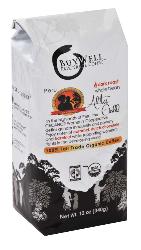
Kroger will be carrying a Café Femenino coffee roasted by BuyWell Fair Trade Coffee: Peru Alta Gold, an organic dark roast produced by 743 women of the CECANOR cooperative in the Penachi region of Peru. (Click here for our review of several BuyWell coffees.) While at the SCAA conference last spring,I spoke with OPTCO’s founders Gay and Garth Smith. I asked which of their Café Femenino countries had the best and most diverse shade, and Peru was the answer.

At the same time, I also attended a screening of a documentary on Café Femenino, Strong Coffee. This was an extremely powerful film about an equally powerful life- and community-changing project.Café Femenino is one of the most worthwhile and transformative projects in coffee today. Kudos to Kroger for making it so widely and easily available.