Smucker’s

2014 JM Smucker’s Corporate Responsibility Report

groundhog

Groundhog Day would be an appropriate release time for Smucker’s sustainability reports.

JM Smucker’s, owner of Folgers, Millstone, Café Bustelo, Café Pilon, and Dunkin Donuts retail coffee, has released its 2014 Corporate Responsibility Report, its fourth after being dragged unwillingly into developing a coffee sustainabilty plan by shareholders.

Once again, there isn’t much to say about the report’s coffee sustainability section. The coffee sections from the last two years have been nearly identical, much of it word-for-word — take a look at my posts on the 2013 and 2012 reports. This year, they have at least done some rephrasing, but follow the same theme as previous reports — restating their goal for certified coffee purchases to reach 10% of its total retail purchases by 2016, and highlighting organizations that they support: TechnoServe, the Hanns R. Neumann Stiftung Foundation, and World Coffee Research.

The most notable difference this year is that they have finally stated their progress towards the 10% certified goal: in 2014 they indicate that 6% of the coffee they purchased was certified. Caveats: First, we don’t know the total amount of coffee the company purchases; the last figures available from 2008 and 2010 put it at an average of 265,000 tons. Second, the company is careful to specify the goal is 10% of retail purchases. Not sure how this is defined, or what proportion of total purchases this represents.

So in a strict sense, this report does indicate some progress in the company sourcing third-party certified coffee. However, we can’t really quantify it, and the certification they are using is primarily UTZ Certified, which doesn’t have strong ecological criteria.

One also has to wonder what happens when the 10% certified purchases goal is reached. The company states it believes this will represent the “highest level of certified purchasing by any mainstream coffee roaster in North America.”  This may or may not be true, depending on their definitions, but I can certainly argue that buying a higher volume of UTZ Certified coffee (at best less than 30,000 tons using a generous estimate) does not have the ecological impact of, for example, Starbucks sourcing 180,000 tons of coffee under its CAFE Practices standards, which have stronger environmental criteria than UTZ.

I don’t give a huge amount of weight to their “partnerships” with organizations that help coffee growers. It’s not that these organizations don’t do substantial important work (they do), it’s mostly because the company’s level of support and involvement is difficult to evaluate. Their support to TechnoServe is apparently financial. In the past it has been a very small fraction of Smucker’s profits; no details have appeared in recent TechnoServe annual reports. There is an entire page in the Smucker’s 2014 report about the company’s “on the ground” partnership with the Neumann Foundation in Sumatra — yet curiously nothing about this project (or Smucker’s) appears on the Foundation’s web site.  The relationship with World Coffee Research also appears to be monetary, but again, no details on the level of support. For a company that in 2014 made $642 million in profit on over $2 billion in net sales in their U.S. retail coffee division alone, I’m not sure we can give Smucker’s much credit for meaningful sustainability efforts from these apparently modest contributions.

Overall, this report is a slight improvement over the past 2 years, but this powerhouse coffee buyer has a long way to go to improve transparency and prove their commitment to purchasing sustainable coffee.

Illustration adapted from photos by Cornelia Kopp/AlicePopkorn and Ken Fager/kenfagerdotcom at Flickr under Creative Commons Licenses.

Update on JM Smucker’s coffee sustainability

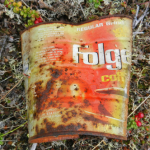
rusty-folgersIn 2011, I profiled JM Smucker’s (lack of) approach to coffee sustainability issues. Since the company acquired Folger’s and some other brands, coffee has become the company’s biggest profit-maker. For two years, major investors pressed the company to develop and report on a coffee sustainability plan.

Last year, Smucker’s began to outline small steps toward a green coffee sustainability vision. In their 2012 Corporate Sustainability Report, they offered,

  • A goal for certified coffee purchases to reach 10% of its total retail purchases by 2016. This would be primarily UTZ Certified coffees, which don’t have strong ecological criteria (it’s the most popular certification for the big commodity coffee buyers), but will greatly improve transparency.
  • Partnerships with organizations that offer smallholder support: TechnoServe, the Hanns R. Neumann Stiftung Foundation, and World Coffee Research.

You can read my whole recap and analysis of the 2012 report here. As for the current 2013 Corporate Sustainability Report (PDF), it’s pretty much a rehash of the points above.

There are no further data on what progress they are making on reaching their 10% goal, e.g., how much certified coffee they are currently buying.

Regarding their partnerships, there is also no new information. The report does go into some detail discussing the goals and achievements of the organizations they support. While the company makes no claims about their specific role in these good deeds, I find this overall approach misleading.

Let’s put it this way:  I do some volunteer work and make an annual donation to a local environmental non-profit. While my contribution may be valuable to the whole, I would be called a fraud if I tried to pad my resme with this organization’s accomplishments.

Two new items are largely symbolic, in my opinion. First is their $50,000 a year membership in The Sustainability Consortium, originally established with funds from WalMart. Many very large corporations are now touting their association with TSC, who states that their mission is “to design and implement credible, transparent and scalable science-based measurement and reporting systems accessible for all producers, retailers, and users of consumer products.” Indeed, transparency is mentioned a lot on their website. For instance, they state that consumers desire “…product transparency” and are confused about “…what constitutes a sustainable product” — and that these were major motivations behind the formation of the organization. Alas, when I try to access the Key Performance Indicators and Category Sustainability Profile for coffee, I find it requires member login. I confirmed with TSC that these data are not available to the public. TSC could very well be doing fantastic work but although their website is extensive, I could not find or access any specific material to help me as a consumer determine whether member coffee companies are taking meaningful steps to improve their supply chain sustainability.

(For more background on TSC, see a couple of Joel Makower’s great pieces at GreenBiz, Inside Walmart’s Sustainability Consortium, and Driving the Sustainability Consortium’s ambitious agenda.)

Finally, Smucker’s is producing “Life is Good” branded coffee, which is is UTZ Certified.  You may know Life is Good for their t-shirts and stickers, etc., whose raison d’être is to spread the power of optimism, with 10% of its net profits going to their own foundation for children.  At $6.99 to $7.99 per 11-ounce bag, the coffee won’t fill the foundation’s coffers (or those of the farmers it was sourced from). While promoted as a premium coffee, it’s safe to be suspicious of the quality of a brand that sells banana bread-flavored and s’more flavored varieties.

I also believe in the power of optimism, but I am not optimistic that JM Smucker will ever be a significant purchaser/purveyor of truly ecologically-sustainable coffee.

Coffee can photo by Travis S. under a Creative Commons license.

Smucker’s sustainability, take 3

JM Smucker’s, owner of Folgers and other grocery and convenience coffee brands, is one of the world’s largest coffee buyers. Yet only a fraction of a percent of that coffee is certified in any way, and the company has a lousy sustainability record.

Since 2010, two large investors have been trying to get Smucker’s to work on substantive and meaningful annual sustainability reporting and address risks associated with climate change, with marginal success. The investors planned on trying again with a shareholder proposal for the 2012 annual meeting. They have withdrawn the proposal based on some positive signs in Smucker’s 2012 corporate responsibility report.

The Smucker’s 2012 CSR report (PDF) does have more meat than the previous effort (PDF).  Among the coffee-related highlights, some of which led to the withdrawal of the proposal, are:

  • A goal for certified coffee purchases to reach 10% of its total retail purchases by 2016. Not surprisingly, they are focusing on UTZ Certified coffees, which don’t have strong ecological criteria; this is the most popular certification for the big commodity coffee buyers. It will greatly improve transparency, however, and UTZ standards have been evolving over time to include more and better-defined environmental criteria. Not sure what specifying “retail” purchases means. Does it not include coffee going toward the wholesale or food service segments?
  • Various partnerships with organizations that offer smallholder support.
    • First, there is their existing relationship with TechnoServe. As I’ve pointed out before, this particular “partnership” is a continuation of a donor/sponsorship started by Folgers’ previous owner, P&G. Both companies offered support at $150,000 (tax-deductible, I assume) annually — less than 0.03% of Smucker’s profit from their U.S. Retail Coffee segment alone. Presumably, their commitment is at or near the same level.
    • A partnership with the Hanns R. Neumann Stiftung Foundation to focus on agronomy training, organizational development, and climate change adaptation strategies in order to improve the farming conditions, yields, and incomes of small-scale coffee farming families. The language in the CSR report (“our work with…”) indicates that this may be a more substantive relationship, but I can’t find any details on the Neumann website.
    • Similar wording introduces their new partnership with World Coffee Research which will focus on developing hybrid varieties using classic breeding techniques. But then the report says Smucker’s is a “platinum sponsor” and I see that they are listed as donor members and not listed as partners on the WCR site.

However, there is this item in a featured box, which I consider a deceptive bit of greenwashing:

“Folgers was the first buyer of coffee from the Rainforest Allaince Certified Fazenda Modena farm in 2011, the inagural year of its certification. This Robusta coffee farm in Espirito Santo, Brazil, designates more than 30 percent of the farm as protected forest and borders a large natural lake.”

Fazenda Modena is the first robusta farm in Brazil to be Rainforest Alliance certified. But the entire production of this farm is 600 metric tons (or 0.24% of Smuckers annual coffee purchases). Further, Brazilian law requires preservation of a minimum of 20% of forested land by rural landowners. The 2012 revision of this law allows landowners to use non-native species — including coffee — to meet their legal requirement. Ergo, trumpeting this move doesn’t impress me.

I don’t have major objections to companies working on sustainability efforts by supporting worthwhile outside organizations, at least to begin with. But really, if you are going to throw money at something, make it an amount that will have impact that matches the magnitude of impact you have from your lack of sustainability efforts, and commensurate with your huge profits.

Smucker’s noises about producing their original sustainability report also resulted in a similar proposal by Trillium and Calvert in 2010 to be withdrawn, but the resulting report was short on substance. We’ll have to see how serious the company is about making real progress.

Let’s try this again

Shareholders will again propose that Smucker’s develop a coffee sustainability plan

JM Smucker Co., owner of coffee brands including Folgers, Millstone, Kava, and Café Bustelo, is the fourth largest buyer of coffee in the world. In 2010, they purchased over 250,000 tons of coffee, and only a fraction of a percent was certified in any way. A recent analysis by the Tropical Commodity Coalition notes that the company “does not provide verifiable procurement figures of certified coffees, has no specific goals for a more sustainable coffee sector, and its future commitment is extremely vague.”

Readers will recall that last year two major investors, Trillium Asset Management and Calvert Investments, put forth a shareholder proposal requesting that Smucker’s prepare a sustainability report.  The Smucker’s Board unanimously recommended that shareholders vote against this proposal. Nonetheless, at the August 2011 meeting,  roughly 20% of shareholders voted in favor of the proposal, with another 10% abstaining, for about a third not agreeing with the board*. (You can read the whole story with background here.)

This year, a similar shareholder proposal will be presented. The resolution, filed recently by Trillium Asset Management, requests that Smucker’s, within six months of the annual meeting, develops and publishes a coffee sustainability plan that goes beyond the insipid 2011 “plan.” This proposal will specifically ask that the plan include:

(1) quantitative goals for quantities of certified coffee purchases; (2) a method for evaluating the success of the plan in addressing the challenges of climate change to the Company and the farmers and ecosystems in its coffee supply chain.

American consumers continue to reward Smucker’s. The U.S. retail coffee segment contributed 49% of the total profit for the company in the quarter ending in January 2012; this segment reported a profit margin of 21.7%.

From their nostalgic ads featuring a bygone era, to their honoring of centenarians via Willard Scott, to their antediluvian view of sustainability and transparency, Smucker’s is stuck in the past. Hopefully this proposal will meet with some success at the annual meeting this summer and move Smucker’s into the present day.

*Another interesting proposal has been filed by a different group, asking that Smucker’s follow the Security and Exchange Commissions standard for proxy vote counting. Currently, Smucker’s counts all abstaining votes as votes in favor of management. Abstentions, where shareholders want their vote noted but not counted, are not figured into the SEC  formula. Counting these as in favor of the management seems to clearly be against the wishes of the abstaining voters.

Folgers owner: not waking up to sustainability

Since acquiring Folgers from Procter & Gamble in 2008, Smucker’s has balked at providing meaningful sustainability reporting. Pressure from corporate investors prompted a first-ever corporate sustainability report. The single page on coffee was disconcertingly deficient in details. The Smucker’s board opposed a second shareholder proposal to produce a sustainability report specific to coffee.

Only a tiny fraction — half a percent — of the coffee purchased by Smucker’s is certified Fair Trade or organic.

Background

J. M. Smucker’s, the jam and jelly folks, now owns some of the best-known coffee brands in the world. In 2008, Smucker’s took over Proctor & Gamble’s (P&G) coffee division — Folgers and Millstone coffee brands and Dunkin Donuts retail distribution. When it took over P&G’s coffees (in a cleverly constructed piece of corporate tax avoidance) Smucker’s became one of the corporate Big Four coffee companies. Even prior to their recent acquisition of Café Bustelo, Café Pilon, and other brands from Rowland Coffee Roasters, coffee made up 44% of Smucker’s product sales.

P&G did not score high grades in corporate responsibility among its peers. So I have been waiting to find out if Smucker’s would be more transparent about coffee sourcing than P&G, and do more to promote sustainability in their coffee supply chain. Looks like I’ll have to keep waiting.

First CSR report – vague and lacking details

In 2010, large investors Trillium Asset Management and Calvert Investments put forth a shareholder proposal requesting that Smucker’s prepare a sustainability report. The previous year, Smucker’s sustainability reporting efforts amounted to a single page in their annual report, described later by Trillium and Calvert as “grossly inadequate.”

When Smucker’s pledged to begin substantive and meaningful annual sustainability reporting, the proposal was withdrawn. In the ensuing months, Trillium and Calvert met several times with Smucker’s. The company provided no details on what would be included in the promised first report, which was released in late July, and the company denied Trillium and Calvert’s request to review it prior to publication. When it was released, the CSR had only one page is devoted to green coffee sustainability. It says very little. Smucker’s describes their two areas of focus:

1. “We have set goals to substantially increase the purchase of certified green coffee over the next five years.”

They provide no specific goals, no timeline, no roadmap or strategy. The other members of the Big Four at least provide actual numbers, however modest they may be (see my posts on the latest from Kraft, Sara Lee, and Nestlé). Smucker’s coffees span nearly 75 varieties and flavors. A mere four are Fair Trade certified, with three (formerly five) of those also certified organic. In 2007, one was Rainforest Alliance certified, but that was discontinued. As of 2009, Smucker’s purchased the smallest amount of certified coffee — 0.05% of their 280,000 metric tons — of any of the major coffee companies.

2. “Our plan’s second area of focus supports Technoserve…” Smucker’s commits to five more years of support.

Most of the rest of the page describes the work Technoserve performs relating to coffee. These are not specific partnerships with Smucker’s, which is one of many donors to the organization. While technically true, it is misleading for them to say “Our coffee brands’ commitment to Technoserve began nearly 10 years ago.”  P&G was a donor, pledging $150,000 a year for ten years starting in 2002. Smucker’s has only donated the last two years, since they became owner of the P&G coffee brands, honoring P&G’s previous commitment.

For some perspective, their $150,000 (tax-deductible, I assume) annual donation is less than 0.03% of Smucker’s profit from their U.S. Retail Coffee segment alone.  Presumably, their continuation for the next five years will be at or near the same level.

Board fights 2011 Shareholder Proposal for coffee sustainability report

It’s time to wake up to the need for sustainability in your supply chain.

Based on their unsatisfactory discussions with Smucker’s, Trillium and Calvert anticipated that the CSR might not meet expectations. When it was evident the CSR would probably not be released prior to the deadline for filing proposals for the 2011 annual meeting, Trillium and Calvert filed another shareholder proposal in March.

This request was more specific. It pointed out that coffee represents a large percentage of Smucker’s profits (48%) and net sales (40%). The request emphasized the risk of climate change to the coffee supply chain. This was entirely appropriate. Last year the U.S. Securities and Exchange Commission (SEC) issued a guidance document outlining instances when corporations may be required, under existing rules, to disclose to investors business risks to due to climate change.

The entire text is of the proposal here. The bottom line was that

“…within six months of the 2011 annual meeting, the Board of Directors provide a report to shareholders … describing how the company will manage the social and environmental risks and opportunities connected to the company’s coffee business and supply chain. We recommend the Board include in the report a concise discussion of how it will address temperature changes, changes in rainfall patterns, and the company’s responsibility for its impact on the coffee farming families in its supply chain.”

Upon receipt of this proposal, the Smucker’s board petitioned the SEC to allow them to exclude the proposal from the proxy materials, in part because a CSR would be forthcoming. The SEC denied their request, stating “it does not appear that Smucker’s  public disclosures compare favorably with the guidelines of the proposal.”

In their letter to shareholders, the Smucker’s Board unanimously recommended that shareholders vote against this proposal, stating that they felt the forthcoming CSR was adequate. In contrast, Trillium and Calvert’s letter to shareholders, recommending a “yes” vote, called the CSR “a significant disappointment.”

Results of the voting on the sustainability proposal

At the annual meeting on August 17, roughly 20% of shareholders voted in favor of the proposal. Combined with the 13% abstaining, a third of Smucker’s shareholders did not agree with the company position. This is actually a strong showing for a first-time environmental proxy issue. Given that the CSR was published less than three weeks prior to the meeting, many shareholders probably did not even get a chance to read and digest it.

Shareholder proposals are not legally binding, but used to send a message to corporate boards that their investors want change.

Maybe the younger generation of the Smucker’s family will adopt a more modern view of sustainability efforts, and the vintage outlook can be shelved.

What’s next?

Smucker’s is a company that manufactures and markets agricultural-based products. Coffee makes up a huge portion of their business. Should their coffee division continue to grow at the rate of the last few years (in 2011, coffee profit increased 11% over 2010), aided by the Rowland brands, Smucker’s could find itself primarily a coffee company. Their supply chain is clearly vulnerable to the impacts of climate change. Further, since companies are required to disclose information that influence investment decisions, and the SEC has indicated climate change is a risk factor that must be considered, Smucker’s may eventually need to get off the dime.

As noted, Smucker’s main competitors, Kraft, Nestlé, and Sara Lee, each have well-defined, very public sustainability initiatives (however miserly they may be relative to the size of their overall businesses). Smucker’s lags far behind them, and that is really saying something. Perhaps the only good news is that they have nowhere to go but up.

To take a look at the report and financials yourself, download these PDF documents, which should also be linked at their web site:

  • J. M. Smucker Co. 2011 Annual Report (see page 50 for coffee sales, pages 24-25 for profits, page 50 for product sales)
  • J. M. Smucker Co. 2011 Corporate Sustainability Report (see page 18 for coffee)
Folger’s finds another way to make poor beans taste "better"

Folger’s (owned by Procter & Gamble*) is introducing a new roasting method that they say is “the biggest innovation since the launch of decaf” according to an article in the New York Times. The article says

P.& G. has overhauled its main roasting plant in east New Orleans — which employs more than 400 people — to include a step it calls ”predry” or ”preroast.” Each bean is fully dried before roasting, ensuring a more evenly cooked bean, which makes it less bitter…Jim Trout, innovation leader for research and development, at P.& G., said: ”It’s like thawing a turkey before you cook it. If you don’t, the outside will be burnt and the inside will still be raw. This way it cooks evenly all the way through.”

P&G makes it sound as if they’ve come up with some necessary innovation that will improve the taste of coffee. The truth is, it’s only necessary for corporations like P&G, Kraft, Nestlé, or Sara Lee that deal is millions of tons of coffee to utilize multiple post-harvest steps to make their product drinkable.

Green coffee beans do contain water. The drying process, which takes place shortly after harvest at the farm or mill, brings this down to 11 to 12  percent (further drying makes the beans brittle and the flavor bland). Skilled coffee roasters take the unique characteristics of a particular crop into account (including water content) in order to transform the raw, tasteless bean into a the flavorful roasted product that will highlight the best features of the crop in the cup. They also roast in small batches, from 7 to 25 or perhaps 50 pounds, in order to best control the roasting process and the delicate transformations taking place.

I repeated the word “crop” to remind us all that coffee is an agricultural product, not a bolt or a fan blade. Coffee beans vary from year to year, region to region, farm to farm, and even tree to tree depending on microclimate variables.

That’s the first problem big companies like P&G face. They get tons of beans from multiple sources. Some are wetter than others, and some are drier. They roast them in 300-pound batches. If they are to get any consistency, they have to start off with a uniform product — something closer to a bolt than to an agricultural product. Pre-drying/pre-roasting would indeed even out the beans so that they can “cook evenly all the way through.”

Actually, pre-drying is not a new procedure for P&G. In 1989, P&G used it to make beans more porous in order to impregnate them with compounds that would enhance the flavor while simultaneously treating them with enzymes to extract bitter compounds (found in cheap robusta beans). The following year, P&G applied for a patent using pre-roasting for creating dark roasts. They come right out and state in the application that

Low grade coffee beans with many defects will burn and scorch more readily than wholesome beans, causing non-uniform roasted bean colors and tastes … It is an object of the present invention to dark roast poor quality beans with less tipping and burning when compared to present dark roast processing.

Pre-drying and fast roasting also results in roasted beans that are less dense. In 1991, P&G worked out the method, incorporating pre-drying, that produced reduced density (lighter by weight) high yield (same number of cups from fewer beans) coffee. P&G’s “new” roasting method saves P&G lots of money in shipping costs.

According to the data provided by P&G to the Enquirer, what was once a 13 oz. can will now weigh 11.3 oz. but still  produce 90 cups of coffee. Tens of thousands of lighter cans of coffee will add up to significant cost savings in shipping with today’s high fuel prices. If the consumer pays the same price for each can of coffee, it will generate even more profit.

Technically, it’s true that this method improves the taste of Folger’s coffee — because they use low-quality beans to begin with, as is stated in each of their patent applications. In their application “Process for making reduced density coffee,” P&G notes that robustas are the preferred bean (it also states that even moldy beans “show a slight improvement”!).

Do not support these technological “advances” that allow the big multinationals to continue to purchase, and encourage the farming of, low-quality cheap coffee beans. It pushes farmers into poverty and destroys the environment.

*JM Smucker purchased the Folger’s brand earlier this year, and the deal is expected to be completed within a few months.