Corporate coffee

Illegal coffee growing threatens wildlife, Kraft major buyer

In a well-investigated and detailed report (pdf) released yesterday, the World Wildlife Fund (WWF) revealed that robusta coffee is being illegally grown in southern Sumatra, with most being purchased by large coffee producers such as Kraft and Nestlé.

“Illegally grown coffee is mixed with legally grown coffee beans and sold to such companies as Kraft Foods and Nestlé among other major companies in the U.S. and abroad.” — WWF

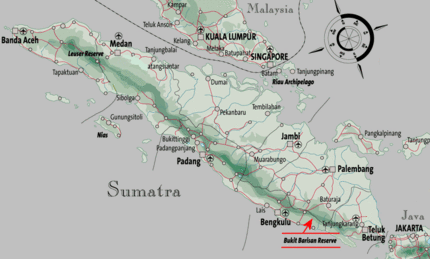
The coffee is being grown inside Indonesia’s Bukit Barisan Selatan National Park, which has over 300 bird species and is one of the few places where the endangered Sumatran subspecies of tigers, elephants, and rhinos coexist. This park has already lost 30% of its land to illegal agriculture, mainly coffee. WWF found 173 square miles being used for illegal coffee growing, with a yield of nearly 20,000 tons of coffee annually.  Wildlife has abandoned these cultivated areas.  WWF tracked the illegal coffee from the park through export routes to multinational coffee companies using satellite imaging, interviews with coffee farmers and traders, and trade route monitoring.

The U.S. received 17% of the coffee tainted with illegally grown beans.  Illegal beans are sold to local traders, who mix them with legally grown beans which then make their way to exporters. Major international companies purchase beans from exporters, and if they are not conscientious about their supply chain, they may not know they are buying illegal beans. The main buyers are shown in this graph from the report (click to enlarge), with Kraft being the number one buyer.

Exports of robusta beans from Lampung province, where most the park lies, have been steadily increasing, and the top six companies on the graph buy 55% of all Lampung beans. The profits spurring the encroachment into the park are financed by the purchases of these global roasters, and all Lampung beans have a very high probability of being contaminated with illegally grown beans, according to WWF. Talcoa (part of Kraft Foods), Kraft, and Nestlé were the top recipients in 2003-2005; Folgers (Procter & Gamble) and Starbucks received smaller amounts in 2004.

After being contacted by WWF, Kraft and Nestle were among five companies in the early stages of “engaging with WWF” on the problem. Four companies, including ED&F Man, parent company of VOLCAFE (which supplies beans to Nestlé and Maxwell House), denied involvement. Eight other companies did not reply (full list in report).

Remember this is robusta coffee, so you don’t have to worry about the Sumatran arabica beans from your favorite specialty roaster. The illegal beans are those used in most supermarket blends.  Another reason to not buy these coffees!
See update #1 here and a late 2007 update here.

Hat tip to Ned Potter’s ABC News Science and Technology blog.  Map adapted from GoVacation Indonesia.

Wal-Mart and Sam’s Club coffee

In my post summarizing Coffee Review’s look at supermarket coffees, I mentioned that Wal-Mart’s coffee deserved special attention. I was unable to find out exactly where Wal-Mart sources its ”Great Value 100% Arabica” but I can tell you where it sources its Sam’s Club’s Member’s Mark: Café Bom Dia, a huge Brazilian coffee roaster and importer. Because Wal-Mart prefers to (has to) work with large suppliers, and because the Great Value coffee contains beans from Brazil, I’m sure this is a major source for the Great Value as well as the Member’s Mark.

So, when you buy coffee from Wal-Mart or Sam’s Club (including the Café Bom Dia and Marques de Paiva brands), here is where your coffee comes from:

The photo is from the Café Bom Dia web site (since removed). The coffee is grown in the Mata Atlantic Forest region in the southern Brazilian state of Minas Gerais, one of the world’s biodiversity hotspots. Only 7.3% of the original forest remains, having been cleared for agriculture, with coffee being the major crop. In the Mata Atlantic, 40% of the plant species are found nowhere else on earth, and there are 30 critically endangered vertebrate species, including 15 birds.

Café Bom Dia has 3 million coffee trees on over 741,000 acres. Although deforestation from coffee cultivation has occurred since the beginning of the 19th century, I do not want to buy coffee grown in this manner, nor do I want to encourage this type of production or expansion of these farms. Sustainably grown coffee mimics, at least to some degree, the natural forest system.  High production coffee is its antithesis, a factory system geared towards efficiency, uniformity, and low cost. Economies of scale dictate that when you buy coffee from large retailers and corporations, you are not supporting biodiversity and with your dollar are voting against the environment.

It is astonishing to me that Member’s Mark brand is Rainforest Alliance (RA) certified. I’m guessing that once again this means that the coffee includes only the minimum 30% certified beans, but I am writing RA for clarification.  Frankly, I don’t understand how RA can justify encouraging purchase of coffee from companies which obtain most of their coffee from giant monocultures. We’ll see what they say.

More information:

Update: Wal-Mart’s trustworthiness regarding organic food labeling is discussed in this new BusinessWeek article, which links to photographs taken by the Cornucopia Institute showing misleading labeling.

Further update (2008): Fact check on Walmart’s false claim about Sam’s Choice Rainforest Alliance certified coffee.

Coffee Review reviews supermarket coffees

The latest at Coffee Review is a look at mainstream supermarket coffees.  Reviewing prepackaged, pre-ground coffees is a departure for Kenneth Davids’ site, which is the best source on the web for reviews of specialty coffees. Davids was honest, perhaps even courageous, giving a couple of coffees fair scores. However, his overview states that “the mainstream supermarket coffees reviewed here offered mainly mediocrity, bracketed by a couple of excursions into pretty good and more than a couple into sheer repulsiveness.”

Just because a few coffees scored “pretty good” should not encourage people to stick with these cheap beans, for reasons described below. He reviews 14 coffees available in major supermarkets, which include a couple I’ve never heard of (regional?) and some “crossover” products such as Peet’s and Starbucks.  You should certainly read the whole article, but I’d like to mention two points he makes about the big corporate coffees. He reviews Maxwell House and two Yubans (all owned by Kraft); four by Folgers (owned by Procter & Gamble); and MJB Premium (owned by Sara Lee).

All of these commodity brands share a similar heritage.  Davids writes:

Most of the robustas in the cans appeared to have been steamed to remove the sewery taints these coffees acquire through being dried inside the fruit in rotting heaps. The result is a neutral, cloyingly sweet, woody, vaguely nut-like cup, usually with a slight residual hint of rot. All of the standard branded, canned blends shared a similar steamed-robusta-heavy profile, with only minor differences.

Aside from the lousy taste, the corporate (and public) thirst for cheap robusta beans is what precipitated the coffee crisis, driving thousands of small farmers who grew quality arabica beans out of business. This is most often framed as a serious humanitarian crisis — and it is — but it has also been an ecological disaster. Plummeting prices led farmers to sell their farms, or convert them to less environmentally-friendly crops (including drugs) or to sun coffee. Please read more here.

Davids discusses what inexpensive coffees mean to farmers, even the theoretically beneficial types like the Rainforest Alliance certified Yuban blend (which I discussed in depth here). He notes, “mainstream supermarket coffees generally fail to provide much option for those of us who want to recognize and reward coffee growers as our colleagues rather than exploit them as unacknowledged drones in the vast global commodity hive.”

One coffee he reviewed, which got a decent score, was Wal-Mart’s Great Value 100% Arabica, which was also incredibly cheap (“someone got shafted..at the coffee-tree end of the supply chain.”) The importance of a retail giant like Wal-Mart in the coffee business deserves a post of its own, which will be forthcoming.

Genetically-engineered coffee

Nestlè, whose coffee brands include Nescafe and Taster’s Choice, has obtained a patent on a genetically modified coffee plant that will improve the solubility of instant coffee powder made from its beans. The patent also includes other aspects of the process which produces the coffee powder.

Nestlè has come under fire in the past for not labeling products that contain GE ingredients and insufficient third-party testing.  Must we take any risks for something as mundane and profit-oriented as faster-dissolving instant coffee?!

Other genetic manipulation going on by various groups working with coffee includes goals such as:

  • Simultaneous ripening of coffee cherries. Cherries would ripen to a certain point then stop; final ripening would be triggered by spraying with ethylene, at which point they could be picked by machines. To be practical, this would have to be done on short coffee varieties that also require high chemical inputs to maintain good yields.  A lot of this work is being done at the University of Hawaii, and Kona coffee growers strongly object to any GM coffee being put in the field in Hawaii, as they are concerned about the genes “escaping” and contaminating their own plants, a situation not without precedent.
  • Beans with little or no caffeine. As explained in a previous post, caffeine protects plants from pests, so “decaffeinated” plants may require more chemicals to protect them. The work I’ve seen so far is being done on Coffea canephora — robusta — which has far more caffeine than higher grade arabica beans.  This might seem like starting at a disadvantage, but the choice is no doubt due to the ability to mass-produce robusta in large, sunny, chemically-doused plantations. There are naturally-occurring low caffeine coffee varieties that are bitter and not commercially viable. Attempts to breed these traits into arabica varieties (which are not closely related) have been unsuccessful.  Recently, several mutant low caffeine arabica plants were located in Ethiopia.
  • Pest-resistant varieties.  Initially, crops implanted with proteins that are lethal to pests (usually derived from Bt) may lead to decreased pesticide application. Many transgenetic Bt crops target specific pests, and that may cut
    down on broad-spectrum insecticide application. On the other hand, other case studies have indicated that there is a lack of support for claims that GM crops result in a widespread decrease in chemical use. Pests are more likely to become resistant to insecticides in genetically-modified crops than are crops that are sprayed with pesticides.  There is also concern about impacts on non-target organisms. Since many coffee pests can be kept in check by careful cultivation and integrated pest management the risks associated with GM Bt coffee seem unreasonable.