Coffee news and miscellany

My year in beans: 2009

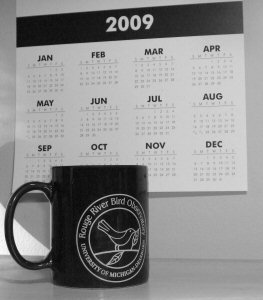
Last year I kept track how much I paid for coffee over the course of 2008. This year, I kept even more precise numbers. Here are my 2009 stats:

  • 81 bags of coffee totaling 63 pounds; I probably gave away or shared 5 to 8 pounds.
  • Total retail price = $1031. I purchased very few bags locally, so I also spent $129 on shipping, for a grand total of $1160 for the year.
  • This still works out to only $0.45 per six-ounce cup.
This isn’t even a good example of how little you have to spend to drink great, sustainably-grown coffee, because I’m pretty self-indulgent. I drink a lot of fine coffees, with 13 in 2009 retailing over $20/lb. The most expensive was a Bolivian Flor de Mayo from Terroir Coffee, which was the equivalent of $55.90/lb. All but 6 of the coffees were single-origin, and they came from 19 countries and 20 roasters. I know I’m not a typical coffee drinker.

Let’s say you order from Birds & Beans, which only sells organic, SMBC Bird-Friendly certified coffees, and donates a portion of profits to bird research and conservation. Their coffees retail for $19.95 for 2 pounds. If you drink (and gift) as much coffee as I do, that’s $618 a year in coffee. They charge a flat rate of $8 for shipping, so even if you order twice a month (they have a handy subscription service so no matter what you want or how often you want it, you don’t even have to think about it), that’s
another $192, for a total of $810 a year, or $0.31 per six-ounce cup. Amber at Birder’s Lounge decided to keep track of her shade-grown coffee consumption last year, too, and only spent $0.40 a cup.

For most people, it’s a myth that environmentally-friendly, sustainably-grown coffee is too expensive. And given the number of great roasters providing subscription services similar to the one described above, it’s also a myth that environmentally-friendly, sustainably-grown coffee is too hard or inconvenient to get.

I’ll conclude my New Year’s crusade against cheap coffee with the words of Geoff Watts, which appeared in a comment in a post at Hungry Magazine (which may now be defunct). Geoff is Vice President of Coffee and the green coffee buyer for Intelligentsia Coffee, spending the bulk of his year on coffee farms with producers. My emphasis added.

“The mainstream first-world consumer has held stubbornly to the idea that coffee is a cheap luxury, that  the $1.00 bottomless mug is somehow a right or a deserved privilege. It is this very attitude that will continue to ensure that the modern smallholder coffee farmer has little hope of escaping a life of extreme poverty. Cheap coffee (and by ”cheap” I mean low cost, which typically equates to low quality) is one of the many forces shackling the developing world and suppressing opportunity for advancement for a huge chunk of the planet’s population who depend on coffee to make a living.

And while of course it makes sense to be thrifty in difficult economic times, we still need to realize that the decisions we make will have an impact further down the line. For a consumer the choice to purchase cheaper coffee has ramifications that extend far beyond the personal sacrifice of taste in favor of lower cost. It impacts the way coffee is produced, the way it will be produced in the future, and the ability of those who produce it to earn a living wage from their efforts.”

How can you not afford to drink environmentally-friendly, sustainably-grown coffee? Make this your resolution for 2010.

Very special promo on Counter Culture Holiday Blend 2009

My holiday fundraiser for the Smithsonian Migratory Bird Center

One of my favorite coffees is Counter Culture’s Finca Nueva Armenia from Guatemala’s Huehuetenango region. We reviewed it in November 2008. Here are some quick facts about this coffee:

  • Although it is not marketed as such by Counter Culture, this is a certified Bird-Friendly farm, meeting the highest shade and biodiversity standards available for coffee. You can verify this status at the Smithsonian Migratory Bird Center (SMBC) web site; just click on “Guatemala.”
  • It’s certified organic (this is also a requirement for Bird-Friendly certification).
  • As a family-owned farm, Finca Nueva Armenia doesn’t qualify for Fair Trade certification, which only covers small farmers that are part of a cooperative. However, this coffee is Counter Culture Direct Trade Certified, in which Counter Culture pays a minimum price that is well above the Fair Trade floor price, plus quality incentives. Price and other aspects of the program are certified by a third party.

Finca Nueva Armenia has remained consistently delicious the last several crop years. So I was thrilled to find out that Counter Culture has decided to use this coffee as their 2009 Holiday Blend. As they have done in the past, Counter Culture’s “blend” is not composed of coffees from different origins, but a single origin roasted using a European technique called Vienna MÁ©lange, in which different roasts are mixed and blended. You can read more about this technique here.

This year, for each bag of Holiday Blend sold, Counter Culture will be donating $1 to a native tree-planting project. Acting on a suggestion by the SMBC, the Recinos, owners of Finca Nueva Armenia, want to incorporate more fruit-bearing and canopy trees in the coffee production areas. These funds will help cover costs of collecting seeds from native trees, raising them in their nursery, and planting and tending them. So far, they have 7500 seedlings.

I want you to support this tree-planting effort; support the Recinos family’s commitment to growing organic, shade-grown, Bird-Friendly coffee; and I want you to try this fine sustainably-grown and sourced coffee.

For every bag of the Finca Nueva Armenia Holiday Blend purchased by a Coffee & Conservation reader from now through December 21, 2009,  I will donate $1 to the Smithsonian Migratory Bird Center*.

The Holiday Blend is $11.75 for a 12-ounce bag. That’s $0.65 for a cup of great coffee. Counter Culture is now offering a $3 flat rate shipping for all orders — so even if you only order a single bag, it is still only $0.82 a cup (calculate it here yourself).

Order it here, and put your money — and mine, and Counter Culture’s — where our hearts are: in support of a great future for great coffee and the birds and biodiversity that depend on it.

UPDATE: I rounded up and contributed $50 to SMBC…I wish more people had cooperated, and am up for ideas on how to run a similar promotion next year.

*The Fine Print. Send me a copy of your order via email (coffeehabitat AT gmail.com). I’ll just note how many bags of the Holiday Blend you purchased so I can keep track, then I’ll delete it. It does not contain your credit card information (but feel free to strip out the payment section if you like) and I won’t save any of your personal information. I am a modestly-compensated ecologist, so I’ll have to cap this at $250, but feel free to make me fork over every penny. Does anybody care to join me in this effort with a match in part or whole? Send me an email!  This promotion was entirely my idea, and I am not receiving any compensation for this promotion from Counter Culture.

Coffee: The World in Your Cup is hitting the road

Coffee: The World in Your Cup is an exhibit providing a broad overview of the powerful influence of coffee on environments, human cultures, and economies worldwide. For nine months this year it was at the organizing institution, the Burke Museum of Natural History and Culture, in Seattle. Now it is going on the road.

The exhibit, done in collaboration with the University of Washington, the Smithsonian Migratory Bird Center, Seattle University, Seattle Audubon, and the Specialty Coffee Industry, includes videos, photographs, and coffee tastings from local roasters. The web site describes some of what visitors learn:

Coffee explores the environmental and social impacts of the coffee industry and recommends ways for consumers to make socially and environmentally responsible coffee purchases at the grocery store or in a coffee shop. Concerned about how coffee affects human health? Learn about the impacts of caffeine, the world’s most commonly-used drug, on your body. Curious about how coffee became so popular? Discover its early controversial reputation as a “revolutionary drink,” and consider the culture that surrounds coffee in the twenty-first century.

Here is the current schedule:

  • World Forestry Center, Portland: Oct 17, 2009 to Jan 10, 2010 (includes coffee break weekends featuring local roasters)
  • University of Northern Iowa Museums, Cedar Falls: Feb 13 to May 9, 2010
  • Yale Peabody Museum of Natural History, New Haven: May 20 to Sep 19, 2010
  • Gwinnett Environmental & Heritage Center, Buford, GA: Oct 9, 2010 to Jan 2, 2011
  • Museum of the North, University of Alaska, Fairbanks: Jan 22 to Apr 17, 2011
  • Museum of Texas Tech University, Lubbock: May 14 to Aug 7, 2011

This exhibit was so popular at Burke that it was extended three months beyond the initial run. If you have attended or do attend, drop a note in the comments regarding your impressions.

Shade coffee at HowStuffWorks

There’s an article up on the popular Discovery web site HowStuffWorks on shade coffee. The author contacted me a couple of months ago; Coffee & Conservation is cited frequently as a resource (under the common alias “Coffee Habitat”) and my photos of Finca Esperanza Verde from this post are used in the sections “Growing coffee in the shade” and “How shady is shade coffee?”

Speaking of Finca Esperanza Verde, the new crop is now available from Counter Culture Coffee as Cafe San Ramon. I can personally vouch for the shade, birds, and biodiversity present on this farm. I’ve just started drinking my first bag, and it’s excellent as always.