Birds and other biodiversity

How “wild” is Ethiopian forest coffee?

Ethiopia is the birthplace of coffee.  Coffea arabica originates in and still grows wild in Ethiopia in areas which are included in the Eastern Afromontane Biodiversity hotspot.  This hotspot — which also covers areas in the coffee-growing regions of Kenya, Tanzania, Rwanda, Burundi — has been reduced to 10% of its original extent. In Ethiopia, only about 2000 sq km of high-quality forest with wild arabica coffee remains.

As coffee consumers, we often hear about this “wild” coffee, or the generally rustic way in which coffee is typically grown in Ethiopia, and so we generally feel good about enjoying Ethiopian coffee from an ecological point of view. Technically, coffee is wild if it grows and reproduces or regenerates on its own within natural habitats.

How much Ethiopian coffee is grown in forests? Is it really coming from a pristine environment? Is this method of coffee production really preserving biodiversity?

A number of publications over the past few years help shed some light on this topic, and the results are a bit surprising.  The diagram at right is one I constructed using data from several sources (list at end of post). It indicates the different methods of coffee cultivation in Ethiopia, with rough approximations of the frequency of occurrence of each. Below are the characteristics of each method. This is all necessarily simplified, but most sources are in general agreement.

Plantation coffee (10%). This is the most intense method of coffee cultivation, where land is cleared and planted with coffee and managed for yield, which ranges from 450 to 1200 kg per ha annually (around 750 seems “average”). This includes larger estates, but may also involve small holders.

Garden coffee (or “semi-forest plantation”) (50%). Here coffee plants are transplanted to gardens around farmers’ homes. These plants might come from nearby forest, or farmers may exchange seedlings best adapted to an area or microhabitat; some may originate from a different region. Coffee is typically interplanted with other crops and fruit trees. Garden coffee is found most frequently in southern Ethiopia, including Sidamo, and well as Harerge/Harrar. Yields range from 200 to 700 kg/ha/yr.

Forest coffee (5%).  I think this is what most people probably envision when they hear about “wild” coffee. Here, coffee is harvested from trees growing in the forest, with virtually no management of the surrounding forest or vegetation, except perhaps some removal of undergrowth to facilitate access to the coffee trees. However, it should be noted that several authors have stated that coffee is managed in some way virtually wherever it occurs. Even among locals, “forest coffee” is broadly and variously defined. It may mean old overgrown plantations, or a single coffee tree in a pasture that was once forest. In any event, yields are well below 200 kg per ha, often between a mere 7 to 30 kg.

The Abyssinian Ground-thrush (Zoothera piaggiae) is a very secretive montane forest bird of the Bonga forest, thought to be declining due to habitat loss. Image: Wikimedia Commons.

Semi-forest coffee (35%). Most “forest coffee” is probably really in this category, termed semi-forest coffee. Here, the forest is altered and managed, often quite substantially.  The canopy is thinned once to several times a year to allow more light to reach the coffee and increase yields (which vary greatly depending on the extent of management, but are under 400 kg per ha per year). Trees with open, wide-spreading canopies are favored since fewer trees are needed to provide the preferred amount of shade. Undergrowth, competing shrubs, and emerging seedlings of other plants are removed to make harvesting easier and to make room for more coffee. The coffee grows wild, but is also supplemented by shrubs transplanted from elsewhere. Usually this means from a nearby forest, but occasionally even government-supplied cultivars are utilized.

While semi-forest coffee is better than a coffee monoculture with no canopy cover, several studies have shown that the managing of these forests does have serious consequences. Schmitt et al. (2010) found that in the Bonga region, 30% of canopy trees and most undergrowth was removed in these systems, severely disturbing forest structure.  Although the overall number of plant species increased by 26% in comparison with intact forest, it was due to secondary and pioneer species, mostly herbaceous species and vines. Forest species declined. Of special concern is the reduction in the number of tree ferns, an ancient family of plants which require shady, moist conditions that are becoming rare in some locations. In Jimma, Aerts et al. (2011) found a near-absence of a true upper canopy >15 m tall, and many climax forest species have nearly disappeared, as they are removed and seedlings are not allowed to regenerate.

Increasingly, forest coffee is being managed as semi-forest coffee, and semi-forest coffee is being managed and harvested with increasing intensity as coffee prices rise. The increasing management intensity has profound impacts on the forest and biodiversity. This diversity includes the genetic resources of wild races of Coffea arabica, as the practice of swapping and transplanting coffee, and any interbreeding, erodes the integrity of wild genotypes.

Volkmann (2008) did an analysis of the areas used by two dozen cooperatives that are part of the Kafa Forest Coffee Farmers Cooperative Union, and concluded that the designation “forest coffee” was probably inappropriate for the output of almost half of them, as they are highly degraded forests, or mostly garden coffee. However, in 2010, this area was designated as UNESCO biosphere reserve. Like other biosphere reserves, the goal is to have a core area that is protected, and buffer zones in which sustainable practices are allowed. Planned projects include reforestation.

Coffee is a main source of income in for people who live in regions where it grows wild. The solution isn’t prohibition, but probably some sort of incentive or compensation to manage the coffee in such a way that forest integrity and species are conserved. One idea being explored is some sort of certification that includes a production ceiling (so that managing for higher yields is not encouraged). The International Standards for Sustainable Wild Collection of Medicinal and Aromatic Plants might be a starting point.

There is much more on the coffee forests of Ethiopia at the web site of the Conservation and use of wild populations of Coffee arabica in the montane rainforests of Ethiopia project web site.

Papers cited and additional resources:

Aerts, R., Hundera, K., Berecha, G., Gijbels, P., Baeten, M., Van Mechelen, M., Hermy, M., Muys, B., and Honnay, O. 2011, in press. Semi-forest coffee cultivation and the conservation of Ethiopian Afromontane rainforest fragments Forest Ecology and Management DOI: 10.1016/j.foreco.2010.12.025

Gole, T.W., T. Borsch, M. Denich, and D. Teketay. 2008. Floristic composition and environmental factors characterizing coffee forests in southwest Ethiopia. Forest Ecology and Management. 255: 2138-2150.

Gove, A.D., K. Hylander, S. Nemomisa, A. Shimelis. 2008. Ethiopian coffee cultivation — Implications for bird conservation and environmental certification. Conservation Letters 1:208-216.

Hylander, K., and S. Nemomissa. 2008. Home garden coffee as a repository of epiphyte biodiversity in Ethiopia. Frontiers in Ecology and the Environment. 6: 524-528.

Labouisse, J., Bellachew, B., Kotecha, S., and Bertrand, B. 2008. Current status of coffee (Coffea arabica L.) genetic resources in Ethiopia: implications for conservation Genetic Resources and Crop Evolution 55:1079-1093. DOI: 10.1007/s10722-008-9361-7

Schmitt, C., Senbeta, F., Denich, M., Preisinger, H., H. Boehmer. 2010. Wild coffee management and plant diversity in the montane rainforest of southwestern Ethiopia African Journal of Ecology 48: 78-86.  DOI: 10.1111/j.1365-2028.2009.01084.x

Volkmann, J. 2008. How wild is Ethiopian forest coffee? The disenchantment of a myth. Conservation and use of wild populations of Coffee arabica in the montane rainforests of Ethiopia (CoCE) Project Report, Subproject 5.4. Center for Development Research (ZEF), University of Bonn, Germany.

Wiersum, K.F., T.W. Gole, F. Gatzweiler, J. Volkmann, E. Bognetteau, and O. Wirtu. 2008. Certification of wild coffee in Ethiopia: experiences and challenges. Forests, Trees, and Livelihoods. 18: 9-22.
Know your coffee birds: Horned Guan

The Horned Guan (Oreophasis derbianus) holds a near-mythical status for birders. It is large –almost the size of a turkey — and bizzare-looking, with a red horn projecting from its head, the exact function of which is unknown. It is rare, a critically endangered species with a population of  fewer than 2000 individuals. It is found in the cloud forests from 1200 to 3500 meters (primarily 2000 to 3000 m) in the Sierra Made de Chiapas of Mexico and in west-central Guatemala. Even a guided journey to accessible areas is described as “grueling,” “brutal,” and “a death march.” Thus, the Horned Guan is one of the most sought-after birds in the world: even Sports Illustrated ran an article about searching for the guan; the group included George Plimpton.

The Horned Guan is the sole member of its genus, and a member of the cracid family. This is the same family as the Jacu I wrote about in a previous post, the bird that eats and craps out coffee in Brazil and the source of “Jacu coffee.” Unlike other cracids, though, Horned Guans spend most of their time in trees rather than on the ground. The Horned Guan’s diet is comprised nearly exclusively of  fruit of several dozen species, but also some orchid flowers and leaves. By dispersing the seeds of a large variety of plants, the guans perform an important ecological function maintaining the health of forest diversity.

Horned Guans were discovered in 1844, but the species is so rare and difficult to locate that the nest and eggs were not first observed until 1982 [1]. Its rarity is a result of deforestation over the past century which been caused mostly by farming, much of which is coffee. Horned Guans are also hunted, and this pressure has increased as forest has been converted to agriculture. Now, populations are very small and fragmented.

The core areas of the El Triunfo Biosphere Reserve are some of the guan’s most important population centers. Biosphere reserves consist of core areas where no human activity is permitted, surrounded by buffer zones where activities of low ecological impact are practiced. One of the most critical activities is organic shade coffee farming. While Horned Guans are unlikely to occur within the coffee farms themselves, they have been recorded in some of the habitat set-asides in the buffer zones. Overall landscape characteristics have significant influence on biodiversity, especially for species which require large amounts of forest habitat, so the health and preservation of the buffer zones is an integral part of guan conservation.

Because of the communal land ownership in the area, community involvement in buffer zone management at El Triunfo is critical. It wasn’t until the mid-1990s that the first organic coffee farm cooperative was formed. Help from various aid, environmental, and coffee organizations has made organic coffee farming a success for both the communities and conservation. Starbucks has worked extensively here and sources their Shade Grown Mexico offering from these farmers. You can read more about their involvement and the coffee in a previous post.

Ecotourism is also important to communities in the buffer zones and elsewhere in areas where Horned Guans are found. Coffee farms and guan searches are often part of the same tourism projects, and provide income and incentive to preserve habitat for the abundant biodiversity in this region.

The continuing decline of Horned Guan populations has lead to the initiation of captive breeding programs. Fewer than 100 guans are present in a few zoos which are working to understand dietary needs and how to successfully breed the birds in captivity. Even if these projects succeed in raising new generations of guans, if their habitat is gone they can never be released. Their survival as a species in the wild depends on the preservation of their habitat.

Strictly speaking, Horned Guans are not found on shade coffee farms. But in a practical sense they depend on our support of ecologically-responsible activities near their forest homes, the most critical of which is shade coffee growing.

1. Gonzalez-Garcia, F. 1995. Reproductive biology and vocalizations of the horned guan Oreophasis derbianus in Mexico. Condor 97:415—426.
Horned Guan painting by Marco Pineda courtesy of CONABIO. Photo of Horned Guan by Stormtrooper under a Creative Commons license (bird at St. Louis Zoo).

Know your coffee birds: Black-and-white Warbler

The Black-and-white Warbler (Mniotilta varia) is a small, zebra-striped bird that is unique among our warblers. It is the only representative of its genus, and also the only one whose typical mode of foraging is clinging to and climbing up and down tree limbs and trunks in search of prey found in bark crevices. Black-and-White Warblers breed across much of central and eastern Canada and the eastern U.S. in forested habitats. They winter in Florida and the Gulf Coast, the West Indies, southern Mexico, Central America, and northern South America.

On their tropical wintering grounds, Black-and-White Warblers are frequently found on shaded coffee farms. They were one of the most commonly encountered North American migrants in shade coffee farms of Chiapas, Mexico. In Venezuela, they were found foraging in the coffee understory as well as in the canopy of shade coffee farms. In Jamaica, Black-and-white Warblers were among the birds found on shade coffee farms that preyed upon coffee berry borers, a major coffee pest.

In the Dominican Republic, 65% of Black-and-White Warblers maintained winter residence on shade coffee farms, all of which were smaller than 9 ha. This site persistence indicates that there were adequate resources on these farms for the birds. An amazing 40% of warblers returned to the same farm in which they were originally captured and marked a year or more later. Most small songbirds, especially those that make twice-annual long-distance migrations, have very short lifespans, so this return rate is impressive. It also underscores that migratory birds rely on finding their winter habitats intact when they return from nesting in order to survive.

Since 1973, researchers have been monitoring overwintering migrant birds in Puerto Rico, where Black-and-white Warblers are one of the most common species. They have documented a distressing decline in this species, which now occurs at less than 20% of its original abundance. While the study does not take place on coffee farms, it supports North American Breeding Bird Survey data, which has documented a significant decline of around 1% annually for breeding populations over the same period.

Black-and-white Warblers are still one of the most familiar New World warblers. Yet the studies cited above, as well as others, indicate that even abundant and adaptable species like this one are vulnerable to habitat loss and alteration. Plenty of research has shown that shade coffee farms are important wintering habitat for Black-and-white Warblers. Let’s make sure that when they make their annual sojourn to the tropics, they continue to find these farms for their winter homes.

See more in the “Know your coffee birds” series.

Photo of Black-and-white Warbler banded at the Rouge River Bird Observatory by Julie Craves. All rights reserved.

Range map from Cornell’s All About Birds.

Faaborg, J., K. M. Dugger, and W. J. Arendt. 2007. Long-term variation in the winter resident bird community of GuÁ¡nica Forest, Puerto Rico: lessons for measuring and monitoring species richness. Journal of Field Ornithology 78:270—278.

Greenberg R., P. Bichier, and J. Sterling. 1997 Bird populations in rustic and planted shade coffee plantations of eastern Chiapas, Mexico. Biotropica 29:501-514.

Johnson, M., J. Kellermann, and A. Stercho. 2010. Pest reduction services by birds in shade and sun coffee in Jamaica. Animal Conservation 13:140-147.

Jones, J., P. Ramoni-Perazzi, E. H. Carruthers, and R. J. Robertson. 2002. Species composition of bird communities in shade coffee plantations in the Venezuelan Andes. Ornitologia Neotropical 13:397-412.

Wunderle, J. M. Jr., and S. C. Latta 2000. Winter site fidelity of Nearctic migrants in shade coffee plantations of different sizes in the Dominican Republic. Auk 117:596—614.

Research: Birds reduce coffee pests in Jamaica, take 2

Pest reduction services by birds in shade and sun coffee in Jamaica. 2010. Johnson, M. D., J. L. Kellermann, and A. M. Stercho. Animal Conservation 13:140-147.

Matt Johnson’s team from Humboldt State University (CA) continues its excellent research on birds and ecosystem services on coffee farms in Jamaica. This study, similar to others, looked at pest reduction on a 18 ha farm, Kew Park Coffee. This farm is about 70% shaded; the other 30% has shade trees too young to provide shade yet. The farm also has one side bordered by dense second growth forest.

Exclosures were placed on some coffee trees to prevent birds (but not insects) from accessing them, and the number of insects on these and control trees were examined. The authors found that on trees where birds had access, there was a 40 to 58% reduction in the coffee berry borer (CBB), or broca (Hypothenemus hampei), the world’s most serious coffee pest.

The most common means of controlling CBB are the nasty pesticide endosulfan (although some are developing resistance), or scent traps. Traps are most effective when female CBBs leave coffee cherries to lay eggs in other cherries; the birds in these studies usually attacked the CBBs as they were entering new cherries. Thus, the birds can provide an extra layer of control even on farms that use traps. The authors determined that the pest reduction by the birds on this small farm amounted to 12% of the value of the crop.

This study did not find that birds were more effective at controlling pests in shade than in sun, but it may have been due to the small size of the farm and the proximity of adjacent forested area. A previous study on four different Jamaican farms by some of the same researchers found that the birds consuming CBBs declined dramatically in abundance as distance from forest patches increased. Birds may have made use of the unshaded portions of the farm in the current study because of the amount of forest and shaded coffee surrounding it. I saw a presentation by another member of this research team at a recent ornithological conference that indicated some of the bird species in question foraged in coffee during the day, but retreated to forest patches to roost at night.

Bird species found in the shaded portion of the farm in good numbers, but not at all in the sun portions, included the national bird of Jamaica, the Red-billed Streamertail (Trochilus polytmus), a hummingbird also known as “Doctorbird”, shown above); another resident hummingbird, the Jamaican Mango (Anthracothorax mango); and the North American migrants the Black-and-white Warbler (Mniotilta varia) and Prairie Warbler (Dendroica discolor), which winter on the island.

Johnson, M., Kellermann, J., & Stercho, A. (2010). Pest reduction services by birds in shade and sun coffee in Jamaica Animal Conservation, 13 (2), 140-147 DOI: 10.1111/j.1469-1795.2009.00310.x

Know Your Coffee Birds page

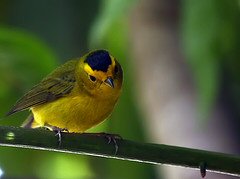
I recently posted the ninth account in the "Know Your Coffee Birds" series, this one on the Rufous-capped Warbler. This series provides mini-profiles of bird species that are commonly found on shade coffee farms, focusing on their use of coffee farms and why these farms are important to them. 

I've now put together a page that lists all the published accounts, as well as species that I anticipate writing up in the future. I'll update it whenever a new account is added.

Know Your Coffee Birds

Know your coffee birds: Rufous-capped Warbler

The Rufous-capped Warbler (Basileuterus rufifrons) is found through much of Central America, north through Mexico. This species is occasionally found in the southwestern U.S., when it creates a sensation among birders.

This warbler is a common resident of shade coffee farms all year long, where it can be the dominant foliage-gleaning species. This is a foraging method where birds pick off insects from the upper and undersides of leaves. Many birds that occupy coffee farms make the most use out of remaining forested patches, the canopy trees, and associated epiphytes — thus the importance of shade-grown coffee to birds. Rufous-capped Warblers are in the minority in that they also forage within the coffee layer as well.

Two of my former Rouge River Bird Observatory student volunteers co-authored a paper on Rufous-capped Warbler foraging habits on a shade coffee farm in Chiapas, Mexico [1]. They knew from previous research that many resident species like the warbler that use shade coffee move to other habitats once wintering migrants from North America arrive, perhaps to reduce competition. Rufous-capped Warblers stay put, but shift from their foraging in all the layers of vegetation to focusing on the coffee and shrub understory in the winter. This is also likely due to competition for resources, since many North American migrants prefer to forage in the canopy layer.

This shift to lower foraging heights was in evidence when we visited Finca Esperanza Verde in Nicaragua, where we caught multiple Rufous-capped Warblers in the coffee production area, including the one photographed above.

This is just another example of the complex interactions between resident and migratory birds in the tropics, an intricate dance coordinated over thousands of years of evolution. The Rufous-capped Warbler has adapted well to shade coffee production. Let’s drink shade-grown coffee, and keep them around.

[1] Seasonal shift in the foraging niche of a tropical avian resident: resource competition at work? Jedlicka, J., R., Greenberg, I. Perfecto, S. M. Philpott, and T. V. Dietsch. 2006. Journal of Tropical Ecology 22:385-395.

Photo by Darrin O’Brien, all rights reserved, used with permission.

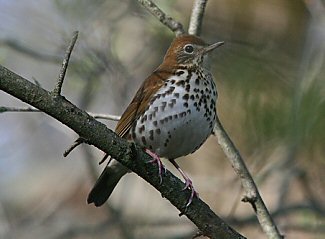
Know your coffee birds: Wood Thrush

The Wood Thrush, a relative of the familiar American Robin, is often considered a symbol of the population declines of birds that nest in North America and winter in the tropics. This species has been declining since the mid-1960s, and is on the National Audubon Society’s 2007 WatchList of declining birds.

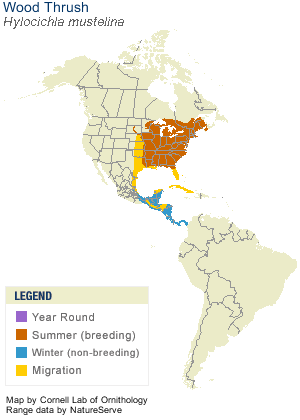
Wood Thrushes nest in forests over much of the eastern U.S. Like most other songbirds, they migrate at night. These thrushes travel an average of 2200 km between their nesting areas and wintering grounds in Central America.

In the winter, Wood Thrushes are most common in primary and mature second growth forests, and they can be a familiar site on polyculture shade coffee farms from Mexico to Panama. For instance, they are the most commonly banded species at the gorgeous shade farm Finca Esperanza Verde in Nicaragua — we caught and saw a number of them when we were there in March 2009.

One reason for Wood Thrush declines may be tropical deforestation. At least one study has found a correlation between reduced numbers of Wood Thrushes and reduction in forest cover in the northern portion of their wintering range [1].

Wood Thrushes will choose and defend a territory in the winter, much as they do when they are nesting. However, as forests are destroyed in the tropics (including for sun coffee), Wood Thrushes are forced to become nomadic — a case of too many Wood Thrushes and other species, and not enough space. These thrushes must move from place to place, or settle in habitat that is low quality. These birds are less likely to survive the winter than individuals who have territories in a good forest patch [2].

Here in North America, habitat fragmentation is considered another cause of Wood Thrush population declines. As in the tropics, Wood Thrushes can be found in small woodlots or low quality habitat, but their chances of successfully raising a brood are greatly diminished in these situations. In fragmented forests, predators are more common, as are Brown-headed Cowbirds, which lay their eggs in the nests of other birds, often targeting Wood Thrushes. These factors contribute to dramatic rates of nest failure in some locations.

The Wood Thrush and coffee connection is so iconic that this bird has been found on the coffee packages or web sites of Birds and Beans, Coffee for the Birds, Audubon Coffee, and Counter Culture Sanctuary Coffee, to name a few. Wood Thrushes are considered “area sensitive,” needing good, intact forests throughout their annual cycle. High-quality shade coffee plantations represent essential habitat for this species, and your choice of coffee has a direct impact on the survivorship of Wood Thrushes and other birds that rely on tropical forests.

Wood Thrush photo by Eddie Calloway under a Creative Commons License.

[1] Rappole, J. H., G. V. N. Powell, and S. A. Sader. 1994. Remote-sensing assessment of tropical habitat availability for a nearctic migrant: the Wood Thrush. In Miller, R. I. (ed.). 1994. Mapping the diversity of nature. Chapman & Hall, London, England.

[2] Deinlein, M. 1998. A “Sing”-ular Sensation. Wood Thrush: Bird of the Month. Smithsonian Migratory Bird Center.

Know your coffee birds: Violet Sabrewing

One of the most enduring memories of my visit to Finca Hartmann is that of passing a spot that was frequently visited by a vivid male Violet Sabrewing (Campylopterus hemileucurus), a large tropical hummingbird found from southern Mexico to western Panama. Many of us in the U.S., especially in the east, think of hummingbirds as diminutive creatures. Violet Sabrewings, however, are big, spectacular birds the size of sparrows. The males are a brilliant dark violet while the females are largely metallic green. Both sexes have white-tipped outer tail feathers that flash as they hover and flit about. They are unmistakable and not soon forgotten.

Violet Sabrewings are most common at 900-1650 meters, the same elevations at which coffee is grown. These hummingbirds like open forests or edge habitats where they can find an abundance of flowering plants, and are found on most bird lists of shade coffee farms within their range.

Hummingbirds are among the most important pollinators, especially in the tropics. Many tropical plants have co-evolved with their specialized hummingbird pollinators, so that the flower is shaped in such a way that only a hummingbird with a matching bill can pollinate it. Violet Sabrewings pollinate a wide variety of flowers, and utilize a foraging strategy known as long distance traplining. They repeatedly visit flowers along a long, fixed route.

Coffee itself is rarely pollinated by hummingbirds (arabica coffee is self-pollinating, although fruit set increases when bees help cross-pollinate). Therefore, sabrewings and other hummingbirds are rarely found in sun coffee farms, but are reliant on the other flowering trees and plants found in shade coffee. Trees in the genus Erythrina are commonly used to shade coffee, and most tropical species are pollinated only by hummingbirds. Bananas and plantains, also frequently used in shade coffee, heliconias, and various ephiphytes are all very important to Violet Sabrewings and other hummingbirds. This plant diversity is not found in sun coffee, but shade coffee farms provide excellent habitat for these dazzling birds.

Another important feature for Violet Sabrewings found in shade coffee farms is nesting habitat. This species inevitably nests on the branch of a tree or shrub over a small stream (we found several nests near creeks at Finca Esperanza Verde). Some source of running water is characteristic of most coffee farms in Latin America, which use the washed or wet processing method. Without streamside vegetation, it’s unlikely Violet Sabrewings could nest successfully.

Another group of organisms depends on hummingbirds to complete their life cycle. Known as hummingbird mites, these tiny invertebrates live and reproduce in flowers, feeding primarily on the nectar. There is only one way for these specialists to move between plants: in the nostrils of hummingbirds. Mites that need to move to another flower of  their specific host plant (when the flower is dying) must clamber onto the bill and into the nostrils of a hummingbird in the brief few seconds the hummingbird is probing the flower. The mites recognize the scent of their host plants, and have an equally brief time to disembark into a new flower.

Hummingbird mites do not harm the birds; in ecological terms this is known as phoretic commensalism, when one species (the mite) uses another (the hummingbird) just for transportation. The mite benefits, the bird is not affected.

Swaths of sun coffee fragment hummingbird habitat, creating barren deserts essentially void of these beautiful birds, all for the want of a cheap cup of coffee. Save hummingbirds (and hummingbird mites!), drink sustainably-grown shade coffee.

Top photo by Jerry Oldenettel, second by Doug Greenberg, under Creative Commons licenses. Violet Sabrewing nest at Finca Esperanza Verde by Darrin O’Brien and Julie Craves, all rights reserved.

Know your coffee birds: Baltimore Oriole

The beautiful Baltimore Oriole (Icterus galbula) is a familiar summertime sight across eastern North America (as is its western counterpart, the Bullock’s Oriole, I. bullockii; the two were once considered the same species). Their cheerful whistled notes and distinctive bag-like hanging nests are characteristic of woodland edges, open areas with scattered tall trees, and mature suburban neighborhoods. The brilliant orange and black plumage of adult males (young males, females, and juveniles are all duller) make the Baltimore Oriole one of the most colorful and arresting species of songbird in North America.

One reason these orioles are so beloved is that they are easily attracted to feeding stations which offer grape jelly or oranges sliced in half. Baltimore Orioles are also conspicuous in spring and early summer as they feed on the nectar and pollen of the blossoms of flowering trees. Although during most of the nesting season they feed on insects, as do most songbirds, it is this affection for fruit and nectar that hint at the habits of orioles on their Latin American wintering grounds.

Trees in the large genus Inga are popular shade trees in Latin American coffee farms. They are fast-growing, evergreen, easy to prune, and fix nitrogen in the soil. While their overuse generally does not benefit biodiversity if they are planted at the expense of a variety of other trees, Ingas do have wildlife value. They produce an abundance of flowers in the dry season (our winter) to which many birds are attracted. Nectar and pollen are important food sources for birds during the dry season, when fewer insects are available.

The nearly ubiquitous presence of Inga on coffee farms almost always assures the presence of Baltimore Orioles on these farms in their wintering range as well. In fact, surveys in Chiapas, Mexico found more Baltimore Orioles in coffee farms containing Inga than in farms with more extensive tree cover or in mature forest.

In areas where coffee farms have been converted to sun coffee, Inga-shaded farms have become important refuges for orioles as well as other species. Small flocks of Baltimore Orioles, working their way through coffee farms in the mid-canopy of Inga are a frequent sight from Mexico through Central America. Other flowering trees that are often grown as shade trees in coffee farms, such as Erythrina and Gliricidia, are also visited by orioles and other birds. Many of these trees are pollinated only by birds and provide farmers with fuelwood and fruit in addition to shading their coffee. A fine example of the interconnectedness of coffee, shade trees, birds, and people in Latin America.

Top oriole photo from Wikimedia Commons, bottom by JimGuy, used with permission; map by Cornell Lab of Ornithology.

Research: Andean shade coffee quality habitat for birds

Bakermans, M. H., A. C. Vitz, A. D. Rodewald, and C. G. Rengifo. 2009. Migratory songbird use of shade coffee in the Venezuelan Andes with implications for the conservation of the cerulean warbler. Biological Conservation 142:2476-2483. doi:10.1016/j.biocon.2009.05.018

Most studies of birds in shade coffee have concentrated on numbers, species composition, and foraging dynamics, but none has looked at whether birds using shade coffee improve in body condition during the winter months. Body condition is strongly correlated with annual survival, and thus a crucial metric.

This study took place in Venezuela’s northern Andes near La Azulita in the state of Merida. This region is not very well represented in the literature (either coffee-growing or bird ecology research), yet it is an important wintering site for many North American bird species. These include various flycatchers and thrushes (Contopus and Catharus sp.), and a number of warblers including Cerulean Warbler (Dendroica cerulea). This species, which I have written about before, has declined an estimated 83% in the last four decades. The shade coffee farms examined ranged from 3 to 5 ha with 38 to 63% canopy cover. Nearby primary forest was also included in the study.

The four most common North American migrant species found, all warblers, were American Redstart, Blackburnian Warbler, Cerulean Warbler, and Tennessee Warbler. These species were three to fourteen times more common in shade coffee than in primary forest, even when detectability was factored in (because coffee farms are more open, birds can often be easier to detect, which would introduce bias if not accounted for).

Body condition was measured using various parameters in the five most common species of birds captured for banding in the shade coffee farms. Body condition improved over the winter for three species, including Cerulean Warblers, and was maintained in the other species. Nearly 30% of the individuals of the 15 species of migrants banded were recaptured, meaning they stayed in the coffee farms for prolonged periods of time throughout the season. These are all indications that the shade coffee provided quality habitat for these species.

In addition, 65% of Cerulean Warblers banded the first winter were recaptured or resighted the next winter, a remarkable return rate. Faithfulness to wintering sites is advantageous in that birds are familiar with resources such as food and cover, which can improve survivorship. However, it is also quite risky for birds wintering in areas experiencing high rates of habitat loss. Venezuela has seen nearly 40% of its shade coffee converted other types of agriculture — the authors state that they witnessed several shade coffee farms turned into cattle pasture during the two year duration of this study.

Just noting the sheer numbers, or even diversity of birds, in a particular habitat doesn’t tell the whole story. They may be present, sometimes only briefly, depending on the availability of resources in the larger landscape. This study not only showed that migrant birds were very common in shade coffee even in a region with primary forest, but also demonstrated site fidelity and improvement in body condition — adding  a critical component to the story of the value of shade coffee.

Cerulean Warbler photo by Petroglyph under a Creative Commons license.

Bakermans, M., Vitz, A., Rodewald, A., & Rengifo, C. 2009. Migratory songbird use of shade coffee in the Venezuelan Andes with implications for conservation of cerulean warbler Biological Conservation DOI: 10.1016/j.biocon.2009.05.018

Cerulean Warbler Reserve coffee certified

A coffee farm that is part of the ProAves Cerulean Warbler Reserve in Santander, Colombia was recently certified by Rainforest Alliance (under the cooperative Asociacion de Café Sostenibles de Santander). The 15 ha farm was acquired in 2006 by ProAves, the Colombian partner of the American Bird Conservancy (ABC). These two organizations worked together to secure funding to establish the 220 ha Reserve in 2005. In 2008, the farm covered 18% of the Reserve’s operating costs, and the goal is to cover all operating costs by 2011 through the sales of coffee.

As part of the Save the Cerulean Warbler effort, ABC has also marketed a Cerulean Warbler Coffee, roasted and distributed by Thanksgiving Coffee Company, which we have reviewed here.

Just to avoid confusion, the ABC/Thanksgiving Cerulean Warbler coffee is from a different part of Colombia, not from farms adjacent to or near the Reserve. The Thanksgiving Coffee Company’s Cerulean Warbler Coffee is not Rainforest Alliance or Smithsonian Bird-Friendly certified. According to ABC, the plans are for Thanksgiving to source coffee from these farms in the future. Currently, coffee from farms near the Reserve are being sold to wholesalers and are not being marketed as conservation coffees.

Nicaraguan shade coffee: Finca Esperanza Verde

Last winter, I spent some time in Chiriqui, Panama, and visited some coffee farms. I summarized what I found in my post “What shade coffee looks like.”

I’ve just returned from Nicaragua, where I spent a week at Finca Esperanza Verde doing bird and insect surveys, and especially bird banding. FEV is located near San Ramon in the central highlands of Nicaragua’s Matagalpa department. It consists of about 106 ha, of which 10 are in active coffee production; a handful cover the organic garden, small coffee washing facility, and eco-lodge; and the rest are in native forest, forest restoration, and fallow shade coffee.

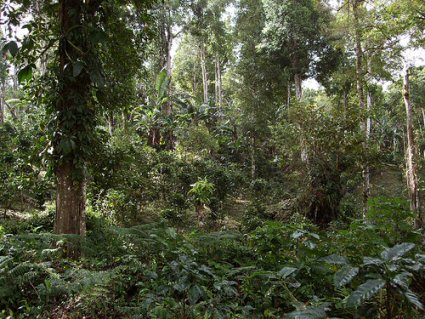
We were participating in the fifth year of a banding project initiated by the North Carolina Museum of Natural Sciences, and the research was done entirely in the coffee production area, shown above.

In the shade continuum from rustic to shaded monoculture described in my introductory post “What is shade-grown coffee,” the production areas I saw fell into the highly desirable traditional polyculture category. Recall that one reason certifying shade coffee can be so complex is that coffee is often grown in a matrix of different crops and land uses and varying levels of shade management depending on location within a farm.  Yet every area I visited at FEV had the same lush growth and diverse shade.

FEV is certified organic, and is being actively courted by Rainforest Alliance for certification and use as a model farm. I believe FEV also qualifies for Smithsonian Bird-Friendly certification, and that is being looked into as well. More on that in a future post.

Leaves from the shade trees provide a thick, natural mulch for the coffee, and help curtail soil erosion and moisture loss while offering nutrients.

Even more so than the areas we visited in Panama, Finca Esperanza Verde and other shade coffee farms are critical to birds and other wildlife in Nicaragua. We were stunned at the deforestation. It’s not due to human development, but to agriculture (mostly non-commercial) and (especially) cattle grazing. Shade coffee farms appeared to be one of the only land uses that preserved a lot of native trees.

During our brief stay, we counted well over 100 bird species, including nearly two dozen species of migratory songbirds that breed in North America. Over 30 species of migrant songbirds have been recorded at the finca, and the overall bird list is approaching 300 species. We observed or banded several species new to the finca ourselves.

You can read more about the migratory bird species we encountered at the Rouge River Bird Observatory’s blog Net Results. I thought I would cover some of the resident species here, focusing on a few of the species that we banded. Bird banding is an excellent complement to bird surveys — some of the most common bird species we saw were rarely captured, and we rarely observed many of the species we captured.

Crimson-collared Tanagers (Ramphocelus sanguinolentus) favor areas of dense shrubs in second growth, but will also come to trays of fruit placed at feeding stations.

White-breasted Wood-wren (Henicorhina leucosticta) is a forest species that favors dense tangles, especially around fallen trees.

Cocoa Woodcreeper (Xiphorhynchus susurrans) prefers gallery forest and older second growth, and forages on large trees by probing the bark, epiphytes, mossy clumps, and vines — which wouldn’t be left on trees in intensively managed coffee farms.

I was happy to band several Black-headed Nightingale-Thrushes (Catharus mexicanus), since they are closely related to the species that I research at home. These shy, elusive birds prefer thick cover and forage mostly near the ground or in the leaf litter, conditions they would not find on a sun coffee farm.

Not only is this farm great for biodiversity, it produces fantastic coffee. It placed 10th in the 2007 Nicaraguan Cup of Excellence. Coffee from Finca Esperanza Verde is sold exclusively to Counter Culture Coffee, where it is the main component of their Cafe San Ramon.

Know your coffee birds: Emerald Toucanet

The Emerald Toucanet (Aulacorhynchus prasinus) is the most widely distributed member of the toucan family. It can be found from Mexico through Central America south to Bolivia. As might be expected for a species with such as broad geographic range, there are many subspecies — at least 17. They vary by throat color, facial pattern, and the color and pattern of the bill. Some researchers believe that some of these may actually be separate species, with perhaps four different species in Central America, and at least three in South America.

Emerald Toucanets are, as the name implies, smaller than toucans, at a little over a foot long. The sexes look alike, although males have slightly larger bills than females. Nobody is positive why this difference exists, as one study discovered it is not related to differences in diet or foraging (which is often the case when both sexes share territories year round). These toucanets nest in well-concealed tree hollows, and live in small flocks in the non-breeding season. They are found in open woodlands, including shade coffee plantations, from around 900 to over 3000 meters.

While they eat big insects and small lizards, fruit forms a large part of the diet of Emerald Toucanets. Therefore they are important dispersers of the seeds of tropical trees and shrubs. They have large feeding territories, so they encounter many species of trees, up to 47 at one Costa Rican study site alone. Although they are the smallest members of the toucan family, they’ll even consume large-seeded fruits, repeatedly regurgitating and reswallowing a fruit until the seed separates from the pulp and can be discarded. For the most part, seeds pass through the digestive system, though, and it’s been determined that those have a higher germination rate than seeds that merely drop to the ground in the fruit. All these factors make Emerald Toucanets an integral part of tropical forest ecosystems.

Because this species favors open forest habitats and forages in the mid-canopy, shade coffee farms are suitable habitat for them — and likely quite important in regions where other deforestation is high. Counter Culture Coffee chose the Emerald Toucanet for the new label of its Cafe San Ramon coffee because it is found at one of the main suppliers of these beans: Finca Esperanza Verde in the Matagalpa region of Nicaragua. In fact, when Counter Culture was redesigning the label and asked for a recommendation, I suggested this species (and the subspecies on the label is the correct one!). Just to keep myself honest, I’ll will be at Finca Esperanza Verde this week doing some bird surveys and bird banding, and hope to see a few Emerald Toucanets in the process.

Credits and references

Top photo of a “Blue-throated” Emerald Toucanet in Costa Rica by Laura Erickson; used with permission. Middle photo of the nominate form of Emerald Toucanet, in Honduras, by Brian Gratwicke, under a Creative Commons license.

Puebla-Olivares, F., E. Bonaccorso, A. E. de los Monteros, K. E. Omland, J. E. Llorente-Bousquets, A. T. Peterson, and A. G.
Navarro-Siguenza. 2008. Speciation in the Emerald Toucanet (Aulacorhynchus prasinus) complex. Auk 125:39-50.  For an excellent discussion of this paper and the taxonomy of Emerald Toucanets, see Nick Sly’s blog posts on the topic.

Riley, C. M. and K. G. Smith. 1992. Sexual dimorphism and foraging behavior of Emerald Toucanets Aulacorhynchus prasinus in Costa Rica. Ornis Scandinavica 23:459-466.

Wenny, D. May 2000. Seed dispersal, seed predation, and seedling recruitment of a newtropical montane tree. Ecological Monographs / Ecological Society of America, 70 (2): 331-351.

Wheelwright, N. T. 1991. How long do fruit-eating birds stay in the plants where they feed? Biotropica 23:29-40.

Wagner, H. O. 1944. Notes on the life history of the Emerald Toucanet. Wilson Bulletin 56:65-76.

Know your coffee birds: Black-throated Blue Warbler

The North American Wood Warblers are known for their colorful beauty. The male Black-throated Blue Warbler (Dendrioca caerulescens, left) is one of the most beautiful. This species is one of the most sexually dimorphic as well — the female is not blue at all — and was not even recognized as the same species until the late 1800s. The pale “hanky” showing on the lower edge of her wing, which matches that of the male, is the only giveaway.

This eastern warbler nests in large forests in the northeastern United States and southern Canada and in higher elevations of the Appalachian Mountains. They spend the winter mostly in the West Indies, as well as along the Caribbean coast of the Yucatan, Belize, and Honduras. New techniques using a simple laboratory test of the molecular composition of feathers has revealed that Black-throated Blue Warblers from the northern part of the breeding range winter mostly in Cuba and Jamaica, and birds that nest in the Appalachians winter mostly in Hispaniola and Puerto Rico [1].

A common species in shade coffee ecosystems
Wintering Black-throated Blue Warblers are frequently found on coffee farms, with studies noting them using these plantations in Jamaica, Puerto Rico, the Dominican Republic, Haiti, and Chiapas, Mexico. These studies often note that Black-throated Blue Warblers are one of the most common migrants found on the farms.

While wintering in coffee farms, Black-throated Blue Warblers consume primarily small insects, many of which are coffee pests. In Jamaica, Black-throated Blues were the number one predator recorded on the dreaded coffee berry borer.

Like some other species of wintering migrants, Black-throated Blues tend to segregate themselves by sex on their wintering grounds. Males tend to be found in tall, mature forest habitat, and females in shorter, shrubby habitat. Research has shown that in the Dominican Republic, shade coffee farms had more males than females [3,5], indicating that shade coffee farms were a good substitute for tall forest habitats.

Many bird species return to the same places to nest each year, and some also return to regular wintering areas. Black-throated Blue Warblers are very faithful to their wintering sites [2,3]. In fact, they have a stronger fidelity to their winter territories than their nesting territories, making the health of the habitats on coffee farms critical to their survival [4]. Declines in abundance of breeding populations in the southern Appalachians of over 2% a year the last two decades may be linked to severe habitat degradation in parts of the winter range, particularly Haiti [1] where deforestation is particularly severe.

The Black-throated Blue Warbler’s song is sometimes described as sounding like a buzzy “beer-beer-beer!” From its strong affiliation with shade fincas in the winter, we know what it really means is “coffee-coffee-coffee!”

[1] Rubenstein, D. R., C. P. Chamberlain, R. T. Holmes, M. P. Ayres, J. R. Waldbauer, G. R. Graves and N. C. Tuross. 2002. Linking breeding and wintering ranges of a Neotropical migrant songbird using table isotopes. Science 295: 591-593.

[2] Wunderle, J. M., Jr. 1995. Population characteristics of Black-throated Blue Warblers wintering in three sites in Puerto Rico. Auk 112: 931-946.

[3] Wunderle, J. M., Jr. and S. C. Latta. 2000. Winter site fidelity of nearctic migrants in shade coffee plantations of different sizes in the Dominican Republic. Auk 117: 596-614.

[4] Holmes, R. T. and T. W. Sherry.  1992.  Site fidelity of migratory warblers in temperate breeding and Neotropical wintering areas: Implications for population dynamics, habitat selection, and conservation. pp. 563-575. In: J. M. Hagan III and D. W. Johnston (eds.). Ecology and Conservation of Neotropical Migrant Landbirds. Smithsonian Institution Press.

[5] Wunderle, J. M., Jr. and S. C. Latta. 1996. Avian abundance in sun and shade coffee plantations and remnant pine forest in the Cordillera Central, Dominican Republic. Ornithologia Neotropical 7: 19-34.

Top male Black-throated Blue Warbler by Jerry Oldenettel; bottom by Julie Craves.

Know your coffee birds: Jacu

When I conceived the “Know Your Coffee Birds” series, I made up a list of birds often found in shade coffee farms. There was one that was not included that I feel compelled to write about already because it’s being used in a unique way to market coffee: the Jacu bird.

The Dusky-legged Guan, a.k.a. “Jacu”, has found a new career as a coffee picker and processor.

“Jacu” is the Brazilian name given to a group of birds, actually — the guans. Guans are the largest group in the bird family Cracidae — primitive, vaguely chicken-like forest birds found in much of Latin America. There are 15 species of guans in the genus Penelope. All guans are strictly forest birds, preferring primary forest. Due to deforestation and hunting pressure, cracids in general are among the most endangered groups of birds in the Neotropics.

Guans are primarily vegetarians, eating mostly fruit and berries, some flowers and buds, and a few insects. Guans are very important in tropical ecosystems because of their role in dispersing seeds in the forests in which they live. It is this frugivorous diet that leads us to the Jacu’s coffee connection.

Guans eat ripe coffee cherries. While they are unlikely to venture onto sun coffee plantations, they will live in or near coffee farms where coffee is grown in forest-like conditions and/or adjacent to intact forest. Like nearly any animal that eats fruit, guans prefer fully ripe fruit, and that includes coffee cherries. One might imagine this habit would draw the ire of coffee farmers. But at least one enterprising producer is using the philosophy, “If life gives you lemons, make lemonade.” Or in this case, “If life gives you bird crap with coffee beans it it, make coffee.”

In the spirit of kopi luwak, produced from coffee beans collected from the feces of civet cats in southeast Asia, comes Jacu coffee, produced from beans collected from the droppings of guans.

This coffee is currently being offered by Camocim Estate (two farms: Camocin and Alatalia) in Pedra Azul, Brazil. Pedra Azul is in the southern part of the Atlantic state of Espirito Santo. Two species of guan may be found there: Rusty-margined Guan (Penelope superciliaris) and Dusky-legged Guan (P. obscura).

Fazenda Camocim encompasses 500 hectares in total, with 50 planted in coffee, and the rest re-planted in a forest-rejuvenation project. The farms are certified organic and biodynamic, and utilize fruit and nut trees in the coffee plantings, and native habitat patches as well. All of which no doubt provides habitat and other food for the guans.

Supposedly, some of the ”unique” characteristics of kopi luwak come from the civet’s digestive process, which according to tests leach out proteins which cause bitterness. But a bird’s digestive system is different than that of a mammal.

The digestive enzymes in mammals and birds are similar. But while some cracids do have gizzards in which ingested grit helps crack and grind seeds, it is not well developed in guans. So the beans are not getting a lot of deep scratches that would allow for added absorption of chemicals that might alter the properties of the bean. Most importantly, food passes very quickly through birds. Birds typically pass the seeds of fruit within an hour, or at most a few hours. It’s very inefficient for a bird to have their small digestive tracts loaded up with a lot of seeds — especially large ones like coffee beans. I cannot imagine there is any physical reason why they should taste much different than the rest of the crop that is harvested by humans and processed in a more traditional manner.

However it tastes, I love the idea of this coffee. It means the beans are coming from a forested area, from producers that care about working with and preserving — rather than fighting and eliminating — native wildlife. And that’s especially important in this case, because Espirito Santo is smack in the Atlantic Forest biome, one of the most exceptionally biodiverse and endangered habitat types in the world. Large bird species have been severely reduced or extirpated in many of the remaining forest fragments of the Atlantic Forest. This has dire consequences, as up to half of the native tree species require birds, including guans, which have large enough mouths to swallow and disperse their fruits. Rusty-margined Guans are tolerant of disturbed habitats and have been considered important for their role in seed dispersal in these forests and have been suggested for use in conservation efforts.

One day, I wouldn’t mind reviewing some jacu coffee. I’ve seen it offered green at Sweet Maria’s in the U.S. and roasted from Hasbean in the U.K. I’d especially like to try it side-by-side with the more typically-processed organic from Camocim. When I find a U.S. source where I can get both, roasted, I’ll be on it like a duck on a june bug. Or a jacu on a coffee cherry.

Update: Here’s an interesting article on Jacu coffee in Modern Farmer in 2013.

References:

Cardoso da Silva, J. M. and M. Tabarelli. 2000. Tree species impoverishment and the future flora of the Atlantic forest of northeast Brazil. Nature 404: 72-74.

Munoz, M.C. and G. H. Kattan. 2007. Diets of cracids: how much do we know? Ornitologia Neotropica 18:21-36.

Pizo, M. A. 2004. Frugivory and habitat use by fruit eating birds in a fragmented landscape of southeast Brazil. Ornitologia Neotropica 15:117-126.

Photo of Dusky-legged Guan by Jose Claudio GuimarÁ£es.