JulieCraves

The True Cost of Coffee

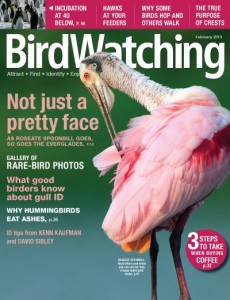
The February 2013 issue of BirdWatching Magazine (formerly Birder’s World) is in bookstores and other retailers now. It contains my article on the connection between coffee, birds, and biodiversity, The True Cost of Coffee. It can be read at the magazine’s here.

I have been answering questions from readers, and you can submit your own on the BirdWatching Magazine Facebook page, via an email to the magazine (ask@birdwatchingdaily.com), or here in the comments. I’ll may be able to publish the more broad-based ones in my “Since You Asked” column in the magazine.

Coming up, I will post a page of resources for BirdWatching Magazine readers who want to know more about the issues I covered in the article.

Know your coffee birds: American Redstart

I have yet to meet someone who has seen an American Redstart (Setophaga ruticilla) who was not charmed by this bright, energetic little bird. Redstarts are warblers, but like many New World birds bear the name of similar-appearing (though unrelated) Old World birds. In this case, the original redstarts are flycatchers that often have patterns in black and red. Likewise, male American Redstarts that are at least two years old are jet black and vivid orange. Younger males and female American Redstarts are gray and salmon or yellow, but no less beautiful.

American Redstarts breed across much of eastern North America and western Canada, and winter in the West Indies, southern Mexico, Central America, and northern South America. Like other warblers, they feed primarily on insects, and may flush them from foliage by spreading and flashing their tails. This has earned them several other names, particularly in the tropics, including candelita (“little candle” or “little flame”) or mariposas (the same word used for butterflies).

In winter, redstarts can be found in a variety of forested habitats. They are particularly well-studied in the West Indies, where they are most often found in mangroves, coastal scrub, and shade coffee. In Jamaica, redstarts have been found to greatly benefit coffee farmers by providing pest control, especially against the hard-to-control coffee berry borer, one of coffee’s most dreaded pests. To reap these benefits, however, farmers needed to provide habitat for the birds, either via shade trees or adjacent forest patches. Another vote for shade-grown coffee!

In the Dominican Republic, redstarts returned annually and stayed put overwinter on shade coffee farms at rates similar to natural forest [1]. Other studies have specifically documented shade coffee use by redstarts in Mexico, Venezuela, and Guatemala; and I have recorded them myself in coffeelands in Panama and Honduras.

A recently published paper [2] presented data on a very rigorous study of wintering migrant birds in Puerto Rico that began in 1973, in which American Redstarts are among the three most common species (the other two are also “coffee birds”: Ovenbird and Black-and-white Warbler). All three species have shown population declines, even though overwinter survivorship has remained the same for the birds that do winter there. The most dramatic declines have occurred over the last decade, but the authors cannot pinpoint an explanation. They concluded with words seldom found in academic publications:

“Given the patterns shown by our data, we now join with those who earlier proclaimed that ‘the sky is falling’ for Neotropical migratory birds, even though we lack a ready explanation for these declines.”

Please see this as a call to action. This is one of many studies that have documented the loss of migratory bird species. These “birds of two worlds” have very complex life cycles, and many things impact their survival. Some of these factors are within our control, and they include habitat loss due to agriculture — such as coffee.  You can help by choosing your coffee carefully and being willing to pay more for organic and eco-certified coffee that encourages the preservation of habitat and enhancement of coffee farms with shade trees. Seldom is so simple an individual action apt to lead to such positive results for redstarts, other warblers, and the biodiversity and health of our planet.

See more in the ”Know your coffee birds” series.

Photo of male redstart by Laura Gooch under a Creative Commons license; female redstart banded at the Rouge River Bird Observatory by Julie Craves, all rights reserved.

[1] Wunderle, J and SC Latta. 2000. Winter site fidelity of Nearctic migrants in shade coffee plantations of different sizes in the Dominican Republic. Auk 117:596-614.

[2] Faaborg J, WJ Arendt, J D Toms, KM Dugger, WA Cox and MC Mora. 2013. Long-term decline of a winter-resident bird community in Puerto Rico. Biodiversity and Conservation 22:63-75.
K-Cup alternatives: summary and parting thoughts

Updated December 2018

I wrote my first post on an alternative for throwing away those wasteful, pesky not-really-recycled/recyclable K-Cups in 2007.  Since then, I have reviewed a number of alternatives. I’ve even reviewed another single-cup brewer. However, now that some of the patents on K-Cups have expired, we have more variations and and alternatives to Keurig brewers and single-cup pods, cartridges, and capsules than Carter has little pills.

Avoiding sending coffee-related trash to landfills (and using much more sustainably-grown coffee than is typically available in pre-packaged single-cup coffee products) is certainly within the purvey of a web site on coffee sustainability. But it’s come to the point that if I were to review, or even mention, half of the K-Cup alternatives flooding the market this site would veer away from an emphasis on the ecological effects of coffee growing.  I am going to semi-retire from discussing or reviewing these types of products, unless there is some sort of remarkable innovation or noteworthy news.

For my finale, here is a table that summarizes the popular products currently on the market which are reusable alternatives to K-Cups which allow for the use of a consumer’s own coffee that are compatible with many of the original Keurig brewers.

Reusable alternatives to K-Cups

Product
Approx. Price
Capacity in grams*
Notes
My K-Cup Reusable Filter$13, original. $23 for a universal model that fits older AND newer (2.0) Keurig brewers.15 or 17Best to have at least two so that you aren't cleaning one over and over. The best deal is a pack of 4 universal stainless steel version.

My review here.
ekobrew


$1514My review here.


2nd-most popular with C&C readers.
Solofill

See also gold versionthat has less potential to alter flavor.
$1511My review here.


Most popular with C&C readers.
The My-Cap (also known as My-Kap) was a simple and inexpensive ($7 for 3 caps plus a cleaning brush) for refilling used K-Cups. They went out of business, but a similar product is the Recycle A Cup, a product I've not tested.$12 for 29, or however much you can fit into an old K-CupUsed to refill old K-Cups.

My post of the old product here. I haven't tested the replacement.
EZ Cup by Perfect Pod which requires proprietary filters, approximately $12 for 100.


There is a newer product, the Cafe Fill Value Pack by Perfect Pod that includes two reusable filters and a special scoop with a funnel allowing for the correct amount of coffee easily placed in the pod. Very popular.
$9.90 for original, $13 for new pack.Around 9Requires proprietary filters, approximately $12 for 100. Only for older Keurig brewers.

I’m not sure, given the fact that there are so many competitors and K-Cup brands, that K-Cups themselves will ever be truly eco-friendly.  Here is what Keurig owner Green Mountain Coffee Roasters (GMCR) had to say in their 2011 CSR document:

Widespread adoption of the Keurig® single cup brewing system raises some important — and complex — environmental challenges. To better understand the impact of our products and guide our efforts to address those challenges, we conducted a life cycle analysis comparing single cup brewing systems to drip-brewing systems. We learned that the cultivation of coffee beans, operation of brewing systems, and use of materials in product packaging all represent significant impacts on the environment. The study revealed that packaging disposal represents a fraction of a product’s environmental impact across its entire life cycle.

Literally billions of K-cups ending up in a landfill may be just a “fraction” of this product’s environmental impact, but it is huge in and of itself. With the alternatives listed above, there’s no excuse for using this wasteful product.

*I’ve included the capacity as stated in promotional material, user reviews on outside web sites, and/or my own testing, if available. The volume of coffee grounds that will fit in something that goes in the original Keurig brewers is, in my opinion, the biggest limitation to coffee quality to those machines. The Specialty Coffee Association of America recommends 10 grams of coffee per 6-ounce cup; most people drink larger mugs of coffee and may also prefer a stronger cup. A regular K-Cup can hold about 9 grams of coffee. Despite “bold” selections and brewers that make various cups size, the physical capacity of the older (not the new “Vue” brewers) machines is difficult to overcome. Therefore, getting a well-crafted cup of coffee from a Keurig brewer (and many other brands I have seen or used) is hit or miss.

Is coffee really at risk of extinction?

Recently, a paper was published in the peer-reviewed, open-access journal, PLoS ONE: “The impact of climate change on indigenous arabica coffee (Coffea arabica): predicting future trends and identifying priorities.”

It specifically looked at wild, endemic populations of Coffea arabica in Ethiopia (and a few points in nearby areas). In a nutshell, the authors created computer models using known localities, environmental conditions, and various climate change scenarios to predict current and future distribution of these populations. The models determined a reduction (ranging from very worrisome to nearly complete) in suitable locations in this region by 2080. This is no surprise. I’m not sure I’ve seen any models that do not show some impact on the ranges (whether expansions, contractions, or shifts) of plants and animals under any accepted climate change scenarios. And we all know coffee is a very climate-sensitive species, especially arabica coffee.

It is a big leap to go from what this paper actually examined and concluded to the shrill, frantic headlines and stories pumped out by mainstream  media. For instance, under the headline So Long, Joe? World Coffee Supply Could Be Threatened By Climate Change, US News and World Reports declared “Nearly 100 percent of the world’s Arabica coffee growing regions could become unsuitable for the plant by 2080.” This is way off base, given the study was only looking at wild arabica in the vicinity of southwest Ethiopia. The article also stated that “If Arabica becomes impossible to raise in its native areas, it could wreak havoc on the economies of the mainly third-world countries in which it grows,” which is ridiculous considering that coffee is already grown on millions of acres in dozens of countries around the world where it is not native. Likewise, Salon.com made the even more extreme statement, “By the end of this century, climate change could wipe out nearly all the world’s coffee” in their piece, Coffee beans at risk of extinction.

I could cite more hand-wringing examples of failure by news outlets to make an honest effort at reporting what this paper really said, but you get the gist. As a scientist, journalist, editor, and world citizen, this lack of accuracy disgusts me. First, there is no excuse for it; the paper is open-access and anyone can read it for themselves! Apparently, this dismal reporting stems from incomprehension, laziness, and/or incompetance on the part of writers and their editors, as well as a disregard for actually informing the public in favor of profit for the news outlet via sensationalism.

If you’ve read this far and want a more nuanced analysis of the paper, I’ll give a few of my thoughts.

I thought the  paper was thorough and well-conceived. The bioclimatic modelling used is pretty standard for looking at the distribution of species under future climate change situations. Computer models, of course, are as robust as the data one feeds into them.  In this paper, the bulk of the data used to model current distribution was based on unpublished field work done by one of the authors; the rest was from herbarium specimens or literature reports, some dating back to 1941.  Ergo, it is technically not possible to evaluate the quality of this data. The climate data emphasizes factors like temperature, rainfall, and seasonality. These are all critical for coffee growing, but the models did not integrate other important environmental influences on coffee production such as soil types, microhabitats, and ecological processes, and the authors acknowledge those shortcomings.

The results and discussion provided didn’t stray far beyond these limitations and delivered on the authors intended goals: to identify conservation, monitoring, and research needs for wild, native Coffea arabica. It established baseline data to help assess future impacts of climate change on these populations, having identified suitable localities for them.

Two paragraphs in the discussion are devoted to the implications of the findings for cultivated arabica coffee, and they are also presumed to be negative. Does this mean the news headlines, while not the subject of the actual paper, are true? Not exactly. The authors note that optimum cultivation requirements for arabica coffee will likely become harder to achieve in the face of climate change, productivity will probably be reduced, and more intense management (especially irrigation) will be needed.

Is the potential loss of genetic resources in these populations something to worry about? In their article Climate change threatens sweet smell of morning coffee, Reuters took a stab at trying to interpret what the paper had to say by writing, “Although commercial coffee growers would still be able to cultivate crops in plantations designed with the right conditions, experts say the loss of wild arabica, which has greater genetic diversity, would make it harder for plantations to survive long-term and beat threats like pests and disease.”  Indeed, a reason the authors focused on wild populations of arabica in their native range was that their genes may be valuable for breeding disease and pest resistance and climate resilience into commercially grown coffee. While this is logical, and maybe even likely, the paper did not provide detail on the genetic diversity, number of unique arabica strains, or other features of the coffee being mapped and modelled. In fact, the authors noted that genetic variation in wild arabica still needed to be assessed. Further, other more tolerant species of coffee (primarily Coffea canephora, robusta, and its hybrids) are being used in breeding programs today and probably hold the best hope for resilience in commercial coffee. (This is not to discount the importance of preserving these populations; I’m a strong believer that genetic biodiversity should be preserved regardless of it’s commercial value.)

One point was made in the paper that I thought was not given enough emphasis. The biggest driver of the loss of wild coffee populations has been and is deforestation and land conversion, which themselves exacerbate climate change. We can sit on our hands and watch one of the models in this paper play itself out, with what the authors term as “profoundly negative influence” on coffee. Or we can encourage the production (and consumption) of coffee grown in an ecologically-sustainable manner, using carbon-capturing shade trees and sensible agroforesty techniques — and reward farmers for their troubles by paying more for eco-friendly coffee. The press  could make a real contribution by informing the public on the issues surrounding the sustainability of one of the world’s most popular beverages, rather than thoughtlessly spew out faulty proclamations with little basis in fact and no call to action.

More of my posts on coffee and climate change here.

Davis AP, Gole TW, Baena S, & Moat J (2012). The Impact of Climate Change on Indigenous Arabica Coffee (Coffea arabica): Predicting Future Trends and Identifying Priorities. PloS one, 7 (11) PMID: 23144840