Rainforest Alliance Cupping for Quality winners
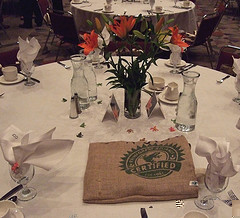 My husband and I attended the Rainforest Alliance Sustainable Coffee Breakfast this morning, at which the winners of the fifth annual “Cupping for Quality” event were announced. These awards recognizes Rainforest Alliance (RA) certified coffee farmers dedicated to growing top quality beans, while protecting the environment and the rights of workers.
The first year of the competition, eight countries participated submitted 40 coffees to be judged. This year, 90 RA certified farms in 11 countries participated; judging was held last month in New York and Long Beach, CA. Coffee from 94 percent of the participating farms received scores of 80 or above.
 The top scoring farms that received scores of 85 or above are listed below. I’ve provided links or additional information if available.
- Hacienda La Esmeralda (Panama) — 89.93. This is not the famous geisha Jaramillo Especial coffee which I wrote about here, but I did discuss their sustainability initiatives. Although the sustainability section of their web site has not been substantially updated recently, I have read more about the work of the Peterson’s (owners of
Hacienda La Esmeralda) and think they are doing a good job. - COMISAJUL (Cooperativa Mixta San Juancito Limitada) La Montana (Honduras) — 87.22
- Daterra — Boa Vista (Brazil) — 86.58. I wrote about Daterra here.
- Grupo Yariguies (Colombia) — 86.32. I believe these producers are in Santander province, in the region where the Cerulean Warbler preserve is located. Terrific!
- Aguadas (Caldas, Colombia) — 86.08
- Victoria (El Salvador) –– 85.98
- Carmen Estate (Panama) — 85.55. I wrote about Carmen Estate in a review here. This is one of only five farms that have participated in this competition every year so far.
- Coagro Brisas (Colombia) — 85.50
- Finca Arroyo Negro (Chipas, Mexico) — 85.46. More info here.
- La Merced (Colombia) — 85.25
- Finca San Luis (Colombia) –– 85.13
- Santa Rita (Jinotega, Nicaragua) — 85.00. I think this is the same producer that is also Utz Certified.
Below, I’ve listed the top three scorers (fewer means there were fewer than three farms competing) from each country.
Panama: Hacienda Esmeralda (89.93), Carmen Estate (85.55), La Fortuna (81.00)
Guatemala: La Retiro (84.93), San Diego Buena Vista (84.64), La Pampa (84.63)
Peru: Pronatur — Monterrico (84.81)
Costa Rica: Coopronaranjo R.L. (84.82), Cooperativa de Caficultores de Dota R.L. (83.31)
El Salvador: Lictoria (85.98), La Mecca (84.48), Santa Isabel (84.42)
Honduras: Comisajul La Montana (87.22), Cohorsil (83.67), Café Tierra (80.72)
Colombia (39 farms participating!): Grupo Yariguies (86.32), Aguadas (86.08), Coagro Brisas (85.50)
Tanzania: Uru Estate (83.48), Machare Estate (83.12)
Nicaragua: Santa Rita (85.00), La Bastilla (83.27), Momimboo (83.13)
Brazil: Daterra — Boa Vista (86.58), Fazenda Lambari (84.75), Fazenda Sete Cachoeiras Estate Coffee (84.35)
Mexico: Finca Arroyo Negro (85.46), Finca Santa Elena (81.35), Espana (80.25)