Category: Smithsonian Bird-Friendly

Finding Bird-Friendly coffee – now easier

We especially liked these cool cans of Bird-Friendly certified coffee from Chesapeake Bay Roasting Co. They also have t-shirts!

The Bird-Friendly website at the Smithsonian Migratory Bird Center has made it easier to find local and online retailers of Bird-Friendly certified coffee.

There is an interactive map to find local roasters. I found the page for online purchases is especially nice — each coffee has a brief description and a direct link to the roaster and filters are available. At the time of this writing, there were 125 coffees to choose from.

These resources make it easier to find and try some biodiversity-preserving coffee and find roasters that have incorporated sustainability into their supply chains.

Get Bird-Friendly coffee at Whole Foods

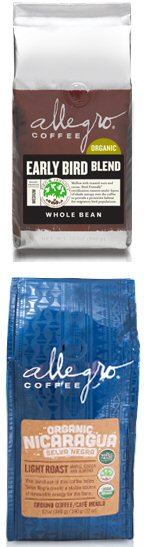
Two Smithsonian Bird-Friendly certified coffees are now available at Whole Foods Markets nationwide, offered by their wholly-owned subsidiary Allegro Coffee Roasters.

allegro-smbcEarly Bird Blend

The first is the Early Bird Blend, a special coffee Allegro will keep in rotation to feature Bird-Friendly certified coffees. Currently, it comprised of a blend of Selva Negra from Nicaragua (see below) and the GRAPOS (Grupo de Asesores de Produccion Organica y Sustenable S.C.) co-operative in Chiapas, which is in the buffer zone of the El Triunfo Biosphere Reserve. The Reserve contains the northernmost cloud forests in the world and is considered as one of the greatest biodiversity sites of North America. It’s one of the best of only a few places in the world to see the spectacular and critically endangered Horned Guan.

Allegro plans to utilize other Chiapas farms in the blend, as well as the famous Colombia El Roble (Mesa de los Santos), an origin we first reviewed here, and which has also been used by Birds & Beans in their Chestnut-sided Warbler variety.

Organic Selva Negra

The other is their most recent Origin Direct coffee, Nicaragua Selva Negra. This is the same program that featured the farm El Jaguar earlier this year, where my husband and I did a bunch of bird-banding and insect survey work a couple of years ago. The Origin Direct program (formerly Special Reserve) picks an outstanding source every quarter and awards the producers $10,000 to support community projects.

Selva Negra (the name of the farm is actually La Hammonia) is located near Matagalpa, Nicaragua, and I wrote about it when overviewing that country’s Bird-Friendly certified farms.  They also hold Rainforest Alliance and organic certification (the latter necessary for Bird-Friendly certification as well). I have been to Selva Negra twice, and can attest that the 150 ha of preserved cloud forest is fabulous, and contains many unique and rare birds among 280 or so species, plus orchids and other biodiversity. I had two great birding milestones there: my first Resplendent Quetzal, a near threatened species, and my 1000th life bird, a Ruddy Woodcreeper at an ant swarm, which are kind of unusual at high elevations.

Roast and taste

We’ve had an opportunity to try both of these coffees. The Selva Negra is designated as a light roast, although it comes with just a bit of sheen to the beans.  The Early Bird Blend is medium. Fans of Birds & Beans light or medium roasts, or generally more robust coffees will find the Early Bird Blend very much to their liking, and it will hold up well to milk and/or sweeteners. The Selva Negra is a bit more subtle, but a perfect every day breakfast coffee. We found both extremely smooth, with several layers of creamy, understated complexity building as they cooled. This was more pronounced with the Selva Negra, which was therefore probably responsible for this characteristic. This quality gave both coffees some of the most lustrous, almost velvety mouthfeels I think I have ever experienced in any day-to-day coffee, versus some much more expensive boutique selections.

Support the Bird-Friendly Early Bird Blend!

There are over 350 Whole Foods Markets; these coffees are currently available bagged and (if there is an Allegro roastery in one of your local stores) fresh in bins ready to be scooped up an enjoyed. This should reduce the number of people I hear saying that Bird-Friendly coffee is too hard to find. You can also buy online from Allegro.

But here is the important part — Allegro is launching the Early Bird Blend to gauge how much this certification resonates with customers. Do you care about the availability of this blend, and want to support the birds and biodiversity emblematic of and the purpose behind Bird-Friendly certification? If so, PLEASE make sure your Whole Foods store manager knows how you feel. Try out the Early Bird Blend and provide feedback to Whole Foods and/or Allegro.

Coffee drinkers have the potential to make a huge impact on the environment and economies of coffee growing nations. This is a terrific opportunity for coffee drinkers concerned about sustainably-grown coffee to stand behind our beliefs.


First Bird-Friendly coffee from Caribbean

The Smithsonian Migratory Bird Center has announced the first Bird-Friendly certified coffee from the Caribbean, from Spirit Mountain Coffee in the Dominican Republic. Several years ago, I wrote a piece about coffee growing on Hispaniola, the island shared by the Dominican Republic and Haiti. There, you can read about Hispaniola’s great biodiversity, including 30 endemic bird species; the importance of the island to birds that winter and migrate through the West Indies and breed in North America; and the critical role of shade coffee in preserving habitat on an island with a very high level of deforestation.

The farm is near the village of La Angostura in the Jarabacoa region. The property is around 140 ha, of which 32 ha at 1100 to 1400 meters is in typica and caturra coffee (some bourbon is being planted). All the coffee is Bird-Friendly/organic certified, and also carries Rainforest Alliance and UTZ certifications. The current owners acquired the abandoned farm in 2003, and have since planted over 50,000 trees of over 30 species that provide both timber and habitat for birds and other flora and fauna, making it ideal to qualify for Bird-Friendly certification.

In addition to coffee, Spirit Mountain keeps 20 bee hives for organic honey production, and also grows a variety of citrus, nut, and timber trees.

Bird-Friendly certifies coffees in Nicaragua

Approximate locations of Bird-Friendly certified producers in Nicaragua.

From my accounts of previous trips, readers know I have a soft spot for Nicaragua. So I’m happy to report that the Smithsonian Migratory Bird Center has now has three Bird-Friendly certified coffee producers in the country.

Selva Negra — Selva Negra, near Jinotega, is 450 ha that consists of an ecolodge, organic gardens, ponds, 150 ha of preserved cloud forest, and a coffee farm (actually named Finca La Hammonia, although usually referred to as Selva Negra).  About 120 to 150 ha are in shade coffee production, much of it organic; 87 ha is now certified Bird-Friendly. Finca La Hammonia grows bourbon and caturra between 1200 and 1300 m.  The sustainability efforts of Selva Negra are extensive and well-known, the farm has long been Rainforest Alliance certified, and the coffee has been well-represented in the U.S. by multiple roasters, including Allegro/Whole Foods.

The forested area has numerous trails (I have been there twice), hosts over 500 tree species, 130 species of orchids, and at least 280 species of birds. A number of restricted-range, rare bird species that are hard to find elsewhere are common at Selva Negra, including Three-wattled Bellbird (conservation status “Vulnerable”) and Resplendent Quetzal (Near Threatened).

Read more at their excellent web site.

UniÁ³n de Cooperativas Agropecuarias San Juan del Rio Coco — This cooperative is located in the northern department of Madriz, near the towns of San Juan del Rio Coco and Telpaneca. The certified area covers 709 ha and 128 growers, and the co-op is also certified Fair Trade and Utz Certified.

Gaia Estate (Finca Bosques de Gaia) – This small, 18-ha farm owned by Jefferson Shriver and Gabriela Navarez is located outside the familiar central highlands of Nicaragua, south of the capital Managua near Diriamba, Carazo department.

Birds & Beans has contracted with all of these producers and will incorporate the beans in two of their coffees this fall.  They purchased all of Gaia’s current crop, and it will appear in the Wood Thrush variety, and Selva Negra’s coffee will be in the Chestnut-sided Warbler variety.  San Juan del Rio Coco should show up next year.

A list of all current Bird-Friendly certified farms can be found here.

Bird-Friendly certified coffee at more Smithsonian units

In December, the Smithsonian Institution’s National Zoo began serving Bird-Friendly certified coffee. The certification standards for this coffee were, of course, developed by the Smithsonian Migratory Bird Center, making this an obvious move. Now more Smithsonian locations — the Natural History Museum, the National Museum of the
American Indian, the National Museum of American History, the Smithsonian
Castle, the Smithsonian American Art Museum, and the National Portrait
Gallery — will serve Bird-Friendly coffee.

This amounts to around 1,200 pounds of coffee brewed each month. An equal amount has been served each month in
the House of Representatives’ cafeterias since January.

The National Zoo coffee is roasted by Golden Valley Farms Coffee Roasters, which also offers retail sales online to consumers. The coffee provided in the other Smithsonian locations is roasted by S&D Coffee [now Westrock Coffee], one of the suppliers of coffee to McDonald’s.

Certified Bird-Friendly coffee

I have a rotating list of recommended coffee roasters and retailers at the bottom of this page. They are all sources of sustainably-grown coffee, with online ordering available. These roasters have been chosen based on criteria which I’ve outlined in this post. Many of them carry certified organic, Rainforest Alliance, or Smithsonian Migratory Bird Center (SMBC) Bird-Friendly® (BF) coffee, some do not. There are many reasons why coffee from farms with excellent environmental practices are not certified, and why many coffee roasters cannot afford to carry only certified coffees.

However, I understand some consumers prefer to buy only certified coffee. SMBC has the strongest shade/biodiversity criteria by far, so I have compiled this list of online sources of Bird Friendly® (BF)-certified coffee. I tried to find sources that regularly offered at least two varieties of BF-certified coffee, but remember that coffee is seasonal and there are not many certified farms, so availability may fluctuate. Be sure to check that the offering says it is BF-certified.

You can search for a retailer on the SMBC web site, and you can also verify that the source/farm listed is really a BF-certified farm with a look-up on the SMBC web site.

Bird-Friendly coffee now available in Europe

I’m back from Nicaragua — and yes, I did see Emerald Toucanets at two different shade coffee farms. I’ll be writing about my trip soon.

Meanwhile, news from the Smithsonian Migratory Bird Center. Certified Bird-Friendly coffee is finally available in Europe. Simon-LÁ©velt Coffee and Tea is offering it through its stores in The Netherlands and Belgium. Their web site is in Dutch, but I see that they do offer online ordering, so perhaps folks in other countries will have access as well.

Birds & Beans now available

The Birds & Beans: The Good Coffee web site is now up and running. Since I posted about this initiative, which offers only Smithsonian Bird-Friendly certified coffee, there have been a few tweaks and changes.

  • The price is a tad higher than first announced: two pounds for $19.25 plus shipping.
  • Looks like you can subscribe from anywhere in the U.S., not just New England (Canadian customers should order from Birds & Beans Canada, which has a wider choice of coffees and no subscription restrictions).
  • Right now, they do not seem to be putting the country of origin on any of the bags, and only mentioning Colombia as the origin of the medium-roast coffee on the web site. This might mean they will source from various Bird-Friendly certified farms and focus on a flavor profile. Personally, I think promoting specific origins is a critical part of educating the public. I also think that birders, to whom this line is targeted, would be especially enthusiastic and receptive to the specific stories behind some of the Bird-Friendly certified farms. So much research has been done at some of them, they could put a bird list and photos on the web site — and birders, of all consumers, would totally get this. Big missed marketing opportunity, in my opinion.

There is an attractive page with photos of eight species of migratory birds. I assume that there will be some sort of text accompanying them at some point, as they aren’t even identified. They are all migratory species that breed in North America and winter in the tropics, but not all species that depend on, or even winter in, coffee farms. There are also nice bios of the bird conservationists that have been supporting this effort.

We have been trying out all three varieties of Birds & Beans coffees this week. I had intended on posting a longer review later, but since I will be in Nicaragua when the trial period expires, it looks like now is the time to fire off our first impressions. I won’t rate them with motmots, since they have not been tasted by as many people yet as usual.

These were all roasted by Wicked Joe. No roast date on the package.

The “Scarlet Tanager” dark roast is really dark. Starbucks fans, line up here. I was told this is currently from Peru, and aside from a few small microlots sometimes offered by other roasters, I have yet to meet a Peruvian coffee I really like. So this was not my cup, but I did find it very smooth for such a dark roast. Folks who liked a darker roast in our office that have tried it so far were happy with it.

The medium roast “Chestnut-sided Warbler” was perhaps a tad on the dark side of medium, with all beans showing an oil sheen and many oil spots. There was evidence on some beans that it had been roasted too rapidly (this creates little divots in the beans where rapid expansion pops a hunk off). I presume the actual origin of this is Mesa de los Santos, which has long been the only Bird-Friendly certified farm in Colombia. We’ve reviewed and commented on this origin previously, so I won’t go into the details here. This coffee garnered the most diverse comments. A few wished it had been just a tad lighter so some of the more sweeter tones would emerge. Others got the sweetness right away, and pegged a cherry-like fruit flavor. It was smooth and quite bright for a medium/dark roast.

The light roast “Wood Thrush” was the winner of the group. As of this writing, it is sourced from Mexico, and had the chocolate sweetness one expects from this origin. It was especially good in a French press, where it had character and some complexity. Brewed, it was just a nice, pleasant classic Latin American cup. Overall, it just had more going on in the cup than the other two.

The primary audience for these coffees is birders. Most birders I know drink a lot of dark, pedestrian coffee. I think they will find the Birds & Beans coffee a real step up, but not too different from the flavor and roast profiles they are accustomed to, or so exotic that they don’t “get it.” The “Wood Thrush” will also please those that have somewhat more refined palates. All the coffees should completely satisfy people who really care about habitat and biodiversity preservation and want it fully represented in their cup.

If you try these coffees, please leave some impressions in the comments — both on the taste and your thoughts on the web site and “theme.” I’m especially interested in what birders think!

Birds&Beans: a new Bird-Friendly coffee initiative

A new initiative to featuring Smithsonian Bird-Friendly certified coffee is being launched next week in the New England and New York area. “Birds&Beans: the good coffee” will be sold by subscription, and promoted via “Voices for the Birds” talks by several leading names in bird conservation.

The coffees, all Smithsonian Bird-Friendly certified (and therefore also certified organic) will be available in three varieties:

  • Scarlet Tanager will be the dark/bold roast from Peru, and will also be Fair Trade certified.
  • Chestnut-sided Warbler will be a medium roast Colombian (also Rainforest Alliance certified).
  • Wood Thrush will be the light/mild roast Mexican, also be Fair Trade certified.

The coffee will be roasted and distributed by Capitol Grounds Café and Roastery in Montpelier, VT and Wicked Joe in Brunswick, ME. The standard subscription will run $18.50 for two pounds, plus shipping and handling.  Initially, orders will only be taken from customers in New England and New York; there are also plans to have it available in regional food cooperatives. The hope is to expand nationwide.

(Canadian consumers can get Smithsonian Bird-Friendly certified coffee through the Toronto cafe and roastery Birds & Beans — which has actively promoted and sold Bird-Friendly coffee in Canada for years. In fact, the roaster/owner there, David Pritchard, has licensed the Birds & Beans name to the U.S. initiative and is cooperating to help raise the profile of Bird-Friendly coffee. I have visied Birds & Beans in Toronto and can attest to David’s skill as a roaster and dedication to Bird-Friendly coffee and migratory birds.)

Three very well known bird conservationists and experts in migratory birds will be promoting Birds&Beans coffee by giving talks to educate consumers about the bird and coffee connection. “Voices for the Birds” lectures will discuss the birds that nest in New England — in particular the three species featured on the Birds&Beans packages — and the importance of shade coffee farms to their survival. Kenn Kaufman is an artist, naturalist, and the author of a number of bird books, including Kingbird Highway and the Kaufman Field Guide series. Scott Weidensaul is a prolific natural history writer often focusing on birds; his excellent book on migratory birds, Living on the Wind, was a Pulitzer Prize finalist. Bridget Stutchbury is a professor of biology and Canada Research Chair in Ecology and Conservation Biology at York University in Toronto. In addition to a large body of scientific work, her book Silence of the Songbirds explained threats faced by songbirds, including loss of winter habitat due to the proliferation of sun coffee. Russ Greenberg, head of the Smithsonian Migratory Bird Center, will also be participating. A number of regional organizations will help support and promote the talks and the coffee, including Audubon Vermont, New Hampshire Audubon, Audubon Connecticut, the Vermont Center for Ecostudies, Vermont’s North Branch Nature Center, and Audubon chapters in New York.

The Birds&Beans web site (www.birdsandbeans.com) is scheduled to go live early next week. That’s where you’ll be able to find details on the coffee and subscriptions, as well as a list of events and talks. As a certification program run by a scientific research center, the Bird-Friendly certification generally lacks marketing, so this is a really positive step in raising awareness of sustainable, shade coffee in general and the strength and benefits Bird-Friendly certification in particular.

If you are in the New England/New York area, I encourage you to check out the coffee and the talks, and send me some feedback.

Bird-Friendly fees: where do they go?

Roasters that sell Bird-Friendly coffee, certified by the Smithsonian Migratory Bird Center, pay a per-pound fee to Smithsonian (around US$0.25, I believe). These fees go to support bird conservation research and education, with an emphasis on coffee as bird habitat. In 2015, the Smithsonian Migratory Bird Center summarized the research supported by the fees paid by roasters for Bird-Friendly certified coffee, and they have a page where you can read about some of these projects. Let me take this one step further and tell you why this is so important, because they didn’t take the opportunity to really drive this point home.

Most people don’t understand how research is paid for. I’m a working scientist. I can tell you from direct experience that this type of research relies heavily — if not totally — on outside funding (e.g., it’s not part of the budget of the sponsoring institution, whether a university, non-profit, or government agency). Grants are the typical funding mechanism, and often they only fund very specific aspects of particular research projects, such as field equipment and supplies. It’s hard to find money for the mundane things that allow these research programs to continue functioning, and unrestricted funds such as these royalties are very helpful in that regard.

I know that roasters have business decisions to make, and consumers (who ultimately pay these premiums) have budgets as well. Roasters and the public need to understand that at least in the case of Bird-Friendly fees, they don’t just go to fund the annual office party or expensive haircuts for the boss. Virtually all that we know about the importance of coffee to biodiversity comes from this research. Smithsonian pioneered it and continues this work today. That’s what you’re paying extra for when you buy Bird-Friendly coffee. It’s totally worth it.

Photo by Scott Feldstein.

Bird-friendly Galapagos Island coffee

The Smithsonian Migratory Bird Center has just announced that it has certified Hacienda El Cafetal coffee from the Galapagos Islands as Bird-Friendly, the most eco-friendly certification for coffee. Galapagos coffee has been on my “to try” list for quite awhile. SMBC has just given me more impetus to get some and give it a sip.

This is obviously an exotic origin, and the story is interesting. Hacienda El Cafetal is grown on the easternmost Galapagos island, San Cristobal. With around 7,000 people, San Cristobal has the largest population, and is also the only island with fresh water springs. Hacienda El Cafetal grows arabica coffee of the heirloom bourbon variety at the unimpressive altitude of 500 meters. However, the microclimate there offers conditions that are equivalent to 1200 to 1300 meters elsewhere, owing to the cold Humboldt ocean current which sweeps past the islands. Of course, the soils are volcanic on the Galapagos, some of the best for growing coffee.

Coffee was brought to the Galapagos Islands around 1870 — and these are the some of the same trees that are still producing beans. Hacienda El Cafetal covers about 400 ha within the small area — roughly 3% of the entire archipelago — that is not within the boundaries of the national park and thus where agriculture is allowed. As most chemicals are prohibited anywhere in the archipelago, the coffee is certified organic (which is also a required criteria for Bird-Friendly certification).

Hacienda El Cafetal is not the only coffee producer in the Galapagos; coffee  is also grown on the island of Santa Cruz. Typically about 200 metric tons of coffee are produced annually (although not all is specialty-grade), and the legal limit is 300 metric tons. Organic agriculture is an important source of income for island residents, especially as fisheries become depleted, and organic crops help reduce the need to import so much fresh food and minimize the introduction of invasive species that arrive in these shipments. Conservation organizations also hope that diversified organic agriculture can help with native plant restoration. Coffee grown under native shade trees is a perfect fit for this goal. A short article on the sustainability of the coffee industry in the Galapagos is available in the spring 2008 newsletter (pdf) of the Galapagos Conservancy.

Galapagos coffee isn’t too terribly hard to find, but not all of it is great, and it is often a bit expensive. Most is certified organic, but so far Hacienda El Cafetal is the only farm certified Bird-Friendly. Our friends at Barrington Coffee Roasters have carried Hacienda El Cafetal in the past but it is currently out of stock. A Google search for it should turn some up, though. We’ll review it here in the future!

SMBC certifies its first African coffees

Smithsonian Migratory Bird Center (SMBC) recently certified its first Bird-Friendly coffee outside of Latin America: Anfilo Specialty Coffee Enterprise (SCE). This group of 118 farmers in the district of Wollega, in the sub-districts of Anfilo and Gidami in far western Ethiopia, grows nearly 600 ha of “forest coffee.” This coffee grows in natural forest at elevations of 1800 to 2400 m near the Gerjeda Forest Reserve (which I’m unable to find information about). These areas are crucial to preserve wild genetic coffee resources.

Coffee from this part of the country (also marketed as Lekempti or Nekempt coffee) generally has large beans, mild fruit flavors (less berry, more stone fruit), and medium body. You can view a professional, 15-minute video about coffee growing in this rather removed area of the country at this site. This video was produced by the brother of the man who owns and manages Afilio SCE.

I see that the SMBC site also now lists a second Ethiopian producer, Mullege PLC. As far as I know, this is an export company with at least ten wet mills in a number of regions.

Caffe Pronto goes Bird-Friendly

One of C&C’s favorite roasters, Caffe Pronto in Maryland, has just received Bird-Friendly certification from the Smithsonian Migratory Bird Center. Most people associate the SMBC certification with farms, but roasters may also participate. Obviously, they need to sell SMBC certified coffee (although not exclusively), and contribute $0.25 per pound of certified SMBC coffee to Smithsonian, which goes to support the certification program.

Quick look at differing shade criteria

[NOTE: Rainforest Alliance standards have undergone several revisions since this post was first written. There is now no criteria for canopy cover and tree diversity, and native vegetation criteria do not have to be met for six years. The Bird-Friendly standard remains the same, as outlined below. This post should only be for historical reference.]

I recently reviewed a paper, Field-testing ecological and economic benefits of coffee certification programs, that included a  summary table of the criteria used for shade certification by Rainforest Alliance, and Smithsonian Migratory Bird Center (under the “Bird-Friendly” trademark).  I thought it would be useful to post a summary here, with a little commentary.

SMBC’s criteria are mandatory, while RA has no required criteria for shade management — the standards below are one of the optional criteria (more on the RA standards and scoring can be found here).


Criteria SMBC RA
No. tree species >10 >12/ha*
No. trees/ha (mean) na >70*
% allowed to be Inga trees <60 na
% shade cover >40 >40*
No. of shade layers 3 2
% leaf volume in each shade layer
….. >15 m (emergent) >20 na
….. 12 to 15 m (backbone) >60 na
….. <12 m (understory) >20 na
Epiphytes required? Yes na

*As of April 2009, standards were modified from the previous version, February 2008. In the old standards, one requirement was for at least 12 native tree species and at least 70 trees per hectare; now it is an average of 12 native tree species, with no minimum number of trees per hectare. Previous criteria stated a minimum of 40% shade cover, now the standard specifies this minimum only on cultivated land.

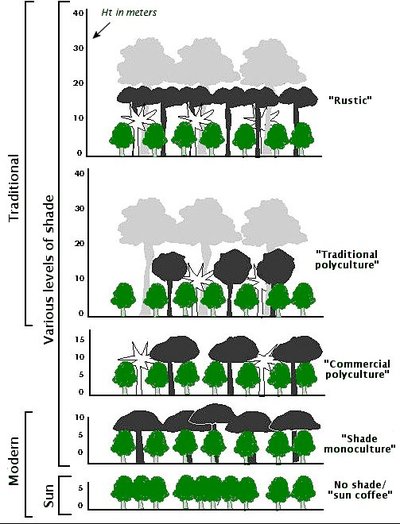
As noted in the previous post, the criteria having to do with vertical stratification — the number of layers of vegetation and the leaf volume in each — are critical components for preserving a rich mix of species.  Many ecological studies support the key role of structural diversity (sometimes referred to technically as floristic heterogeneity) in increased biodiversity — of many types in many ecosystems well beyond the realm of coffee growing. This is the classic schematic illustrating the various coffee production systems and their layers of shade diversity, from a paper by Patricia Moguel and Victor Toledo [1].

Here is a new graphic from SMBC that also illustrates this continuum:

As you can see from the table above, Rainforest Alliance requires (if this criteria is used) only two layers of shade, while Smithsonian requires three. RA has no standards for leaf volume in the shade layers. In short, RA certified farms that use these criteria would have still have structurally-simpler habitats (closer to commercial polyculture) that would likely not support as much biodiversity as farms that met SMBC criteria (closer to traditional polyculture).

A further note. SMBC inspectors visit farms and set up a number of plots and measure various vegetation parameters following methods used in typical ecological studies. The aforementioned paper reports that “Rainforest Alliance inspection auditors rely heavily on data provided by farm managers” (who are not ecologists), and confirm data provided during visits by various estimates and extrapolations.

As an ecologist myself, I am more comfortable that SMBC offers the more stringent, reliable assurance that coffee is grown sustainability if one is comparing certification schemes. And not to beat a dead horse, but the usual caveats apply: there are pros and cons of certification, and many uncertified farms grow coffee sustainably, meeting or exceeding the strongest criteria.

More on SMBCs criteria here, and in the “certifications” category of C&C.

[1] Biodiversity Conservation in Traditional Coffee Systems of Mexico. 1999. Conservation Biology 13:11—21.
Powered by WordPress & Theme by Anders Norén