JulieCraves

McDonald’s promotes coffee sustainability efforts

McD-RA-promoMcDonald’s is launching a campaign aimed to educate the public about their efforts in sourcing coffee sustainably, which I wrote about in March. To recap, the corporation’s North American operations is investing over $6 million to provide education and training to more than 13,000 Guatemalan coffee farmers to increase their capacity for sustainable coffee production.

As I noted in the previous post, the investment in technical assistance to farmers builds on the commitment to purchase increasing amounts of certified coffee, primarily from farms certified by Rainforest Alliance. Currently, all coffee at McDonald’s locations in the U.K., Australia, and New Zealand, and all coffee for espresso-based drinks in the U.S. and Canada, is sourced from Rainforest Alliance-certified farms. All coffee, except for decaf, in Europe is also Rainforest Alliance, Fair Trade, or UTZ certified. In 2011, certified purchases amounted to about 10,400 metric tons. In 2012, 25% of their global coffee purchases were certified; in the U.S. the figure was 14.8% (actual volume figures are not available).

While $6 million is not much money for a multi-billion corporation, keep in mind that coffee is not McDonald’s primary business, and that they only really entered the premium coffee market segment in 2006. They do not source coffee directly, but rely on a suite of suppliers. And, as previously pointed out, even the small amount of certified coffee McDonald’s purchased for North American (around 3800 tons) was more than coffee giants JM Smuckers (1500 tons) and Nestlé’s (2000 tons) total certified global purchases combined! And McDonald’s 14.8% certified U.S. purchases also dwarf Smucker’s 0.5% (and Smucker’s goal is only 10% by 2016). Whereas Smuckers has been dragged reluctantly into modest sustainability efforts, and Nestlé has rejected third-party certifications, McDonald’s has chosen to go with Rainforest Alliance, Fair Trade, and  UTZ Certified because they felt the certification criteria of those organizations were best aligned with the company’s vision.

mcd-coffee-sustainability-shot

Although millions of Americans guzzle coffee every day, not very many are aware of where the daily fix comes from, how it is grown, and the issues that impact coffee farmers and the environment (hence this blog!). McDonald’s wants to familiarize with the public with these issues and how specifically the company is approaching enhancing sustainability in their coffee supply chain. Their connection with Rainforest Alliance will be featured in their ads, in stores, and other promotional assets. Many people that are “into” coffee and drink specialty coffee know about coffee certifications and Rainforest Alliance. I’d venture an educated guess that most people who usually get their coffee away from home at fast-food restaurants have no notion about certifications or coffee sustainability. The ubiquity, popularity, and marketing power of McDonald’s can go a very long way in introducing these issues to the general public.

The next step is increasing the amount of certified coffee they purchase for drip coffee in North America; I hope the majority will be Rainforest Alliance.  McDonald’s has brought their suppliers (S&D Coffee & Tea, Gavina Gourmet Coffee, Farmer Brothers, and Mother Parkers) to the table to address this goal and provide the company with a sequenced plan. These are four of the largest coffee suppliers in North America — providing well over 100,000 tons of coffee annually for foodservice, private label, convenience stores, and their own brands. Currently S&D, the largest of the four, has the best sustainable-coffee commitment, offering a number of certified coffees, including their own line of Bird-Friendly certified coffee [NOTE: S&D was purchased by another company in 2020]. Farmer Brothers has just released its first, baseline sustainability report, where it states it now buys 9% “sustainable” coffee (which amounts to about 3500 tons). Gavina and Mother Parkers don’t provide much detail on similar offerings. This presents a golden opportunity for the Golden Arches. The ability of McDonald’s to influence the purchasing of their suppliers means this initiative has great potential to increase demand for certified, sustainably-grown coffees. Perhaps most importantly, I think that a significant increase in the volume of coffee destined for drip in North America, combined with the visibility and marketing power of McDonald’s, has the potential to really propel coffee sustainability issues into the mainstream.

You can see more at the coffee sustainability section of their website. More detail is promised in McDonald’s next corporate sustainability report, due out next spring. I’ll be reporting on it.

Get Bird-Friendly coffee at Whole Foods

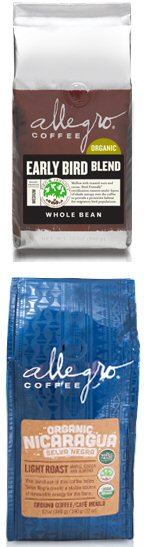
Two Smithsonian Bird-Friendly certified coffees are now available at Whole Foods Markets nationwide, offered by their wholly-owned subsidiary Allegro Coffee Roasters.

allegro-smbcEarly Bird Blend

The first is the Early Bird Blend, a special coffee Allegro will keep in rotation to feature Bird-Friendly certified coffees. Currently, it comprised of a blend of Selva Negra from Nicaragua (see below) and the GRAPOS (Grupo de Asesores de Produccion Organica y Sustenable S.C.) co-operative in Chiapas, which is in the buffer zone of the El Triunfo Biosphere Reserve. The Reserve contains the northernmost cloud forests in the world and is considered as one of the greatest biodiversity sites of North America. It’s one of the best of only a few places in the world to see the spectacular and critically endangered Horned Guan.

Allegro plans to utilize other Chiapas farms in the blend, as well as the famous Colombia El Roble (Mesa de los Santos), an origin we first reviewed here, and which has also been used by Birds & Beans in their Chestnut-sided Warbler variety.

Organic Selva Negra

The other is their most recent Origin Direct coffee, Nicaragua Selva Negra. This is the same program that featured the farm El Jaguar earlier this year, where my husband and I did a bunch of bird-banding and insect survey work a couple of years ago. The Origin Direct program (formerly Special Reserve) picks an outstanding source every quarter and awards the producers $10,000 to support community projects.

Selva Negra (the name of the farm is actually La Hammonia) is located near Matagalpa, Nicaragua, and I wrote about it when overviewing that country’s Bird-Friendly certified farms.  They also hold Rainforest Alliance and organic certification (the latter necessary for Bird-Friendly certification as well). I have been to Selva Negra twice, and can attest that the 150 ha of preserved cloud forest is fabulous, and contains many unique and rare birds among 280 or so species, plus orchids and other biodiversity. I had two great birding milestones there: my first Resplendent Quetzal, a near threatened species, and my 1000th life bird, a Ruddy Woodcreeper at an ant swarm, which are kind of unusual at high elevations.

Roast and taste

We’ve had an opportunity to try both of these coffees. The Selva Negra is designated as a light roast, although it comes with just a bit of sheen to the beans.  The Early Bird Blend is medium. Fans of Birds & Beans light or medium roasts, or generally more robust coffees will find the Early Bird Blend very much to their liking, and it will hold up well to milk and/or sweeteners. The Selva Negra is a bit more subtle, but a perfect every day breakfast coffee. We found both extremely smooth, with several layers of creamy, understated complexity building as they cooled. This was more pronounced with the Selva Negra, which was therefore probably responsible for this characteristic. This quality gave both coffees some of the most lustrous, almost velvety mouthfeels I think I have ever experienced in any day-to-day coffee, versus some much more expensive boutique selections.

Support the Bird-Friendly Early Bird Blend!

There are over 350 Whole Foods Markets; these coffees are currently available bagged and (if there is an Allegro roastery in one of your local stores) fresh in bins ready to be scooped up an enjoyed. This should reduce the number of people I hear saying that Bird-Friendly coffee is too hard to find. You can also buy online from Allegro.

But here is the important part — Allegro is launching the Early Bird Blend to gauge how much this certification resonates with customers. Do you care about the availability of this blend, and want to support the birds and biodiversity emblematic of and the purpose behind Bird-Friendly certification? If so, PLEASE make sure your Whole Foods store manager knows how you feel. Try out the Early Bird Blend and provide feedback to Whole Foods and/or Allegro.

Coffee drinkers have the potential to make a huge impact on the environment and economies of coffee growing nations. This is a terrific opportunity for coffee drinkers concerned about sustainably-grown coffee to stand behind our beliefs.


Update on coffee growing in China

In early 2010, I wrote a post outlining coffee production in China. In it, I provided the following figures:

  • China produced about 3600 tons of coffee in 1997.
  • This increased to an estimated 28,000 tons (perhaps up to 40,000 tons) in 2009.

A recent article in the trade journal Global Coffee Review reports that the 2012-13 crop year could be upwards of 60,000 tons, and that the projection for 2019-20 is as much as 200,000 tons. Another estimate gives the 2012 output of Yunnan province (where 98% of arabica coffee is grown) as 82,000 tons. It’s likely that the coffee tonnage and perhaps acreage would have been much higher between 2008 and today had it not been for a severe drought in 2009-2011.  The reservoir of the new Nuozhadu hydroelectric dam in Yunnan, however, can provide irrigation water to local farmers. (Ironically, people displaced by the flooding of their land by the reservoir are being encouraged by the government to become coffee farmers.)

china-coffe-mapAll of this increased production takes lots of land, of course. Experts quoted in the Global Coffee Review piece expressed concern about the environmental impacts of all this planting, as well as a flooding of the market with so much coffee when the plantings being to yield fruit. I’d like to give an update country’s coffee production which fuels both China’s increasing domestic consumption as well as exports.

Coffee farms and deforestation

Although accurate figures out of China are hard to come by, let’s take a look at published reports on land devoted to coffee.  In my previous post, I noted that China planned to increase the land devoted to coffee to 16,000 ha in the next 15 years.  A report* released only a few months after I found that data indicated that as of April 2010, there were already 29,000 ha of coffee planted in Yunnan province alone. As of August 2012, the Coffee Association of Yunnan calculated the area to have grown to nearly 67,000 ha, ahead of even its 2015 goals. We can safely say there is between 40,000 and 70,000 ha of coffee being grown in Yunnan, China now, and that this figure has been and will be growing rapidly.

Nearly all of the coffee grown in China is sun coffee, monocultures of coffee grown without the protection of shade trees and utilizing high levels of chemical fertilizers and pest control. In China, sun coffee plantations are often created from clearing forest or other habitat, even in areas with logging bans. A great piece on the SCAA web site notes that in Pu’er, organic fertilizer is not readily available, the soil is poor, and requires 2 or 3 applications of fertilizer annually.

China is already suffering from severe deforestation, and it is a serious problem in Yunnan province.

Enter Starbucks

Nestlé has been the big player in China, where the majority of coffee consumed is still instant coffee, of which Nestlé has a dominant market share. Due to relatively low altitudes and the threat of coffee leaf rust, Nestlé has distributed a lot of rust-resistant coffee (of the robusta-derived Catimor variety) and has encouraged farmers to plant some shade trees, conserve water, and helped with other ecological endeavors, according to the SCAA piece. They also plan to construct a Nescafé Coffee Center that will include an education center in addition to warehouses and other infrastructure to support their instant coffee empire. Apparently, many of Nestlé coffee sustainability activities in China are being done largely under the framework of the ecologically-anemic 4-C standards.  And we know that third-party certifications have been rejected by Nestlé. So while their efforts may be better than nothing, it doesn’t make me optimistic about environmental stewardship in China’s coffeelands.

Meanwhile, in late 2012, Starbucks established a farmer support center in the Pu’er region of Yunnan (others are located in Costa Rica and Rwanda). These centers allow Starbucks to work directly with farmers to improve yield, quality, environmental sustainability, and to help them meet the company’s CAFE Practices.  The company press release specifically mentions a goal of “help[ing] reduce the environmental impact of the region’s coffee-growing activities.” This is perhaps the most promising news out of China regarding coffee production, as assessments of CAFE Practices have shown good compliance with the eco-criteria included in the program.

BOLO

I’ll just repeat here my wrap-up of my previous post:

One need only look next door to Vietnam to see what a no-holds-barred coffee production policy can do to world coffee prices and farmer livelihoods worldwide and the environment. Unfortunately, nearly all the same elements that precipitated the catastrophic coffee crisis of the late 1990s are once again in place: world development agencies and a national government encouraging and subsidizing the planting of huge amounts of coffee which could lead to a glut in supply, large multinational roasters eager to have a source of cheap mediocre coffee, and poor rural minority farmers hoping to get rich. As we have learned, a drop in world coffee prices due to oversupply from Asia means people and habitats suffer all over the world.

*International Trade Center. 2010. The Coffee Sector in China: An Overview of Production, Trade, and Consumption. Technical Paper. Doc. No. SC-10-188.E. 23 pp.

A rusty nail in the coffin of organic-certified coffee?

Coffee leaf rust (Hemileia vastatrix) is a highly contagious fungal disease that is devastating coffee production in Latin America, with losses estimated at 15 to 70%, depending on the region. One essential component to combating this disease is the use of fungicides. Copper-based fungicides are relatively inexpensive and are permitted under organic certification. However, they must be reapplied frequently (around every three weeks, or more often if it rains and gets washed off) and are not without ecological risk. If used frequently or in excessive amounts, copper can build up in soils and can also be harmful to aquatic organisms. Some types of synthetic fungicides*, not allowable under organic certification,  can be more effective — and in some circumstances may actually be safer for the environment.

Some of the best reporting on the coffee rust crisis is from Michael Sheridan writing at CRS Coffeelands. As I was contemplating writing this post on the connection between coffee leaf rust and organic certification, Michael hit on the topic himself.  He notes that farm management [use of shade, planting density, pruning, proper timing of fungicide applications] has as much or more to do with crop losses from rust as does whether the farmer uses organic or conventional production; this was echoed in survey results gathered by Green Mountain Coffee Roasters. The severity of this disease is also very dependent on climate and weather factors such as wind, moisture, and temperature. Still, Michael notes that the “official response to coffee rust in Central America so far seems to have been heavily skewed toward agrochemical-intensive approaches”.

For example, at a recent coffee rust summit, a representative from PROMECAFE, a Central American coordinator for coffee-related technical training, suggested that in the short term, organic farmers might consider leaving organic for conventional production.

nailCRS Coffeelands quotes Miguel Medina of the Guatamalan national coffee organization Anacafé as saying, ”I don’t know how organic coffee can have a future.  There is nothing that works to control rust in the field and I am not seeing anyone in the market offering more to create additional incentives for organic farmers.”

Despite a strong commitment by farmers in many Latin American countries to preserve their environment and even a suspicion by a few that chemical companies may be behind the rust epidemic, many farmers may feel compelled to give up their organic certification to fight the rust. With the severity of this threat to their livelihoods — and even survival — the choice between trying to salvage their coffee trees with artificial fungicides or stick with organic certification is straightforward. Many will do what they can to keep afloat and give up organic certification. This not only allows them to use more potent artificial fungicides to try to control the coffee leaf rust, but it also frees them to use pesticides and artificial fertilizers that may be considered necessary to protect or help vulnerable or ailing coffee trees.

Over the past few years, some farmers have already abandoned organic certification because the extra money they receive for it simply does not compensate them for the added expense of producing coffee this way. The rust crisis adds to this dilemma. Eventually, coffee fields are likely to be replanted with rust-resistant varieties, but even those in the ground today will take three to five years to produce a crop. Meanwhile, we as consumers need to brace ourselves for higher coffee prices as crop yields decline, and be that much more willing to pay extra for organic coffee.

More reading on the topic:

*Some media mention “Triazaline” as the synthetic fungicide used for coffee leaf rust control. From what I can tell, there is no fungicide named triazaline. However, there is a group of synthetic fungicides called triazoles that are used. Triazaline may be a brand name in this family, or a misinterpretation/misspelling of triazole.

Update (January 2025): A study has now confirmed the toxicity of triazoles to humans using these fungicides to combat coffee rust.

Rusty nail photo by Scott Robinson under a Creative Commons license.